Beyond AMCA Engine, GTRE Explores Advanced Three Stream Adaptive Propulsion for India's Next-Gen Combat Platforms

Beyond AMCA Engine, GTRE Explores Advanced Three Stream Adaptive Propulsion for India's Next-Gen Combat Platforms


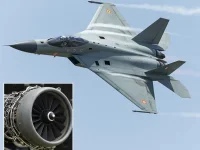
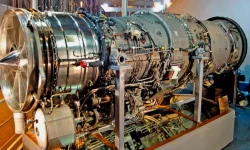
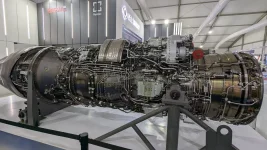
India's Gas Turbine Research Establishment (GTRE) is already looking past the Advanced Medium Combat Aircraft (AMCA) to secure the propulsion systems of the future.

While the immediate national priority is finalising an indigenous engine for the AMCA Mk2—a race that currently sees aerospace giants like Rolls-Royce pitching full intellectual property transfer for a new 110–130 kN powerplant—GTRE is concurrently laying the groundwork for sixth-generation aviation.

Central to this future vision is the exploration of Adaptive Cycle Engine (ACE) technologies, which are set to redefine the performance of next-generation combat platforms.

Rather than attempting to build this intricate technology entirely from scratch, GTRE is adopting a practical strategy focused on international collaboration.

Reliable sources indicate that the organisation is actively engaging with established global aerospace leaders who bring decades of expertise in military propulsion.

A key player in these exploratory talks is the United Kingdom’s Rolls-Royce. The discussions are centred on defining the propulsion needs for highly networked, power-hungry platforms of the post-AMCA era, encompassing both sixth-generation manned fighter jets and future Unmanned Combat Aerial Vehicles (UCAVs).

Rolls-Royce brings highly relevant experience to the table, as the firm is already developing advanced propulsion architectures for the UK-Italy-Japan Global Combat Air Programme (GCAP).

Adaptive Cycle Engine technology represents a massive leap forward from today's fighter jet engines.

Traditional turbofans are built with a compromise in mind: they are generally tailored either for fuel efficiency or for maximum thrust. An adaptive engine, by contrast, can automatically change its internal airflow dynamics mid-flight to suit the immediate needs of the mission.

This versatility allows a fighter to cruise over long distances with exceptional fuel economy, and then instantly switch modes to unleash massive thrust during an aerial engagement.

The result is a significant boost in range, speed, time-on-station, and heat management when compared to conventional powerplants.

The pinnacle of ACE technology relies on a "three-stream" architecture. Standard turbofans use two streams of air (a core stream and a bypass stream), but this advanced design adds a third, dynamically controlled airflow channel.

This extra stream is a game-changer. It not only extends operational range by boosting fuel efficiency, but it also drastically increases electrical power generation and provides a critical cooling mechanism for the aircraft's internal electronics.

These traits are essential because tomorrow’s fighter jets will be far more than just flying weapons; they will operate as airborne data centres.

Future platforms will be packed with complex electronic warfare systems, artificial intelligence processors, distributed sensor grids, and high-energy weapons, all of which require massive amounts of electricity.

According to insiders, the dialogue between GTRE and Rolls-Royce has specifically touched upon how high-thrust adaptive engines can be engineered to support these extreme power demands.

Integrating directed energy weapons, such as high-power lasers and advanced microwave systems, poses a monumental challenge for aerospace engineers. These next-generation weapons require electrical outputs that dwarf what current fighter engines can produce.

Consequently, the engines of the future must transcend their traditional role of merely providing thrust. They will need to function as holistic power stations, simultaneously delivering forward propulsion, massive electrical current, and intense cooling capacity.

Thermal management is perhaps the most critical hurdle. Systems like directed energy weapons generate tremendous amounts of waste heat that must be safely vented to keep the aircraft functioning. The third airflow stream in an adaptive engine acts as a massive internal heat sink, effectively cooling sensitive electronics and advanced weaponry.

Furthermore, future combat scenarios will demand aircraft capable of carrying heavier and more complex payloads. This includes hypersonic missiles, long-range standoff weapons, and the capability to deploy and control swarms of collaborative drones. Only the high thrust and enhanced power capacity of an adaptive engine can support these heavy-duty requirements.

For India, engaging with adaptive propulsion technology now is a strategic move to ensure long-term self-reliance and reduce reliance on foreign military hardware. While finalising the AMCA engine remains the critical milestone for the present, mastering the complexities of adaptive cycle technology will equip the nation for the aerospace challenges of the 2040s and beyond.

Ultimately, these developments underscore a fundamental shift in military aviation: modern engines are no longer just about making an aircraft fly fast. They are the beating heart that enables next-generation sensors, electronic warfare, and futuristic energy weapons, making them the ultimate deciding factor in future defence capabilities.
 
Working on a variable cycle engine serves what useful purpose? Positive PR for GTRE for a few years then the programme will likely fade away, having achieved nothing useful. GTRE is way out of its depth on variable cycle tech.

Better to work on something that could be achieved and produce a useful result. Why not finish a Kaveri derivative suitable for Mk1A? It would be a better idea to ask RR for help on that..
 
Completely unrealistic article. The failed research organisation is involved developing futuristic tech. Not able to develop engine even for 3rd or 4th gen aircraft, such group of failed people is now looking to develop next gen engine technology.
 
Oh, this time India has decided to hop on from the shoulders of Safran to the shoulders of Rolls Royce.

Great progress.
WOW
Bravo

Way to go India 👍👌👏💐💐💐
 
Working on a variable cycle engine serves what useful purpose? Positive PR for GTRE for a few years then the programme will likely fade away, having achieved nothing useful. GTRE is way out of its depth on variable cycle tech.

Better to work on something that could be achieved and produce a useful result. Why not finish a Kaveri derivative suitable for Mk1A? It would be a better idea to ask RR for help on that..
What cynicism of our capabilities. Even if you worked in and retired from GTRE you need to consider our technology students who didn't go abroad don't need to regress, even a step before Kaveri jet engine. Even KDE (Kaveri Derivative Engine is tested) so what do you really want GTRE to work on? Go 2 steps earlier to make jet engine for retired MiG21?
 
Completely unrealistic article. The failed research organisation is involved developing futuristic tech. Not able to develop engine even for 3rd or 4th gen aircraft, such group of failed people is now looking to develop next gen engine technology.
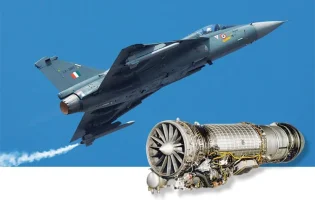
From 49-51 kN dry thrust core of Kaveri (insufficient for even Tejas 1a) GTRE has the enhanced Derivative Engine of Kaveri (KDE) now being tested for 73 kN. This is inbetween GE 404 used in Tejas 1a and GE 414 being used to develop and test Tejas 2, besides AMCA1.0.

GTRE failure on Kaveri last decade does not make them a permanent failure. China took 4 decades to build an effective greenfield engine on its own, with 3 of them merely incremental over Soviet design, so your logic would be to damn China forever. But they have a high thrust VCE engine for their 6g now. How?

GTRE is not responsible for HAL failure to get our weapons integrated on Tejas 1a to pass FOC (Final Operational Clearance).

The new AMCA engine is a new greenfield modular design that Saffran helped conceive. Modular Design does not increase core dry thrust but phenomenally reduces overhaul time so engine, hence aircraft back in service in far shorter period, unlike clunky Russian Design. Lower powered Saffran M88 used in Rafale Mod 3 we already have is Modular Design and is being enhanced for M88-Rex to be used in Rafale Mod5. You can't call Saffran M88-Rex or Rafale Mod5 a failure with same cynicism.

RR is already working on the 100+ kN dry thrust engine while developing VCE for GCAP 6g program (UK, Italy, Japan that already has similar thrust engine with P&W), so will you be cynical enough to dub RR good for nothing, or GCAP 6g in concept stage good for nothing?
 
Oh, this time India has decided to hop on from the shoulders of Safran to the shoulders of Rolls Royce.

Great progress.
WOW
Bravo

Way to go India 👍👌👏💐💐💐
IIRC the US awarded P&W and GE R&D contracts to develop a variable cycle engine. Known as the ADVENT programme (Adaptive Versatile Engine Technology), RR worked with GE on the programme. In the end P&W was selected to produce an engine. RR can therefore be expected to know far more about this technology than SAFRAN.

What cynicism of our capabilities. Even if you worked in and retired from GTRE you need to consider our technology students who didn't go abroad don't need to regress, even a step before Kaveri jet engine. Even KDE (Kaveri Derivative Engine is tested) so what do you really want GTRE to work on? Go 2 steps earlier to make jet engine for retired MiG21?
I was not being cynical. If India has the capability to produce an 80+kN engine for use in Mk1A, why isn't it happening? I suggested it would be better to use RR expertise to get an Indian turbofan finished - for which there is an established need and application - than to start looking at something exotic like adaptive engine design way beyond GTRE capabilities.

I don't quite understand why getting the result aimed at for several decades (an engine for Tejas) has not been considered a priority. If consultancy from a major OEM is required to reach the level of a usable engine, it should be sought IMO.

Now, if the basic design of Kaveri is inadequate, calling on the services of a major OEM may be pointless if India does not want to pay for a major redesign. Additionally there is not much point in producing an engine for Mk1A when they have nearly all or all been built.
 

Forum statistics

Threads
7,468
Messages
66,644
Members
5,485
Latest member
Baba Vickram Aditya Bedi
Back
Top