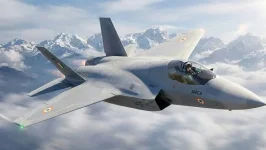
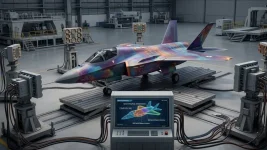
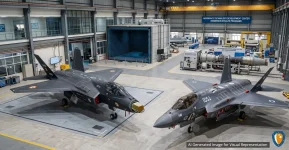
In a major shift for its aerospace industry, the Indian government has handed over the production of the Advanced Medium Combat Aircraft (AMCA)—the country's upcoming 25-tonne class fifth-generation stealth fighter—to an industry consortium led by the private sector.
Beyond meeting the needs of the Indian Air Force (IAF), this newly selected group is also officially authorised to market and export the advanced jet on the world stage.
Historically, India's defence manufacturing has focused entirely on satisfying domestic military demands first, treating foreign sales as an afterthought.
By placing private businesses in charge of building, maintaining, and internationally promoting the AMCA, New Delhi is making it clear that it wants the fighter jet to be a globally competitive product from day one.
A New Strategy Built for Export
In March 2024, the Cabinet Committee on Security approved ₹15,803 crore to develop the AMCA prototypes.Including heavyweights like Tata Advanced Systems, Larsen & Toubro (L&T), and Bharat Forge changes the programme's financial and business future.
Unlike state-run factories, these private corporations already have deep international business ties, massive global supply chains, and dedicated marketing teams that can chase overseas sales far more effectively.
Furthermore, giving the lead to the private sector bypasses the historical monopoly of the state-owned Hindustan Aeronautics Limited (HAL). Creating this parallel manufacturing network means the private consortium can set up independent production lines.
Because they do not have to clear HAL's massive backlog of existing aircraft orders, the consortium can pitch the AMCA to foreign buyers with reliable and faster delivery times, without having to wait for the IAF's demands to be fully met.
Tough Competition Ahead
However, breaking into the global market for cutting-edge fighter aircraft will not be easy.By the time the AMCA reaches series production around 2035, it will face a crowded arena. Nations will be looking at existing and upcoming models such as the American Lockheed Martin F-35, South Korea's KF-21 Boramae, Türkiye's KAAN, and potential Chinese fifth-generation exports.
To win contracts against these well-established jets, the AMCA will need more than just great stealth and technology. It must prove it is easy and cheap to maintain, backed by an efficient supply chain and steady manufacturing rates.
The Engine Factor
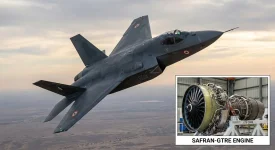
A jet's engine is critical to its export potential. The initial AMCA Mk-1 models will use the American-made GE F414 engine. While highly reliable, selling a jet with a US engine means the importing country will need Washington's strict regulatory clearance.To solve this, the upgraded AMCA Mk-2 will feature a new engine, jointly designed by France's Safran and India's Gas Turbine Research Establishment (GTRE).
If India can successfully build this indigenous engine, it will gain the independent authority to sell the jet abroad without worrying about foreign export blocks.
Affordability as a Selling Point
Experts suggest that the AMCA's biggest advantage will be its price. If the private companies can build this twin-engine stealth fighter at a lower cost than its Western rivals, India could capture a unique market segment.This cost-effective approach could heavily appeal to nations that want next-generation air power but are blocked from buying American or European jets due to high prices or political sanctions.
Target markets could include Southeast Asian countries looking to upgrade their fleets and diversify their defence partners.
Nations in the Middle East, Africa, and Latin America that already hold strategic ties with India may also become prime buyers if the aircraft performs well and remains affordable.
Beating the Clock
Ultimately, marketing alone will not sell the aircraft; the jet must be built on time. The AMCA programme targets a prototype rollout by 2028-2029, followed by its first flight and an eventual IAF service introduction by 2034.Meeting these strict deadlines is vital. Foreign militaries rarely buy a jet that the manufacturer's own home country is not already flying successfully.
By empowering private companies to build and sell the AMCA from the ground up, the government is writing a new chapter for India's defence aerospace sector. Instead of just replacing older jets, India is building a machine meant to compete—and win—in the global arms market.