As the Indian Air Force (IAF) continuously upgrades its combat squadrons to tackle modern threats across the Indo-Pacific, the strategic focus is shifting toward the future of beyond-visual-range (BVR) aerial combat.
While the indigenous Astra Mk1 is actively deployed, and the more advanced Astra Mk2 and Astra Mk3 are rapidly moving through their development phases, several defence experts are advocating for an even bolder step.
They suggest that India should develop a domestic ultra long-range air-to-air missile purposely built to eliminate critical airborne targets from distances well beyond 500 kilometres.
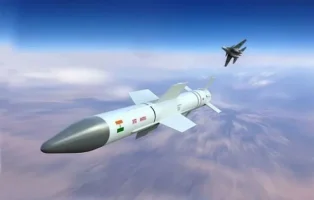
This ambitious proposal, commonly dubbed the LOLA (Long-Range Air-to-Air Missile) concept, outlines a weapon that completely dwarfs standard air-to-air munitions. It is envisioned as a heavyweight interceptor, custom-tailored to be carried by large, heavy-lift fighter jets such as the IAF’s Sukhoi Su-30MKI.
According to the conceptual design, the missile would boast massive physical dimensions—stretching roughly 4.75 metres in length and 380 millimetres in diameter, while tipping the scales at an imposing 860 kilograms.
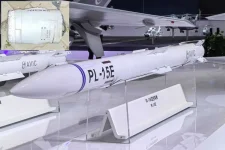
These specifications would firmly establish it as one of the largest air-to-air missiles in global history. Rather than dogfighting agile jets, it would fall into a niche category of "AWACS-killers," similar in philosophy to Russia's R-37M or China's PL-17.
Its primary mission would be to hunt down high-value support aircraft—such as airborne early warning and control (AWACS) planes, mid-air refuelling tankers, and strategic bombers—operating safely behind enemy lines.
To propel such a massive weapon, engineers have proposed a state-of-the-art solid fuel system. This high-energy composite propellant would be infused with nano-aluminium and boron additives, all encased within a remarkably light carbon-composite motor shell.
This specific design choice is crucial; it keeps the structural weight to a minimum while maximising engine thrust, ensuring the weapon can maintain blistering speeds throughout the majority of its journey.
In terms of flight performance, the concept outlines a missile capable of hitting peak velocities around Mach 5, with an average cruising speed of Mach 3.8. By combining these hypersonic speeds with a high-arcing, "lofted" flight path, the weapon could theoretically strike targets at distances approaching 540 kilometres, provided it is launched from the upper atmosphere.
The exact reach of the missile, however, would be heavily dictated by the jet's altitude at the moment of launch.
For instance, if fired from a staggering height of 30 kilometres using a lofted trajectory, the weapon could achieve its maximum 540-kilometre range, boasting an inescapable kill zone of roughly 185 kilometres.
If deployed at a more standard combat altitude of 15 kilometres, that maximum range drops to about 340 kilometres. Launches from lower altitudes of 8 kilometres and 5 kilometres would further restrict the missile's reach to approximately 235 kilometres and 185 kilometres, respectively.
Because intercepting a target at such extreme distances takes considerable time, the concept mandates the inclusion of a highly secure two-way datalink.
This communication system would empower the firing aircraft, or other allied sensor platforms, to send real-time coordinate corrections to the missile mid-flight—an absolute necessity to ensure the weapon does not lose a moving target over hundreds of kilometres.
During the critical final seconds of the engagement, the missile would rely on a sophisticated millimetre-wave Active Electronically Scanned Array (AESA) radar seeker to independently track and lock onto the enemy aircraft.
While engineering a millimetre-wave AESA sensor is notoriously difficult and technologically complex, it provides unparalleled target clarity and is incredibly resilient against enemy electronic jamming attempts.
To guarantee a lethal strike, the proposed weapon would pack a hefty 60-kilogram high-explosive fragmentation warhead.
This large explosive payload is specifically sized to ensure the complete destruction of heavily built, multi-engine aircraft like intelligence platforms, AWACS, and refuellers upon detonation.
For the Indian Air Force, inducting a weapon of this magnitude would fulfil a highly specialised strategic need.
Instead of trying to swat down highly manoeuvrable frontline fighter jets, this missile would serve to hold the enemy's crucial airborne support infrastructure at risk.
By forcing hostile radar planes and tankers to retreat far from the battle space, the IAF could effectively blind the enemy's airspace awareness and severely slash the combat endurance of their fighter fleets.
Given the immense size and weight of the LOLA concept, the Sukhoi Su-30MKI stands out as the only logical launch platform currently in the IAF inventory, thanks to its heavy payload capacity and powerful radar systems.
Conversely, integrating such a bulky weapon into future stealth jets, like the Advanced Medium Combat Aircraft (AMCA), is highly unlikely due to the strict space constraints of internal weapons bays.
However, transforming this 500km-range concept into a reality comes with steep operational and engineering hurdles.
A missile weighing 860 kilograms represents a massive payload burden, meaning a fighter could only carry a very limited number of them per sortie.
Furthermore, because no current fighter radar can independently see targets 500 kilometres away, the success of this weapon would rely entirely on flawless targeting data fed from external sources, such as satellites, ground-based radars, or friendly AWACS planes.
There is also the inescapable reality of ultra-long-range physics: the farther a missile has to fly, the more time the target has to take evasive action or deploy electronic countermeasures, which lowers the overall probability of a successful hit.
As a result, weapons of this sheer size are treated less as guaranteed tactical weapons and more as strategic deterrents designed to push lumbering support aircraft out of the theatre of operations.
In the meantime, India is already securing its long-range combat future through the highly successful Astra missile lineage.
The Defence Research and Development Organisation (DRDO) is currently pushing forward with the dual-pulse Astra Mk2, which boasts a range nearing 160 to 200 kilometres.
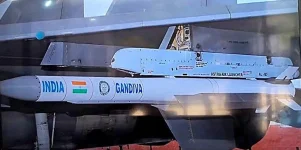
More importantly, the highly anticipated Astra Mk3—often referred to as "Gandiva"—is progressing toward a 2030s deployment.
Powered by cutting-edge Solid Fuel Ducted Ramjet (SFDR) technology, the Astra Mk3 is projected to achieve impressive ranges of up to 350 kilometres, firmly placing the IAF among the global elite in beyond-visual-range capabilities, even as a 500-kilometre AWACS-killer remains a future prospect.