In a major push for domestic military technology, Hindustan Aeronautics Limited (HAL) has awarded a monumental ₹2,205.23 crore contract to Astra Microwave Products Ltd.
Announced to the stock exchanges on July 30, 2026, this landmark agreement involves the production of 122 Active Antenna Array Units (AAAUs) and 121 Interface Frames.
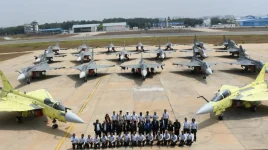
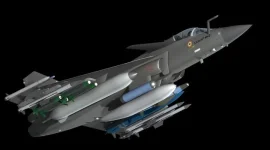
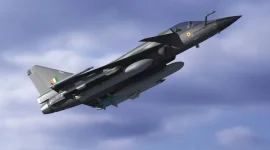
These crucial components will form the heart of the indigenous Uttam AESA fire-control radar, destined for the upcoming fleet of 97 Tejas Mk1A fighter jets for the Indian Air Force (IAF).
Under the terms of the agreement, Astra Microwave will complete the delivery of these radar systems over the next five years, concluding in the 2031 financial year.
This single order, valued inclusive of all taxes, is transformative for the Hyderabad-based firm. It represents nearly double the company’s entire revenue from the previous financial year and exceeds its total standalone order book as of March 2026, massively accelerating its financial trajectory.
Spearheaded by the Defence Research and Development Organisation’s (DRDO) Electronics and Radar Development Establishment (LRDE), the Uttam radar is an advanced X-band Active Electronically Scanned Array (AESA) system.
Development on the project began in 2008, and the system has since been rigorously tested across more than 125 flights on Tejas prototypes, successfully proving its capabilities in both air-to-air and air-to-ground combat scenarios.
Featuring around 912 transmit and receive modules (TRMs) and advanced liquid cooling, the radar provides a detection range of approximately 150 km against tactical targets.
DRDO officials have highlighted that the indigenous sensor performs on par with, and in several metrics significantly outperforms, the Israeli EL/M-2052 radar it was designed to replace.
To ensure that the IAF receives its new fighters without delay, a strategic, phased rollout has been adopted.
The initial batch of 83 Tejas Mk1A jets will continue to be equipped with the Israeli EL/M-2052 radar, which HAL is manufacturing in India under a technology transfer agreement.
HAL's leadership recently confirmed that the integration of the homegrown Uttam system has been intentionally shifted to the subsequent order of 97 aircraft.
This ensures the IAF maintains its combat readiness with the proven Israeli radar while the Indian alternative undergoes final maturation.
The 97 Tejas Mk1A fighters—which were formally ordered by the Ministry of Defence in a ₹62,370 crore deal in late 2025 and consist of 68 single-seat fighters and 29 twin-seat trainers—will be the primary recipients of the new Astra Microwave systems.
By procuring 122 radar units for 97 aircraft, the military is proactively securing necessary spares and test equipment. Deliveries of these specific jets are slated to commence around 2027-2028.
Furthermore, this deferred timeline allows developers to potentially bypass older technologies and directly integrate next-generation Gallium Nitride (GaN) modules into the Uttam radar, ensuring the fleet remains future-proof.
This contract is a watershed moment for India's defence ecosystem. It graduates Astra Microwave from a subsystem manufacturer to a primary system provider for a frontline combat aircraft.
More importantly, equipping the Tejas with an indigenous radar grants India complete sovereign control over the jet's electronic brain.
This independence means the IAF can freely update threat libraries, integrate advanced electronic warfare suites, and pair the aircraft with deadly homegrown weapons—like the 160-200 km range Astra Mk2 missile—without requiring permission from foreign governments.