India is rapidly pushing forward with its Future Ready Combat Vehicle (FRCV) and Future Main Battle Tank (FMBT) initiatives, aiming to build next-generation fighting vehicles domestically.
The FRCV project alone, greenlit in September 2024 by India's Defence Acquisition Council (DAC), aims to procure 1,770 tanks to replace the aging fleet of Soviet-origin T-72s.
In response to this strong push for self-reliance in the defence sector, Russia has taken a calculated step. Instead of opposing this shift, Moscow has positioned itself as a willing technology partner, proposing joint production and industrial teamwork to support India’s evolving roadmap for armoured vehicles.
This calculated strategy underscores the long-standing defence partnership between the two nations. Currently, India's armoured forces rely heavily on Russian-designed tanks, primarily the T-72 Ajeya and the T-90S Bhishma.
This established operational history provides Russia with a distinct edge, as India already possesses the necessary logistics, maintenance networks, and training frameworks required for Russian equipment, even as it looks toward future indigenous platforms.
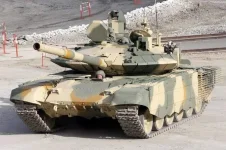
At the heart of Russia’s new strategy is a proposal to jointly produce the T-90MS, the most advanced export model of the T-90 tank family.
State-owned Rosoboronexport is presenting this as a chance to build upon more than 20 years of successful licensed tank production in India, while injecting new technologies derived from Russia's own T-90M.
The proposed T-90MS is a significant upgrade. It features a robust 1,130-horsepower engine, a completely revamped turret, enhanced armour, modern fire-control systems, superior thermal imaging, and digital battlefield management tools, all designed to increase survivability and combat efficiency on modern battlefields.
Crucially, by offering local manufacturing instead of simply exporting the tanks, Russia is aligning its pitch with India’s "Make in India" initiative and its demand for technology transfer.
According to reports, the proposed production plan would begin with assembling imported components in India to establish the necessary infrastructure.
Following this, Russia intends to progressively transfer the technology needed for Indian companies to manufacture key components domestically, aiming to lessen reliance on imported parts over time.
Beyond just the T-90MS, Russian defence officials emphasize the proven track record of their armoured vehicles. They argue that these mature platforms offer less technical risk and faster deployment times compared to starting new developmental projects from scratch.
While this is certainly a marketing tactic, it highlights Moscow's determination to remain a key player as India revamps its armoured forces.
The deep-rooted industrial ties between the two nations further strengthen Russia's position. The Indian Army will continue to operate its existing T-72 and T-90 fleets for years to come, requiring a steady stream of spare parts, engine support, and upgrades.
This ongoing need ensures that Russia will remain a vital partner in maintaining India's current capabilities, regardless of how quickly the new indigenous programs advance.
The FRCV program, estimated at around Rs 60,000 crores, is a particularly significant opportunity. Designed to replace the T-72s, these new tracked vehicles will boast improved mobility, firepower, and network-centric capabilities, along with artificial intelligence, drone integration, and active protection systems.
With a weight of around 55 tonnes and a crew of four, the FRCV is expected to be a game-changer. While multiple international manufacturers are expected to vie for a role, Russia has made clear its desire to partner with Indian industry under the FRCV’s manufacturing guidelines.
This program, processed under the Make-1 category where the government funds 70% of the project, prioritizes domestic production and private-sector involvement over direct imports.
Russian firms have shown a readiness to collaborate, offering to bring decades of tank-building experience and mature technologies to local manufacturing efforts.
Meanwhile, the FMBT program represents India's long-term goal of designing a fully indigenous, next-generation tank, spearheaded by the Defence Research and Development Organisation (DRDO).
The FMBT is expected to feature advanced capabilities such as active protection systems, AI-assisted battlefield management, and improved crew survivability.
Interestingly, Russia does not seem to view the FMBT as a direct threat, but rather as part of India's broader modernization. Moscow’s willingness to partner on technology suggests that collaboration on specific subsystems remains on the table, even as India's domestic design capabilities grow.
Ultimately, Russia’s primary goal is to maintain its significant role within India’s armoured vehicle supply chain, adapting to New Delhi’s push for self-reliance through joint manufacturing and technology sharing.
For India, the challenge lies in balancing the development of its own capabilities—crucial for both replacing old equipment and strengthening its defence industrial base—with the advantages of accessing mature foreign technologies that can reduce risks and speed up progress in critical areas.