The highly anticipated flight testing of the BrahMos-NG (Next Generation) supersonic cruise missile has been postponed by approximately one year.
This delay stems from the Indian Air Force (IAF) updating its operational criteria, prompting a comprehensive redesign of the weapon system.
According to industry sources, the IAF is pushing for significant technological upgrades, including the integration of an Indian-made Active Electronically Scanned Array (AESA) seeker and the ability to perform complex, high-speed evasive maneuvers right before striking a target.
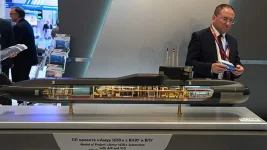
Speaking during the International Maritime Defence Show Fleet 2026, Alexander Maksichev, the Managing Co-Director of the BrahMos Aerospace Joint Venture, verified that the missile is undergoing necessary modifications.
He noted that the initial flight trials have been paused because the customer introduced slightly altered, yet far more demanding, specifications.
Maksichev explained that upgrading the missile to satisfy these stricter requirements is proceeding according to a revised plan, which will require roughly a year of additional development before testing can commence.
While the exact nature of the new specifications remains officially undisclosed, defence sources indicate that a major focus is the implementation of terminal-phase "S-turns."
The IAF reportedly wants the BrahMos-NG to execute these aggressive, twisting flight paths while maintaining blistering speeds approaching Mach 3.5.
By shifting its trajectory unpredictably in its final moments, the missile can effectively defeat the predictive tracking algorithms used by modern surface-to-air missile networks.
However, pulling off such extreme aerodynamic maneuvers at supersonic speeds drains considerable kinetic energy and fuel, requiring engineers to rethink the missile’s internal design and flight mechanics.
In addition to advanced flight profiles, the IAF is said to be demanding the inclusion of a domestically produced AESA radar seeker.
Conventional seekers can sometimes be jammed or confused by enemy electronic warfare. An AESA seeker, however, provides superior target identification, exceptional resistance to electronic interference, and highly accurate tracking in hostile radar environments.
This upgrade ensures the weapon can reliably lock onto and destroy critical targets, even when facing heavily defended and electronically contested airspace.
These rumoured upgrades signal a strategic shift for the IAF. Rather than solely focusing on extending the missile's strike range, military planners are prioritizing survivability.
Penetrating complex, layered air defence grids is vital in modern combat, making a weapon's ability to evade interception during its final approach just as crucial as the distance it can travel.
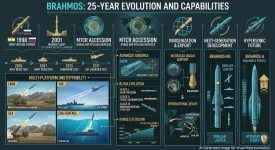
The BrahMos-NG itself represents a major evolutionary leap over the original BrahMos.
While the current air-launched BrahMos weighs approximately 2.65 tonnes, open-source data reveals that the NG variant will weigh just 1.33 tonnes and feature a sleeker, smaller airframe.
Its reduced footprint will allow the IAF to heavily arm a wider variety of fighter jets.
For instance, the indigenous LCA Tejas fighters will be able to carry two BrahMos-NG missiles, while heavy air superiority fighters like the Su-30MKI could carry up to four. This compact design drastically multiplies the combat payload and strike flexibility of the Indian air fleet.
It should be noted that while the delay and redesign have been confirmed by BrahMos Aerospace, the specific requests for an indigenous AESA seeker and extreme Mach 3.5 terminal maneuvers remain unverified by official government channels.
Until formally announced by the Ministry of Defence or programme officials, these reported enhancements reflect informed insights from within the defence sector rather than confirmed public policy.