- Views: 1K
- Replies: 3
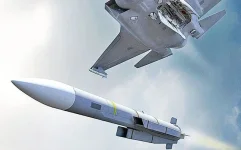
In a significant move to bolster the Indian Air Force’s (IAF) offensive capabilities, the Defence Acquisition Council (DAC) has cleared the procurement of more SPICE-1000 precision guidance kits from Israel.
This approval was part of a major defence spending package worth ₹79,000 crore, authorised on December 29, 2025.
These advanced kits are designed to transform standard gravity bombs into sophisticated, long-range precision weapons.
Enhancing Precision with Israeli Tech
The SPICE (Smart, Precise Impact, Cost-Effective) system, manufactured by Israel’s Rafael Advanced Defence Systems, is a guidance kit that fits onto standard unguided bombs.The newly approved SPICE-1000 variant is tailored for 1,000-pound (approx. 450 kg) general-purpose warheads, such as the Mk-83.
Unlike traditional laser-guided bombs that can be hindered by cloud cover, the SPICE-1000 employs a unique "scene-matching" technology.
Its Automatic Target Acquisition (ATA) system uses an electro-optical/infrared (EO/IR) seeker to scan the ground and compare real-time images with pre-loaded intelligence data.
This ensures the bomb hits its target with a Circular Error Probable (CEP) of less than three metres, even in environments where GPS signals are jammed.
Equipped with fold-out wings and tail fins, the weapon can glide for approximately 100 kilometres, allowing IAF pilots to release it from a safe standoff distance well outside the range of most enemy air defence systems.
This capability builds upon the IAF's prior combat experience with the heavier SPICE-2000 variant, which was notably employed during the 2019 Balakot airstrikes to target terrorist camps.
Indigenous Gaurav Gains Momentum
Parallel to these imports, the Defence Research and Development Organisation (DRDO) is making rapid strides with its indigenous counterpart, the 'Gaurav' Long Range Glide Bomb (LRGB).A heavier 1,000 kg class weapon, Gaurav is being developed by the Research Centre Imarat (RCI) in Hyderabad, with Adani Defence and Bharat Forge serving as key production partners.
The Gaurav system utilises a High Speed Low Drag (HSLD) bomb body integrated with a wing kit to extend its range.
Recent trials conducted between April 8-10, 2025, involving the Su-30MKI fighter jet, successfully demonstrated the weapon's ability to strike targets up to 100 kilometres away.
While it primarily relies on a hybrid Inertial Navigation System and Satellite Navigation (INS/SATNAV) for guidance, it can also optionally use Semi-Active Laser Homing (SALH) for increased terminal accuracy if a target is illuminated by a laser designator.
A Tiered Strategic Approach
Defence analysts observe that the IAF is adopting a "high-low" mix for its aerial arsenal.The Israeli SPICE-1000, estimated to cost around $480,000 per unit, provides a premium, all-weather solution for high-value targets that are heavily defended or require surgical precision without collateral damage.
In contrast, the indigenous Gaurav offers a cost-effective solution for mass employment.
Similar to the Russian UMPK glide bombs used extensively in recent conflicts, the Gaurav allows the IAF to deliver heavy ordnance in large volumes against fixed infrastructure such as fuel depots or airfields.
Although the current version of Gaurav lacks the autonomous scene-matching seeker of the SPICE—making it more dependent on external designation for pinpoint accuracy—it represents a crucial step towards self-reliance.
Future upgrades by the DRDO are expected to incorporate electro-optical seekers into the Gaurav, potentially bridging the technological gap with the SPICE family and further reducing India's reliance on foreign defence imports.