India is aggressively expanding its military manufacturing capabilities to build a robust "surge capacity" in light of the drawn-out Russia-Ukraine war.
Defence Minister Rajnath Singh has recently emphasised the necessity of preparing for unpredictable conflicts that could last anywhere from a few months to five years.
Acknowledging that extended warfare requires absolute self-reliance, the government is heavily focusing on creating a domestic industrial base that can consistently supply the armed forces during prolonged engagements, removing the vulnerability of relying on external support.
This strategic shift is directly influenced by the severe supply chain and production bottlenecks witnessed globally due to the Eastern European conflict.
With ongoing security challenges along its borders with China and Pakistan, New Delhi views a highly dependable domestic supply chain as a matter of vital national security.
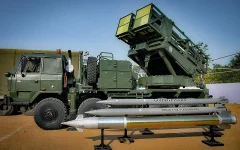
Consequently, India is prioritising the rapid, scalable production of essential combat assets—such as artillery systems, advanced drones, and heavy ammunition—to guarantee sustained combat readiness over long-term operations.
These efforts perfectly complement the "Aatmanirbhar Bharat" and "Make in India" initiatives, which are designed to drastically cut the nation's historical reliance on foreign arms imports.
Russia's struggle to meet India's military demands due to its own wartime requirements has further accelerated this transition.
Backed by substantial policy reforms—including "Positive Indigenisation Lists" that restrict imports and a push for greater private sector participation—India is cultivating a highly resilient defence ecosystem.
These investments are already yielding historic results; the country's annual defence production reached an unprecedented ₹1.51 lakh crore in the 2024-25 financial year, accompanied by record defence exports, pushing India closer to its ambitious target of ₹3 lakh crore in manufacturing output by 2029.