The Defence Research and Development Organisation (DRDO) has achieved a major breakthrough with its next-generation Astra Mk2 Beyond-Visual-Range Air-to-Air Missile (BVRAAM).
Foundational integration of the weapon system is now finishing up across primary fighter jets of the Indian Air Force (IAF).
Specifically, the missile has been successfully synced with the Bars radar system of the Su-30MKI fighter, which will be the first platform to carry the weapon.
Integration work is also rapidly advancing for the indigenous Tejas Mk-1A, utilising India’s own secure data link systems.
Furthermore, recent updates from April 2026 confirm that preliminary trials validating the aerodynamics and propulsion of the missile have been successfully cleared.
Representing a massive technological upgrade over the earlier Astra Mk1, the Astra Mk2 is designed to establish total air superiority.
Thanks to a newly incorporated dual-pulse solid rocket motor, the weapon's engagement range has been pushed to an impressive 200 to 240 kilometres under high-altitude conditions.
This substantial increase in striking distance—more than double the 110-kilometre range of its predecessor—promises to fundamentally change how the IAF approaches long-distance aerial combat.
A central achievement in this developmental phase is the successful validation of the missile’s indigenous Ku-band Active Electronically Scanned Array (AESA) seeker and its two-way data link.
These advanced components provide precise mid-flight course corrections and deadly accuracy during the final approach to the target.
Crucially, the seeker is equipped with Electronic Counter-Countermeasures (ECCM), making the missile highly resistant to enemy jamming attempts.
Together, these systems allow the weapon to function seamlessly within a modern, network-linked battlefield where live targeting data is instantly shared among various military assets.
Perhaps the greatest tactical advantage of the Astra Mk2 is its capacity for collaborative guidance.
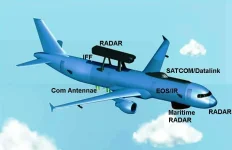
Various aircraft, including the Su-30MKI, Tejas Mk-1A, and Netra Airborne Early Warning and Control (AEW&C) planes, can actively participate in a single attack sequence.
By sharing secure targeting updates through the IAF’s interconnected digital network, one aircraft can safely launch the missile from a distance while another platform closer to the combat zone guides the weapon to its target.
This collaborative flexibility drastically improves pilot safety and mission success rates.
To solidify this new capability, the Indian Air Force is preparing to order an estimated 700 Astra Mk2 missiles.
While the primary carriers will be the frontline Su-30MKI and Tejas Mk-1A fleets, recent open-source reports indicate that the IAF and DRDO are also exploring feasibility studies to equip the Mirage 2000 "Vajra" jets with this weapon.
This large-scale induction highlights India’s decisive shift away from foreign imports towards self-reliance in advanced air-to-air munitions.
When compared to regional threats, the Astra Mk2 stands as a highly credible deterrent.
It is expected to easily outperform the export-version PL-15E missiles currently used by Pakistan, which have an estimated range of just 145 kilometres.
Furthermore, the new Indian missile offers performance that closely matches China’s domestic PL-15 weapon, bringing vital balance to the evolving aerial security environment in South Asia.
Having recently cleared preliminary testing, the Astra Mk2 programme is now officially transitioning to integrated user trials.
These upcoming tests will be conducted with active frontline fighter squadrons to verify how the weapon performs in realistic, high-pressure combat situations.
The trials will stringently test the missile's maximum range, its AESA seeker, anti-jamming defences, and its ability to communicate across the military network.
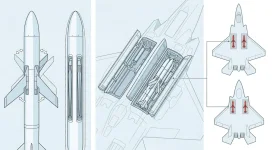
Looking ahead, DRDO is also actively developing a specialised folding-fin variant of the Astra Mk2 to fit safely inside the internal weapon bays of India's future stealth aircraft, such as the Advanced Medium Combat Aircraft (AMCA) and the Ghatak combat drone.