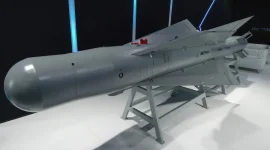
In a major development for India air superiority, Moscow has greenlit the sale of its formidable R-37M ultra-long-range air-to-air missile to New Delhi.
Throughout March and April 2026, reports have confirmed that Russian defence manufacturers received Kremlin authorization to supply this weapon to the Indian Air Force (IAF).
This approval marks a direct and strategic countermeasure to the rapidly shifting balance of combat airpower in the region.
Addressing BVR Challenges Post-Operation Sindoor
The push to acquire these advanced munitions stems directly from the tactical realities exposed during Operation Sindoor in May 2025.During this period, India’s frontline fighters, including the Sukhoi-30MKI and Dassault Rafale, encountered severe beyond-visual-range (BVR) challenges posed by Pakistan’s integration of the Chinese-made PL-15 missiles.
Equipped with active electronically scanned array (AESA) radar seekers and possessing ranges approaching 200 to 300 kilometres, the PL-15 created a formidable threat matrix.
By bringing the R-37M into its arsenal, the IAF aims to decisively reclaim the advantage in long-distance aerial engagements.
Acquisition Details and Platform Integration
Current defence estimates suggest that India is reviewing a potential $1.2 billion agreement to purchase roughly 300 units of the R-37M.The primary launch platform for this new capability will be the Su-30MKI, the heavyweight air superiority fighter that currently serves as the backbone of India’s combat fleet.
Equipping the Su-30MKI with these new missiles should be a highly streamlined process.
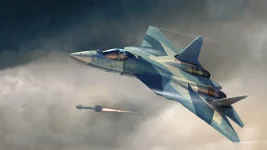
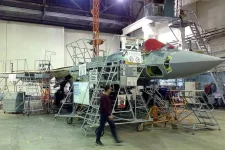
The R-37M is already fully operational on the Russian Su-30SM, a combat aircraft sharing significant structural and avionics DNA with India's MKI variant.
The necessary upgrades will largely consist of software modifications to the fighter’s Bars radar system and mission computers, allowing the aircraft to seamlessly interface with the missile's guidance and targeting protocols.
Each Su-30MKI is slated to carry two of these heavy missiles on its under-fuselage hardpoints, ensuring that the aircraft's aerodynamic stability and diverse mission capabilities remain uncompromised.
Unmatched Reach: The "AWACS Killer" Profile
Purpose-built for extreme distances, the R-37M boasts an operational range of up to 400 kilometres when fired from fast, high-altitude interceptors like the MiG-31BM.When launched from the Su-30MKI, its effective reach is projected to be slightly lower at around 350 kilometres.
Despite this minor reduction, the missile will comfortably outrange the vast majority of air-to-air weapons actively deployed today, serving as a direct counter to emerging ultra-long-range threats like the Chinese PL-17.
Widely known in aviation circles as an "AWACS killer," the R-37M is not primarily designed for close-quarters dogfighting against agile fighter jets.
Instead, it is engineered to eliminate high-value airborne assets (HVAA) operating deep behind enemy lines, such as Airborne Early Warning and Control (AEW&C) systems, mid-air refuelling tankers, and electronic warfare hubs.
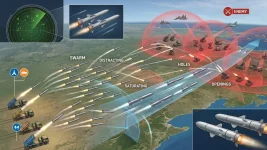
Its lethality is guaranteed by a dual-pulse solid rocket motor that propels it to hypersonic terminal speeds of Mach 6 (over 7,400 km/h), drastically shrinking the time adversaries have to deploy electronic countermeasures or take evasive action.
In terms of its flight profile, the weapon relies on an inertial navigation system supported by mid-course data updates.
Once it enters the final stage of its flight, an advanced active radar homing seeker takes over to pinpoint the target.
Furthermore, the missile utilizes a lofted trajectory—climbing to the upper atmosphere immediately after launch before plunging down toward its objective.
This high-altitude flight path conserves kinetic energy, allowing the missile to maintain its extreme velocity during the terminal phase and effectively intercept distant or evading targets.
Indigenous Ambitions: Bridging the Gap to Astra Mk3
While the R-37M delivers unparalleled immediate firepower, Indian defence planners view this acquisition as a highly capable stopgap measure.The nation’s long-term vision is firmly rooted in self-reliance and the continued development of indigenous aerospace technology.
This includes the impending Astra Mk2, designed to strike targets beyond 200 kilometres, and the highly anticipated Astra Mk3.
The Mk3 variant, which successfully flight-tested its advanced Solid Fuel Ducted Ramjet (SFDR) propulsion system in early 2026, is expected to eventually provide a domestic 350-kilometre strike capability.
Ultimately, introducing the R-37M will give the Indian Air Force an instant and crucial enhancement in its ultra-long-range combat capabilities.
This strategic purchase will effectively hold the line and deter regional threats until India's domestic, next-generation missile systems are fully operational and ready for frontline service later this decade.