- Views: 2K
- Replies: 3
India’s indigenous strike capabilities have reached a significant milestone following the formal approval for the development of the Long Range Air-to-Surface Supersonic Cruise Missile (LRASSCM).
Dr. Samir V. Kamat, Chairman of the Defence Research and Development Organisation (DRDO), confirmed in early 2026 that the project has received the Acceptance of Necessity (AoN), greenlighting the creation of a high-speed, precision-guided weapon for the Indian Air Force (IAF).
Technical Innovation and Performance
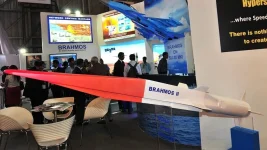
The LRASSCM is engineered to maintain supersonic speeds throughout its entire flight duration.Analysts indicate that the missile will likely utilize liquid fuel ramjet technology, a sophisticated propulsion system similar to that found in the world-renowned BrahMos missile.
By flying at multiple times the speed of sound, the LRASSCM significantly minimizes the time an adversary has to react, allowing it to penetrate advanced integrated air defence networks more effectively than slower, subsonic alternatives.
While specific performance data remains restricted, the missile is designed for a standoff range estimated to reach up to 1,000 kilometres.
This allows IAF pilots to neutralize high-value land or maritime targets from a safe distance, well beyond the reach of enemy surface-to-air missiles.
Strategic Integration with the Su-30MKI
The IAF has designated the Sukhoi Su-30MKI as the exclusive initial platform for this new weapon system.As the primary multirole fighter of the fleet, the Su-30MKI was chosen for its exceptional payload capacity and the structural strength required to carry heavy supersonic munitions.
The integration process will follow a phased timeline:
- Carriage Trials: Testing the physical and aerodynamic fit of the missile on the aircraft.
- Separation Tests: Ensuring the missile safely detaches from the pylon during flight.
- Powered Flight Trials: Full-scale testing of the missile's engine and guidance systems.
Strengthening National Autonomy
The development of the LRASSCM is a vital component of the Aatmanirbhar Bharat initiative.By producing a completely indigenous long-range supersonic cruise missile, India is reducing its reliance on foreign military hardware and joint-venture products.
Additional open-source data suggests that the LRASSCM will eventually be refined into a more compact form factor.
While the Su-30MKI is the debut platform, future variants may be scaled for use on other fighters such as the HAL Tejas Mk2 and the Rafale, further diversifying the IAF’s offensive options in contested environments along the nation's borders.