- Views: 5K
- Replies: 12
As the Indian Air Force (IAF) deliberates on its critical requirement for 114 Multi-Role Fighter Aircraft (MRFA), defence analysts are warning that the service risks repeating a costly historical error.
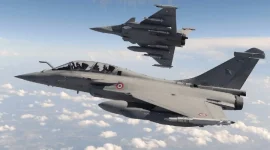
The proposed acquisition, likely favoring the Dassault Rafale, bears striking similarities to the Mirage-2000 upgrade programme of the late 2000s—a venture that promised modernisation but ultimately delivered diminishing returns due to chronic delays.
The Ghost of the Mirage Upgrade
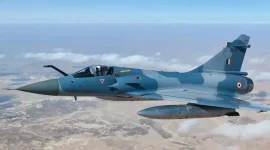
The cautionary tale begins with the IAF's decision to modernise 51 Mirage-2000H/TH aircraft to the Mirage 2000-5 Mk2 standard.Signed in 2011, the deal was valued at approximately ₹10,900 crore for the upgrade alone, with total costs for missile packages (MICA) pushing the figure significantly higher (estimated around ₹18,000 crore in total).
On paper, the upgrade was comprehensive. It equipped the fleet with new radar systems, glass cockpits, advanced electronic warfare (EW) suites, and MICA interceptor missiles.
However, execution delays plagued the programme. By the time the final upgraded aircraft were inducted around 2015–2016, the technology was already being superseded.
The RDY-2 mechanical radar, while capable, was a generation behind the Active Electronically Scanned Array (AESA) radars already operational on global platforms like the Typhoon and later Block Rafales.
Similarly, the EW suite faced stiff competition from emerging Chinese jamming capabilities, and the MICA missile, though potent, was soon outranged by China’s PL-15 beyond-visual-range (BVR) missile.
The expensive upgrade extended the fleet’s relevance by perhaps a decade, falling short of the long-term dominance initially envisioned. Today, while the Mirage 2000 remains a formidable asset in skilled hands, it is no longer considered a top-tier BVR combatant.
The 114-Jet Dilemma
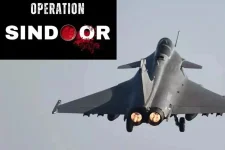
Fast-forward to 2025, and the IAF finds itself at a similar strategic juncture. The proposal to acquire 114 fighters (or a split 54+60 order) under a "Make in India" initiative is seemingly attractive.Proponents highlight the benefits of 60% indigenous content, the establishment of a Dassault-HAL final assembly line in Bengaluru or Nagpur, and a "strategic partnership" intended to endure until 2070.
However, a closer examination of the timelines reveals potential pitfalls. Even if a contract were signed immediately in 2026, the industrial reality suggests that the first Indian-assembled Rafale would unlikely roll out before 2030–2031. Meaningful squadron strength would not be achieved until 2032–2033.
By this period, the indigenous landscape will have shifted dramatically.
The Advanced Medium Combat Aircraft (AMCA)—India’s own fifth-generation stealth fighter programme—is projected to be in advanced flight testing by 2030.
Prototypes featuring stealth shaping and mature Uttam AESA radars will likely be airborne, with production engines undergoing qualification.
By the time the final "Make in India" Rafales are delivered in the mid-2040s, the AMCA Mk1 is expected to be entering service with sixth-generation capabilities, including sensor fusion, AI-driven mission systems, and directed-energy countermeasures.
A Junior Partner to Indigenous Stealth
This timeline creates a strategic paradox: the IAF could find itself operating an imported 4.5-generation platform alongside a superior, home-grown 5.5-generation stealth fighter.The AMCA is designed to outperform the Rafale in key metrics such as stealth and sensor integration, rendering the imported jets strategically junior the moment they arrive.
Furthermore, issues of sovereignty and integration remain unresolved. Integrating indigenous next-generation weapons—such as the Rudram-II and III anti-radiation missiles, the Smart Anti-Airfield Weapon (SAAW), or hypersonic BrahMos-II variants—onto the Rafale would likely require French approval and source code access.
Historical precedence suggests this is not straightforward. Just as the IAF waited for Mirage-2000 upgrades and is currently awaiting full Meteor missile integration on its existing 36 Rafales, future integrations could face delays as the manufacturer prioritises its own air force and premium export clients.
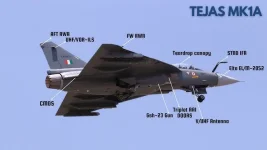
In contrast, the indigenous Tejas Mk2 and AMCA will offer unrestricted freedom for weapon integration.
The Tejas Mk2 Factor
The urgency for a foreign import is further challenged by the Tejas Mk2 programme.Already sanctioned and scheduled for its maiden flight in 2027, the Mk2 is designed to match or exceed the Rafale’s avionics and weapon load by the early 2030s. It will feature the indigenous GaN-based Uttam AESA radar, an EW suite comparable to the Rafale’s, and a high thrust-to-weight ratio.
Critics argue that committing roughly ₹1.5 lakh crore to a foreign production line may divert critical funds and industrial focus from these indigenous programmes just as they are maturing.
Strategic Safeguards Required
Defence experts suggest that the only rational justification for a new Rafale order would be the inclusion of iron-clad guarantees that transcend standard "offset" clauses. These would need to include:- Full Source Code Transfer: Immediate handover of mission software codes to allow independent modifications.
- Unrestricted Weapon Integration: The sovereign right to integrate Indian sensors, EW modules, and weapons without seeking foreign clearance.
- Open Architecture: A guarantee that the platform can be retrofitted with AMCA-derived avionics in the future.
- Future-Proofing Roadmap: A binding agreement to evolve the Indian fleet into a "Rafale-NG" standard, incorporating technologies such as stealth coatings and directed-energy systems.
Conclusion
By 2035, the Indian Air Force will likely operate three primary fighter types: the Tejas Mk2, the AMCA, and the Rafale.Two of these will be world-class platforms designed, upgraded, and armed within India. The third risks being a legacy platform dependent on external permissions to remain relevant.
The parallels with the Mirage-2000 are difficult to ignore. As the Ministry of Defence reviews its options, the choice lies between a comfortable but potentially myopic import strategy and a bolder commitment to indigenous sovereignty.
History is watching, and the ghost of the Mirage upgrade serves as a stark reminder of the cost of delayed modernisation.