Analysis Exploring the IAF Plan B if 114 Rafale Fighter Deal Hits a Dead End

Exploring the IAF Plan B if 114 Rafale Fighter Deal Hits a Dead End


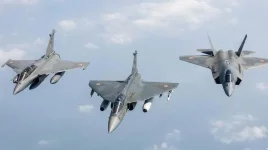
The Indian Air Force's (IAF) pursuit of 114 Rafale fighter jets through the Multi-Role Fighter Aircraft (MRFA) programme is a monumental defence initiative, estimated to cost roughly ₹3.25 lakh crore.

Although talks between New Delhi and Paris are advancing—with expectations of formalising the agreement in 2026—critical hurdles remain.

Key sticking points include France sharing the vital source codes needed for integrating Indian-made weapons, transferring advanced technologies, and seamlessly syncing the Rafale with the IAF's secure Integrated Air Command and Control System (IACCS).

The Network-Centric Warfare Backbone​

These demands go far beyond basic technical requirements; they are essential for modern warfare.

The IACCS forms the digital backbone of India's combat strategy, linking fighter squadrons with radar stations, command centres, and surface-to-air missiles to create a unified, real-time combat network.

If a newly purchased fighter cannot fully connect to this closed ecosystem, it severely restricts the military's reaction time and battlefield flexibility during a potential multi-front conflict.

Moreover, India is actively moving away from total dependence on foreign manufacturers.

True defence sovereignty means having the freedom to upgrade mission computers and mount domestic weapons without seeking permission from the original builders.

With India’s defence industry maturing rapidly, ensuring that new jets can fire homegrown systems like the Astra Mk2 air-to-air missiles, the Rudram anti-radiation missiles, and the upcoming BrahMos-NG cruise missiles is now an absolute priority.

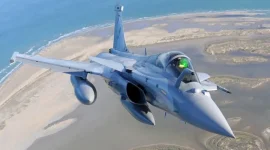
France’s Rafale is a proven platform in India, with 36 jets already serving effectively following a 2016 emergency purchase.

Procuring an additional 114 units—of which around 96 are planned to be built in India under a technology transfer agreement—would simplify pilot training, streamline spare parts supply, and utilise existing maintenance bases.

Despite these massive logistical advantages, New Delhi will be forced to look elsewhere if the final contract does not guarantee full operational independence.

This reality brings forward a critical question for national security: if the mega-deal stalls, what is the IAF's backup plan?

Evaluating the Domestic and Foreign Alternatives​

Finding an immediate substitute is complex.

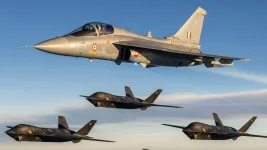
The domestic Tejas Mk2 medium-weight fighter is widely viewed as the long-term backbone of the IAF.

It promises major upgrades over the current Tejas Mk1A, featuring a powerful GE-F414 engine, advanced Uttam AESA radar using superior Gallium Nitride (GaN) technology, and a 6.5-tonne payload capacity.

However, the Mk2 is still navigating its prototype phase, with its maiden flight targeted for 2026. Mass production will likely not commence before the end of the decade, meaning it cannot instantly bridge the IAF's urgent fighter squadron shortage on its own.

Exploring other foreign fighters reveals distinct drawbacks for each option:
  • Boeing F-15EX: Delivers massive payload capacity but operates as a heavyweight fighter, which would drastically increase fuel and operating budgets.
  • Sukhoi Su-35: A highly capable Russian platform, but current global geopolitical tensions raise serious doubts about reliable spare parts and long-term supply chain support.
  • Lockheed Martin F-16: Often viewed as a less suitable choice due to its older baseline design and political sensitivities regarding its use by regional adversaries.
Looking at stealth options, Russia’s fifth-generation Su-57 looks impressive in theory, yet questions about its actual stealth performance and mass production capabilities make it a risky immediate investment.

On the other end of the spectrum, Sweden’s Gripen E offers modern electronics and low flight costs. Unfortunately, the Gripen relies heavily on an American-made engine and various European components, exposing India to the risk of multiple foreign vetoes during times of conflict.

The Logistical Weight of a New Fleet​

Furthermore, inducting any brand-new foreign aircraft type forces the IAF to build a completely new support ecosystem from scratch.

This means spending billions on new ground equipment, creating separate training courses for pilots and mechanics, and undertaking years of testing to pair Indian weapons with the new jets.

Expanding the already familiar Rafale fleet avoids these massive delays and hidden costs.

Because of these factors, the Rafale stands out as the most logical and cost-effective choice to fulfill the MRFA requirement.

The benefits of using the same tools, facilities, and procedures that the IAF already possesses are simply too great to ignore—as long as France meets India's terms.

However, the days of India simply buying off-the-shelf hardware are over.

The modern Indian defence strategy is firmly rooted in long-term self-reliance. Gaining total control over aircraft software, integrating homegrown sensors, and securing unrestricted compatibility with domestic command networks are no longer considered bonus features; they are non-negotiable strategic necessities.

While talks are highly likely to proceed given the deep strategic partnership and mutual interests between New Delhi and Paris, India remains resolute.

The nation is fully justified in demanding that any future multi-billion-dollar fighter deal guarantees the freedom to upgrade the jets domestically and deploy them without foreign interference.

Should these core requirements remain unfulfilled, triggering a Plan B—such as aggressively accelerating the Tejas Mk2 and Advanced Medium Combat Aircraft (AMCA) programmes—will shift from a theoretical discussion to an urgent reality.

It underscores a vital lesson: for a rising global power, the freedom to operate independently is just as crucial as the combat power of the aircraft it flies.
 
Are you sure about Russian willingness to share technology or are you going by what is projected in the media?? If you think the Su-30 MKI made in Nashik is fully indigenous, then I have an offer to sell you an excellent property in US at a dirt cheap price. The address is 1600, Pensylvannia Avenue, at Washinton DC. You can have it for just $ 1 million. Title is absolutely clear.
By the way SU30 is Made in India, and I am not at all quoting or stressing that the SU30 is completely indegenous. It cannot be like Tejas or upcoming AMCA which will be fully indegenous. But still SU 30 control is far more advanced, we are not performing only screwdrivering in SU30 that is the wrong concept inscribed in our minds due to false narrative spread. By the way thanks for your offer in US but least interested in that.
 
By the way SU30 is Made in India, and I am not at all quoting or stressing that the SU30 is completely indegenous. It cannot be like Tejas or upcoming AMCA which will be fully indegenous. But still SU 30 control is far more advanced, we are not performing only screwdrivering in SU30 that is the wrong concept inscribed in our minds due to false narrative spread. By the way thanks for your offer in US but least interested in that.
How many times have you visited either the Nashik or Koraput factory forget about the others that are involved. If you had you would not be saying what you are. I have been there 10s of times.
 
Perfection is the enemy of the good.

India needs fighters.

Light weight fighters are dealt with - Mk1A (unless it is abandoned due to severe, hidden delay coming to light, something that is quite possible with HAL).

Medium weight fighters are not dealt with - Rafale 'Made in India' may never happen. Tejas Mk2 will probably not be delivered until the middle of the next decade.

Heavy fighters are available relatively quickly - Su-30MKI from Nashik.

So, while India needs light and medium fighters, more Su-30MKI may be the only fighters IAF can get into service in the next 5 years.

Another alternative is scrapping Mk1A if another multi-year delay comes to light and getting Gripen E or scrapping Tejas Mk2 and getting Gripen E. SAAB say that Gripen E deliveries would start within 3 years of contract signature.
 
Last edited:
A combined fleet of 114 Rafale F4 and 24 Rafale F5 would help address the IAF's fighter squadron shortfall while ensuring common logistics, training and maintenance. Manufacturing most of these aircraft in India under the MRFA program would also strengthen the domestic aerospace industry through technology transfer, higher indigenous content and greater participation by Indian private and public-sector companies. India has already granted Acceptance of Necessity (AoN) for the procurement of 114 MRFA aircraft, with most expected to be manufactured in India,India should adopt a dual-track fifth-generation fighter strategy.
The Tejas Mk2 is expected to become one of India's most capable 4.5-generation multirole fighters. However, delays in the supply of GE F414 engines could affect the rollout of the initial prototypes, potentially pushing development milestones further. After prototype testing, ADA evaluation, and certification, the Indian Air Force could induct the first IOC-standard squadrons before full operational capability is achieved.
Simultaneously, India should accelerate the AMCA program through a Public-Private Partnership under a Special Purpose Vehicle (SPV). HAL should work alongside major private defence companies—including Tata Advanced Systems, L&T, BEL, Dynamatic Technologies, Bharat Forge, BEML, Data Patterns, Godrej Aerospace, Mahindra Defence, MTAR Technologies, Astra Microwave, VEM Technologies, Reliance Defence, Adani Defence, and over 100 MSMEs—to create a robust indigenous aerospace manufacturing ecosystem capable of delivering large numbers of fifth-generation fighters.
As an additional strategic option, India could evaluate collaboration with Russia on an Indianized fifth-generation fighter derived from the Su-57 platform (AHCA concept), incorporating indigenous mission systems and a future 140–150 kN indigenous engine. If pursued, such a parallel production line could complement the AMCA program and help maintain a numerical edge against rapidly expanding regional fifth-generation fleets while strengthening India's aerospace industrial base.
A balanced mix of Tejas Mk2, AMCA, and a potential second fifth-generation platform, supported by both public and private industry, would enhance self-reliance, increase production capacity, and strengthen the Indian Air Force's long-term combat capability.
 
A combined fleet of 114 Rafale F4 inclusive 90F4 std phase 1 & 24 Rafale F5 std (phase2) along with 36 Already precurment (F3.1std upgrade to F4 std) plus 26 Naval Rafale M and future 31
additional Rafale M F5 std .Total 207 Aircraft with 96 manufacturing in india with 25 % initial to 60% indian content during final phase.

Total 11 squardon of Rafale (16-18) would help address the (IAF's & Naval fighter) squadron shortfall while ensuring common logistics, training and maintenance. Manufacturing most of these aircraft in India under the MRFA program would also strengthen the domestic aerospace industry through technology transfer, higher indigenous content and greater participation by Indian private and public-sector companies. The Government of India has already accorded Acceptance of Necessity (AoN) for the procurement of 114 Multi-Role Fighter Aircraft (MRFA), with the majority of the aircraft planned to be manufactured in India under the 'Make in India' initiative. This acquisition will bridge the capability gap until indigenous platforms such as the Tejas Mk2 and AMCA enter large-scale service, while substantially enhancing the IAF's long-range strike, air superiority, and deterrence capabilities.
During the Rafale mid-life upgrade (MLU), India should seek maximum indigenous integration under a joint India–France roadmap. This could include the integration of an advanced indigenous 360° AESA radar architecture based on future Uttam radar developments (subject to technical feasibility), a next-generation 140 kN-class engine jointly developed with Safran for future applications, Astra Mk-3 beyond-visual-range air-to-air missiles, BrahMos-NG air-launched missiles (subject to aircraft payload and integration limits), Indian mission-command software, and NAVIC-based navigation alongside existing GPS/GNSS capabilities.
Such an upgrade would significantly enhance operational sovereignty by reducing dependence on foreign weapon systems, increasing indigenous content, and enabling seamless interoperability with the Indian Air Force's network-centric warfare architecture. It would also support the broader goal of standardizing indigenous weapons and avionics across platforms such as the Tejas Mk2, Rafale, and AMCA, future AHCA (Indian derivatives of FGFA Su57E) thereby simplifying logistics and strengthening India's aerospace ecosystem.
 

Forum statistics

Threads
7,741
Messages
67,613
Members
5,639
Latest member
geek
Back
Top