- Views: 3K
- Replies: 6
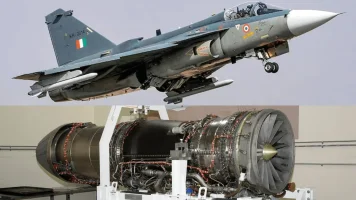
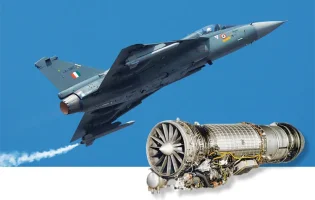
After a period of uncertainty regarding the production timelines of India's indigenous fighter program, significant clarity has emerged regarding the supply of engines, which has been a primary constraint for the Tejas Mk1A.
In a definitive update, Hindustan Aeronautics Limited (HAL) Chairman and Managing Director D.K. Sunil has confirmed that General Electric (GE) has formally committed to a distinct and accelerated delivery schedule for the F404-IN20 engines required to power the aircraft.
According to the newly established timeline, GE is set to supply 24 engines during the financial year 2026-27. Following this phase, the delivery rate is projected to increase to 30 engines annually starting from FY2027-28, eventually stabilizing at an average of 28 to 30 units per year.
Looking at the long-term supply chain, the projected flow of engine deliveries over the coming financial years is expected to follow a sequence of 20, 32, 32, and 30 units.
This detailed schedule provides both HAL and the Indian Air Force (IAF) with a realistic roadmap for when the manufacturing lines can reach peak capacity.
These figures are underpinned by substantial contractual commitments rather than mere estimates.
HAL has secured firm orders for a total of 212 F404-IN20 engines across two major agreements: an initial contract for 99 engines signed in 2021, and a follow-on deal for 113 engines finalized in late 2025.
This extensive order book is directly aligned with the IAF’s requirements, covering the 83 Tejas Mk1A aircraft currently under contract as well as the anticipated additional order for 97 fighters.
Crucially, this commitment from the US-based manufacturer is supported by tangible operational upgrades.
GE has invested in expanding its production capabilities, which includes the establishment of a dedicated manufacturing line and the integration of advanced automation systems.
These improvements are specifically targeted at the testing phase—previously a bottleneck—where engines are subjected to rigorous quality checks before dispatch.
These measures are intended to resolve the supply chain disruptions, such as those involving sub-tier suppliers, which had previously hampered delivery schedules.
For observers of the Indian defence sector, this development marks a pivotal shift.
The delay in engine supplies had forced the IAF to recalibrate its squadron induction plans while continuing to operate ageing fleets of MiG-21s and Jaguars.
With GE’s augmented capacity now operational and HAL’s leadership expressing confidence in the revised schedule, the pathway to mass production appears significantly more robust.
The implications of this stabilized supply chain are strategic as well as industrial. A steady arrival of 30 engines per year will allow HAL to produce approximately two squadrons of fighter jets annually, provided that final assembly and flight-testing processes remain synchronized.
This rate of production is essential for restoring the IAF’s combat squadron strength, particularly at a time when regional security challenges demand a credible and growing air power capability.