- Views: 2K
- Replies: 7
India’s ambition to build its own aircraft engines is facing a major roadblock because the country lacks a local facility to test them at high altitudes.
A senior scientist from the Gas Turbine Research Establishment (GTRE)—a laboratory under the Defence Research and Development Organisation (DRDO)—recently disclosed that an Indian aero-engine has been sitting in Russia for nearly three years.
Dr Ganesan explained that the engine is simply waiting for its turn to be tested at a Russian High-Altitude Engine Test Facility (HAETF).
This situation highlights a long-standing weakness in India’s push for self-reliance in the defence and aviation sectors.
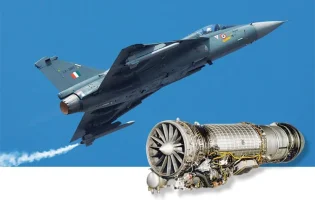
For many years, crucial projects like the Kaveri engine, which was initially meant for the Light Combat Aircraft (LCA) Tejas, have been forced to rely on overseas testing centres.
Specifically, India has depended on Russian institutes like the Central Institute of Aviation Motors (CIAM) and the Gromov Flight Research Institute (GFRI).
These foreign centres are necessary because they can simulate extreme flying conditions, including altitudes exceeding 13,000 metres.
Testing under these intense conditions is the only way to confirm an engine's stability, power, and safety before it can be used in real military operations.
India’s heavy reliance on these foreign sites exists simply because there are no similar, full-scale testing chambers back home. Because of this, vital engine trials have to be booked overseas.
However, time slots at these highly specialised Russian facilities are limited and highly sought after by many countries, leading to massive waiting periods.
These scheduling nightmares have repeatedly pushed back important deadlines for the Indian aerospace industry, including tests where the engine is mounted on a modified Ilyushin Il-76 transport aircraft to see how it performs in actual flight.
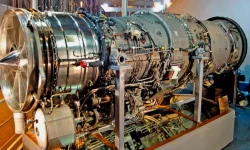
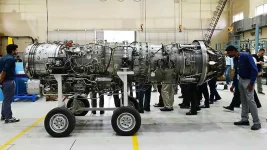
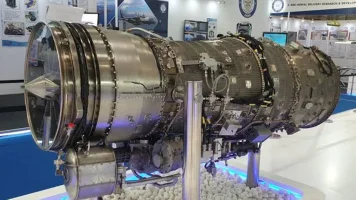
The problem is now severely affecting the Kaveri Derivative Engine (KDE), a dry, non-afterburning variant that produces around 49 kilonewtons (kN) of thrust.
This engine is currently being developed for India’s upcoming stealth drones, such as the Ghatak Unmanned Combat Aerial Vehicle (UCAV).
While early high-altitude chamber tests were successfully completed in Russia in late 2022, getting further test slots has been a massive challenge.
While some reports mentioned delays of about nine months, Dr Ganesan’s recent statement reveals a much worse reality: a three-year backlog. This prolonged wait is likely due to a mix of heavy international demand for the test facilities and shifting geopolitical situations.
The consequences of these delays are severe. They stretch out project timelines and drastically increase costs due to long-term storage, complex logistics, and shipping fees.
Furthermore, not having quick access to a test facility means engineers cannot rapidly fix problems and improve the engine design.
On a larger scale, depending on other nations for such critical testing creates a strategic vulnerability, leaving India’s defence projects at the mercy of foreign schedules and international political tensions.
To finally solve this problem, there is a renewed and urgent push to build testing infrastructure within India.
The DRDO recently took a major step by issuing a Request for Information (RFI) to build the National Aero Engine Test Complex (NAETC).
Expected to be set up either at Challakere in Karnataka or near Nagarjuna Sagar, this massive turnkey project will provide everything needed to test an engine domestically.
It will feature systems capable of simulating altitudes up to 15 kilometres and speeds over Mach 2, alongside dedicated rigs for testing compressors, turbines, and combustors.
This means India will soon be able to fully evaluate and certify its future high-thrust engines without ever leaving the country.
Defence experts believe that constructing the NAETC is the only way to break free from these endless delays.
Having a local high-altitude testing centre will allow GTRE scientists to test engines whenever needed, quickly solve engineering challenges, and build valuable domestic expertise.
Until this new complex is fully operational, the reality of a jet engine being stuck in a foreign country for three years remains a clear warning about the infrastructure gaps that are holding back India’s aerospace goals.