- Views: 3K
- Replies: 3
In a landmark development for India’s defence aerospace sector, the Gas Turbine Research Establishment (GTRE) has invited Indian industry to partner in the production of a high-power indigenous fighter jet engine.
This move marks a definitive shift from research-focused development to industrial-scale manufacturing, aiming to secure long-term technological independence for the nation’s air power.
From Laboratory to Shop Floor
Through a newly released Expression of Interest (EoI), GTRE—a premier laboratory under the Defence Research and Development Organisation (DRDO)—is seeking a "Development cum Production Partner."The objective is to identify capable Indian companies that can manufacture, assemble, and integrate a complex, next-generation military turbofan engine.
For decades, GTRE has led the research into indigenous aero-engines. Currently, the establishment is developing an Indigenous Advanced High Thrust Class Aero Engine in collaboration with a leading international engine house.
With the critical design phase now active, the programme is pivoting toward mass production and system integration, a stage where industrial expertise is vital.
A Complex Industrial Challenge
The scale of the project, as outlined in the EoI, presents one of the most sophisticated manufacturing challenges ever offered to Indian industry.The proposed engine comprises 11 major sub-systems, including high and low-pressure compressors, combustors, turbines, afterburners, and Digital Engine Control Units (DECU).
In total, the manufacturing partner will be responsible for handling approximately 23,000 individual parts across 34 assemblies and over 120 sub-assemblies.
The selected company will not function merely as a component supplier but as a core stakeholder, managing the entire production chain from tooling and fixture design to final assembly and testing infrastructure.
Selection Criteria and Goals
GTRE has set stringent criteria for potential partners, emphasizing that this initiative is about building a lasting ecosystem rather than executing a one-off order.- Eligibility: Participation is restricted to Indian public or private limited companies, including subsidiaries and joint ventures, that meet defence procurement norms.
- Capabilities: Applicants must demonstrate established aerospace quality systems, special process certifications, and expertise in complex system engineering.
- Deliverables: The partner must possess or establish the necessary infrastructure to deliver at least 18 engines as part of the initial production goals.
Strategic Context and Future Implications
This initiative is critical for the future of India’s indigenous fighter programmes, particularly the Advanced Medium Combat Aircraft (AMCA) and the Tejas Mk2.These platforms require engines with significantly higher thrust and modern efficiency standards compared to current operational fleets.
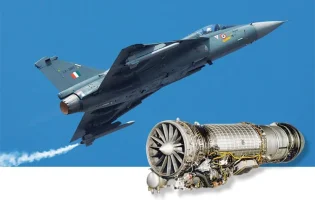
Historically, India has relied on imported engines—such as the American GE F404 and F414—to power its indigenous jets like the Tejas Light Combat Aircraft (LCA).
While effective, this reliance limits true strategic autonomy. By involving domestic industry at the early stages of this high-thrust engine's production, the DRDO aims to break this cycle of import dependence.
Open-source reports suggest that this high-thrust engine project likely aligns with recent government-to-government discussions involving France’s Safran, which has offered full technology transfer for co-developing a 110kN class engine for the AMCA.
If successful, this partnership will not only transform GTRE designs into flight-ready hardware but also elevate private Indian industry into the exclusive club of global military aero-engine manufacturers.