- Views: 1K
- Replies: 2
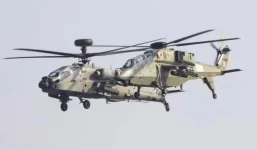
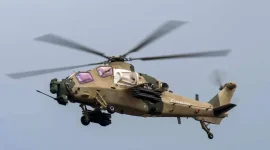
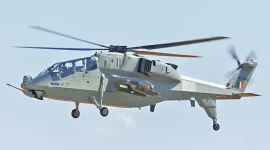
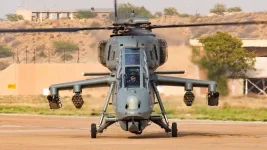
India's domestically built Light Combat Helicopter (LCH), the "Prachand", has achieved a crucial milestone by advancing past its initial flight certifications into a comprehensive weaponisation stage.
Designed and manufactured by Hindustan Aeronautics Limited (HAL), this development marks a significant leap forward for the aircraft.
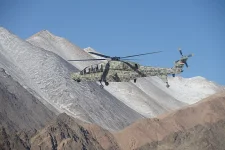
The Prachand was specifically engineered to meet the unique demands of high-altitude warfare, drawing directly on the strategic lessons learned during the 1999 Kargil War.
This current phase of upgrades is dedicated to equipping the helicopter with cutting-edge weaponry, thereby broadening its tactical utility on the battlefield.
This is especially vital for operations in extreme mountainous environments, such as the Siachen Glacier and Eastern Ladakh, where the Indian military confronts difficult terrain and heavily armoured adversaries.
Notably, the Prachand holds the global distinction of being the only attack helicopter capable of taking off and landing at altitudes of 5,000 metres (16,400 feet) while carrying a considerable load of weapons and fuel.
A primary highlight of this effort is the successful testing and incorporation of the HELINA (Helicopter-launched Nag) and Dhruvastra anti-tank guided missiles.
These sophisticated systems grant the Prachand the ability to conduct highly accurate strikes against reinforced structures and enemy tanks from a distance of up to 7 kilometres.
Equipped with advanced "fire-and-forget" technology, these missiles enable the flight crew to engage a target and instantly take evasive action to avoid enemy fire. This rapid relocation capability is essential for aircraft survivability when operating within areas protected by dense air-defence networks.
In addition to conventional armaments like its 20mm turret gun and 70mm rockets, the Indian Army is evaluating an innovative strategy to further enhance the helicopter's combat reach.
There are active plans to arm the Prachand with airborne loitering munitions, which are compact unmanned aerial vehicles (UAVs) weighing under 45 kilograms.
Often referred to as "suicide drones," these devices can be deployed mid-air to fly ahead of the helicopter, actively searching for and identifying threats.
Once airborne, they can remain in the sky for prolonged durations to relay real-time intelligence back to the crew before autonomously diving into designated targets upon receiving the command.
Integrating these loitering munitions transforms the LCH into an airborne deployment hub for autonomous weapons.
Functioning as a "loyal wingman," these drones significantly increase the pilot's observational and attacking range while keeping the manned helicopter safely out of direct hostile fire.
As the dynamics of modern warfare shift, the use of unmanned systems to detect and neutralise threats before traditional aircraft enter the combat zone is becoming a critical tactical advantage.
With the Indian government recently moving forward with the procurement of 156 Prachand helicopters in a major defence deal, these formidable aircraft will soon become a cornerstone of both the Indian Air Force and the Indian Army Aviation Corps, ensuring robust aerial security for years to come.