- Views: 2K
- Replies: 6
India is taking a major step toward total self-reliance in aerospace technology.
The Gas Turbine Research Establishment (GTRE), a vital wing of the Defence Research and Development Organisation (DRDO), is currently in talks with the Telangana state government to build a massive National Aero-Engine Test Complex.
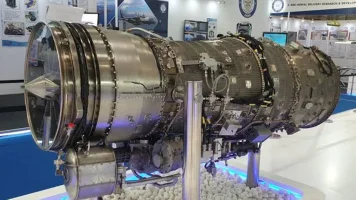
Slated for construction near the Nagarjuna Sagar dam on the Krishna River, this specialised facility is tailored for testing powerful 110–130 kilonewton (kN) class engines—a critical requirement for India's next generation of combat aircraft.
Powering the AMCA Mk-2
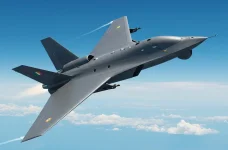
This new infrastructure will serve as the primary testing ground for the engine that will power the Advanced Medium Combat Aircraft (AMCA) Mk-2, India’s ambitious 5.5-generation stealth fighter.Furthermore, it will directly support the ₹61,000 crore joint venture between GTRE and the French aerospace giant, Safran.
While the initial AMCA Mk-1 jets will utilise American GE-F414 engines, this new Indo-French partnership aims to co-develop a robust, indigenous 130 kN thrust engine designed to give future Indian fighters "supercruise" capabilities.
Securing Defence Sovereignty
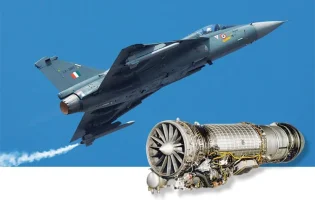
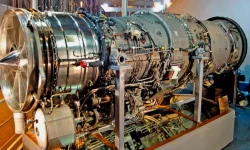
Historically, India has had to send its domestically developed engines—such as the legacy GTX-35VS Kaveri—abroad to facilities in Russia for high-altitude testing.This new complex in Telangana represents a strategic shift. By keeping the validation process within the country, India will eliminate its dependence on foreign test beds, ensuring total security and control over its classified stealth and propulsion technologies.
The High-Altitude Test Cell (HATC)
The centrepiece of this ambitious project is the High-Altitude Test Cell (HATC). Instead of physically transporting heavy jet engines to the Himalayas, engineers will use the HATC to artificially recreate the extreme conditions of flying above 40,000 feet.Testing a high-thrust engine requires simulating:
- Sub-zero temperatures found in the upper atmosphere.
- Low-pressure environments where the air is exceptionally thin.
- Aerodynamic stresses encountered when flying faster than the speed of sound.
The Strategic Role of Nagarjuna Sagar
Replicating extreme atmospheric conditions while running a 130 kN engine at maximum afterburner requires astonishing amounts of energy and water.When an engine fires, it produces supersonic, scorching-hot exhaust that must be instantly cooled before it can be safely processed by the facility's vacuum systems.
To manage this, the complex will utilise:
- Massive "deluge systems" that use high-pressure water jets to rapidly quench the fiery exhaust.
- Steam ejectors and giant chillers to create and maintain the freezing, low-pressure atmosphere.
As one of India’s largest artificial lakes, it guarantees the uninterrupted, year-round water supply necessary for continuous testing.
Looking to the Future
Ultimately, the proposed Telangana site will be far more than a simple, open-air static test bed.It is envisioned as a fully integrated, state-of-the-art national laboratory capable of comprehensive thermal, pressure, and exhaust management.
By enabling full-spectrum testing—from raw performance metrics to extreme weather durability—this facility will lay the foundation for India’s future aerospace dominance.
It will ensure that the engines powering the AMCA Mk-2, as well as future stealth unmanned combat aerial vehicles (UCAVs) like the Ghatak, are rigorously proven on home soil before they ever take to the skies.