- Views: 2K
- Replies: 3
India is preparing for a monumental leap in combat aviation by adopting a collaborative, consortium-style industrial model for its next-generation aircraft propulsion.
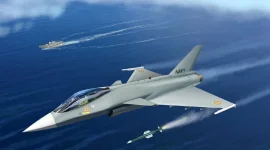
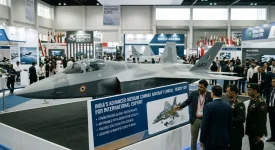
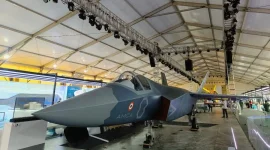
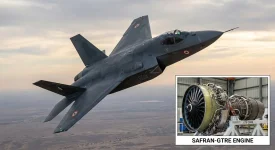
The Gas Turbine Research Establishment (GTRE) is spearheading a comprehensive partnership framework, expected to be executed alongside French aerospace giant Safran, to develop a 120kN-class engine for the Advanced Medium Combat Aircraft (AMCA) Mark-2 programme.
Unlike previous procurement strategies, this estimated $7 billion project is firmly rooted in achieving complete domestic manufacturing.
By securing full Intellectual Property (IP) rights and 100% Technology Transfer (ToT), the strategy ensures that the engine will be sustained by a robust Indian supply chain rather than relying on external imports.
This developing framework closely resembles successful global aerospace initiatives, where the immense complexity of jet propulsion is managed by breaking down the system into modular packages distributed among specialized companies.
GTRE has already begun mapping the capabilities of the domestic industry, issuing requests for information to locate private and public enterprises capable of delivering crucial engine subsystems.
Current discussions indicate that the manufacturing architecture will be structured into a tiered supply chain, featuring a primary Tier-I integrator backed by an extensive network of Tier-II and Tier-III support partners.
Within this proposed structure, individual aerospace firms will take on specific responsibilities that match their technological expertise.
Tasks will range from advanced metallurgy and precision machining to the fabrication of high-temperature single-crystal turbine blades, thermal barrier coatings, and module integration.
The primary objective is to cultivate specialized skills across India’s entire aerospace manufacturing sector. This allows individual partners to master high-value components while adhering to strict, centralized standards to guarantee flawless system compatibility.
At the core of this industrial blueprint sits a designated Tier-I lead entity, which will take charge of the final engine assembly, rigorous qualification testing, and overall performance benchmarking.
This lead integrator will act as the anchor of the programme, handling strict quality assurance and lifecycle management.
Furthermore, this central entity will oversee warranty services and comprehensive maintenance, repair, and overhaul (MRO) duties once the 120kN engine is deployed.
In the realm of military aviation, such unified oversight is critical for maintaining high reliability metrics and ensuring the operational readiness of the fighter fleet.
The vision for this supply chain stretches far beyond the initial production phase.
Modern aero-engines demand a steady supply of replacement parts and consumables to meet rigorous maintenance schedules.
By deeply embedding Indian vendors into the production ecosystem right from the start, the Ministry of Defence aims to guarantee lifecycle resilience.
This ensures that the manufacturing of spare parts, major refurbishments, and future engine upgrades—potentially scaling up to the 140kN thrust class—remain entirely under national control.
What truly sets this initiative apart is the strategic blend of international technical assistance with sovereign manufacturing independence.
While Safran’s involvement will provide critical design validation and access to highly sensitive core technologies, the ultimate goal is to establish an end-to-end propulsion ecosystem entirely within India.
This represents a significant evolution from past engine procurements, moving away from limited technology transfers and fragmented supply chains toward a clean-sheet engine design that India fully owns and controls.
Ultimately, this consortium model highlights a wider transformation in how India executes high-technology defence initiatives.
Moving away from the tradition of relying solely on a single state-run monopoly or prime contractor, the new strategy actively distributes participation across a wider industrial base, blending the strengths of both the public and private sectors.
By evaluating and including companies that already possess experience in aerospace manufacturing, the government is ensuring that India's institutional knowledge is utilized effectively to achieve absolute self-reliance in military aviation propulsion.