Digital Combat Simulator (DCS) is widely recognised as the premier military aviation simulation, celebrated for its hyper-realistic replication of flight physics, sensor suites, and combat systems.
Because the software attracts a massive, dedicated audience of military personnel, defence analysts, and aviation enthusiasts, it presents an unparalleled medium to project India’s indigenous Tejas Mk1A fighter onto the global stage.
The simulator already features an extensive roster of modern combat aircraft, augmented by community-developed modifications for jets like the Su-30MKI.
However, despite the Tejas Mk1A becoming a cornerstone of the Indian Air Force (IAF)—with roughly 180 units currently on order—a fully realised, official module for the aircraft remains completely absent from the virtual skies.
The primary hurdle is not the capability of the simulation software, but the sheer volume of precise technical data required.
To build an authentic module, developers like Eagle Dynamics require close collaboration with original equipment manufacturers (OEMs) and military forces.
Every aspect of the aircraft, from engine thrust curves and radar cross-sections to weapon ballistics and cockpit functionality, must be meticulously recreated.
For an advanced fly-by-wire fighter like the Tejas Mk1A, this data requirement is exceptionally steep.
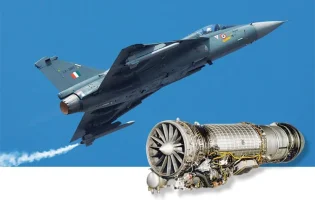
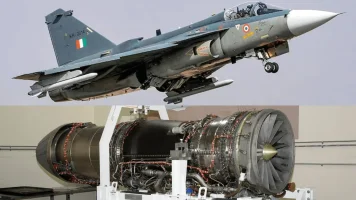
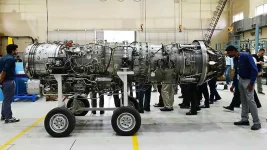
Simulating its indigenous Digital Fly-by-Wire Flight Control Computer (DFCC)—which successfully flew in early 2024—alongside the Uttam Active Electronically Scanned Array (AESA) radar, electronic warfare suites, and the specific performance metrics of its General Electric F404-IN20 engine requires access to highly restricted technical parameters.
Despite these data challenges, an official Tejas Mk1A module would serve as far more than just a gaming add-on.
It would function as a highly interactive digital ambassador, introducing a worldwide audience to India’s rapidly advancing aerospace sector.
High-fidelity modules consistently spark international dialogue and generate deep interest in the real-world platforms they represent.
Within the combat environment of DCS, the Tejas Mk1A would also offer virtual pilots a distinct tactical experience.
By marrying a lightweight composite airframe with modern avionics, beyond-visual-range (BVR) missile integration, and AESA radar capabilities, the jet would occupy a highly specific tactical niche, bridging the gap between older fourth-generation fighters and much heavier multi-role platforms.
For Indian aviation enthusiasts, piloting their nation’s flagship fighter in a study-level simulator would be a monumental achievement.
While players currently dominate virtual airspaces in iconic aircraft like the F-16, F/A-18, Mirage 2000, and various Russian jets, the addition of the Tejas Mk1A would elevate India’s domestic engineering to stand shoulder-to-shoulder with the world’s most globally recognised combat aircraft.
Naturally, national security protocols and classified operational data dictate strict limits on what can be shared with software developers.
However, modern simulation modules have a proven track record of balancing rigorous realism with the protection of sensitive military technology.
If Hindustan Aeronautics Limited (HAL), the Aeronautical Development Agency (ADA), the IAF, and DCS developers can forge a strategic partnership, the Tejas Mk1A has the potential to become one of the most distinctive and celebrated additions in the history of military simulation.