- Views: 2K
- Replies: 4
In a landmark move for India's military aviation sector in early 2026, the decision to bypass Hindustan Aeronautics Limited (HAL) for the Advanced Medium Combat Aircraft (AMCA) prototype phase represents a major turning point.
For the first time, India is actively shifting the design and initial creation of a premier fighter jet away from state-run monopolies, opting instead for a Special Purpose Vehicle (SPV) led by private industry.
This is not a demotion for HAL, which continues to be the foundation of India’s aerial defence. Rather, it acknowledges that building a fifth-generation stealth fighter requires a new industrial approach focused on speed, shared financial risk, and simultaneous design and manufacturing.
The primary reason for this shift is a practical need to avoid manufacturing gridlock.
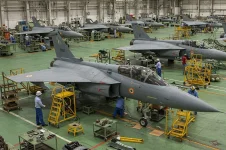
HAL’s current production lines are already operating at maximum capacity.
The state-run giant is tasked with delivering over 180 Tejas Mk1A fighter jets—following massive procurement orders cleared by the Ministry of Defence—while also laying the groundwork for the Tejas Mk2 and upgrading the existing Sukhoi Su-30MKI fleet.
Adding a highly complex, fifth-generation fighter to HAL's workload would likely trigger severe delays across all these vital projects.
Furthermore, the SPV model allows the AMCA project to start with a clean slate.
Building a stealth fighter requires brand-new, highly advanced factories utilizing "Industry 4.0" technologies.
These greenfield facilities will feature automated composite manufacturing, robotic application of special radar-absorbing materials, and incredibly tight construction standards required to keep the aircraft invisible to enemy radar.
Attempting to force these cutting-edge processes into older, existing HAL hangars would be highly disruptive and inefficient.
Financially, this new strategy represents a massive departure from standard Indian defence procurement.
Historically, the government has taken on almost all the financial burden and risk for military development, with state companies operating on a cost-plus basis.
The newly envisioned SPV model introduces a joint venture system where private defence firms are required to invest heavily, matching the government's financial commitment.
This strategy forces companies to have "skin in the game." Consequently, meeting deadlines, staying on budget, and delivering results are no longer just bureaucratic goals; they are directly linked to the private companies' profits.
This approach introduces strict commercial discipline that aims to eliminate the chronic delays often associated with state-funded programs.
Furthermore, manufacturing a true stealth fighter relies heavily on advanced materials science and incredibly precise engineering.
In the past, HAL typically operated on a "design-to-build" basis, simply manufacturing aircraft based on blueprints handed down by the Aeronautical Development Agency (ADA) and DRDO.
The new SPV approach shifts to a Development-cum-Production framework.
Private aerospace giants—such as Tata Advanced Systems Limited (TASL), which has deep ties to global aviation supply chains, or L&T, known for its advanced composite work—will be involved from the very beginning of the design phase.
This early collaboration ensures that the aircraft is designed in a way that is actually practical and cost-effective to build, ultimately speeding up the entire timeline.
This agility extends to the supply chain as well.
State-owned enterprises like HAL are legally bound by strict, often slow, public-sector purchasing regulations that heavily favor the lowest bidder over speed and quality.
A private SPV, however, is free to operate like a modern global business. It can quickly negotiate contracts with top-tier international suppliers and rapidly procure highly specialized, cutting-edge components like advanced stealth coatings, avionics, and sensor systems without getting bogged down in red tape.
Ultimately, India is building a two-pillar aerospace strategy.
HAL is not being cast aside; its mission is being strictly focused on mass production and maintenance of current and near-future fleets, such as the Tejas and potentially the upcoming Multi-Role Fighter Aircraft (MRFA) program.
Meanwhile, the government is deliberately nurturing the private sector to take the lead on highly advanced, next-generation platforms that could eventually be exported globally.
The AMCA is being treated as a major industrial business venture, requiring immense financial strength and proven execution capabilities.
HAL’s absence from the prototype phase is simply a matter of its current workload being full, paving the way for private industry to step up and reshape India's defence manufacturing future.