- Views: 2K
- Replies: 2
The Indian Air Force (IAF) has long warned that its fighter squadron strength is falling to critically low levels. With the current strength hovering around 30 squadrons against a sanctioned strength of 42, the need to induct new jets is urgent.
While the vision of inducting 40 jets annually may not be fully realised by the current leadership, the industrial foundation being laid today promises to help the next Chief of Air Staff turn this ambitious target into reality.
Recent developments in February 2026, including the Defence Acquisition Council’s (DAC) clearance for 114 Multi-Role Fighter Aircraft (MRFA), suggest a major shift is underway.
A synchronized production strategy involving the Dassault Rafale, HAL Tejas Mk1A, Tejas Mk2, and the Advanced Medium Combat Aircraft (AMCA) could fundamentally alter India’s defence manufacturing landscape from 2030 onwards.
The Rafale Manufacturing Hub
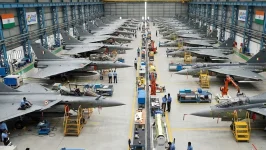
The proposed acquisition of 114 Rafale fighters is set to create a dedicated production ecosystem within India.Following the DAC’s acceptance of necessity, the plan involves importing a small number of jets in fly-away condition while manufacturing the vast majority domestically.
If the projected timelines are met, the Indian Rafale production line is expected to become operational by late 2029.
By 2031, this facility could reach its full capacity, churning out approximately 24 aircraft per year. This volume alone would be a significant departure from the slow delivery rates of the past.
When this output is combined with indigenous manufacturing, it creates a path for sustained fleet expansion rather than the sporadic, small-batch inductions seen historically.
Consequently, by the turn of the decade, the IAF could realistically induct nearly 40 aircraft annually—a milestone not achieved in decades.
The Tejas Mk1A Surge
Before the Rafale line hits peak capacity, the momentum will be driven by Hindustan Aeronautics Limited (HAL). With major orders for 83 and 97 Tejas Mk1A jets already on the books, HAL is ramping up its production capabilities.From 2028 to 2032, HAL is projected to deliver Tejas Mk1A jets at a rate of up to 30 per year, supported by new production lines such as the facility in Nashik.
This period will witness an unprecedented steady inflow of indigenous fighters. By 2032, as the Tejas Mk1A production cycle matures and the Rafale line gains speed, the combined annual output from both programmes could comfortably exceed the 40-aircraft threshold.
For an air force that has battled chronic squadron depletion, this overlap represents a structural fix rather than a temporary bandage.
Transition to Tejas Mk2
A vital component of this roadmap is the smooth transition from the Tejas Mk1A to the more capable Tejas Mk2.By the end of 2032, the industrial infrastructure currently used for the Mk1A is expected to be reconfigured for the Mk2, which will feature the powerful GE F414 engine and heavier payload capabilities.
Low-rate initial production for the Tejas Mk2 is anticipated to begin around 2033, with volumes scaling up by 2034. Once this line stabilises, it is projected to produce 24 jets annually.
During this phase, if the Rafale line continues to deliver 24 jets per year alongside the ramping Tejas Mk2 production, India could see annual induction figures matching or exceeding 40 jets well into the mid-2030s.
This strategy effectively eliminates the "production valleys"—periods of low output—that have historically plagued Indian defence manufacturing.
The Fifth-Generation Era: AMCA
Looking beyond 2035, the focus will shift to India’s fifth-generation stealth fighter, the Advanced Medium Combat Aircraft (AMCA).With the Cabinet Committee on Security (CCS) having cleared full-scale engineering development in early 2024, the AMCA Mk1 is expected to enter production in the mid-2030s.
Initial production rates for the AMCA are estimated between 12 and 16 aircraft per year as the complex supply chain for stealth technology matures.
Even as the Rafale production eventually tapers off, the combination of a stabilized Tejas Mk2 line (24 jets/year) and the new AMCA line (12–16 jets/year) would allow the IAF to sustain an induction rate of 36 to 40 aircraft annually.
By the late 2030s, the introduction of the AMCA Mk2 will further solidify this capacity, ensuring long-term squadron sustainability without the need for emergency imports.
A Mature Industrial Ecosystem
The significance of this projection lies in the maturity of the ecosystem it represents. For the first time, India is moving towards a model where multiple fighter programmes run in parallel.- The Rafale line will bring in advanced foreign manufacturing standards and global supply chain integration.
- The Tejas Mk2 will serve as the workhorse of the indigenous medium-weight category.
- The AMCA will mark India’s entry into the elite club of nations capable of mass-producing fifth-generation stealth fighters.
While the current leadership may not oversee the completion of this vision, they are establishing the industrial engine that will allow their successors to secure India’s skies.
If these timelines hold, the decade beginning in 2032 could define the modern era of Indian air power.