India's aerospace sector, spearheaded by the Aeronautical Development Agency (ADA) and Hindustan Aeronautics Limited (HAL), is currently achieving significant milestones in the nation's indigenous combat aircraft development.
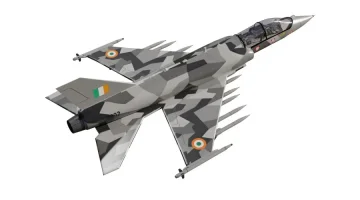
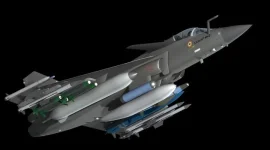
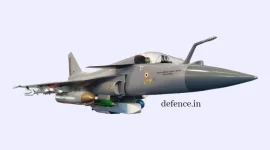
The much-anticipated Tejas Mk2, designated as the Medium Weight Fighter (MWF), is engineered to possess a radar signature that is substantially reduced compared to the existing Tejas Mk1A variant.
According to project engineers, the frontal Radar Cross Section (RCS) of the new fighter jet is projected to decrease by an impressive 75%.
While the current Tejas Mk1A already maintains a highly respectable clean-configuration RCS of approximately 0.5 square metres, independent defence analysts assess that the Mk2 will achieve a remarkable 0.1 to 0.2 square metres.
This drastic reduction places the aircraft's basic stealth capabilities in the same league as elite, high-end global fighters like the French Dassault Rafale.
Overcoming Physical Size through Intelligent Design
What makes this breakthrough in radar evasion truly noteworthy is the overall physical size of the newly designed platform.The Tejas Mk2 is classified as a substantially larger, 17.5-tonne category combat aircraft. To meet the Indian Air Force's requirements, it incorporates a lengthened fuselage, close-coupled canards to boost agility, and increased internal volume to carry more aviation fuel and a heavy weapons payload of 6.5 tonnes across its 11 hardpoints.
In traditional aerospace design, increasing the physical footprint and weight class of a fighter jet almost always results in a highly visible radar return on enemy screens.
However, India's domestic aerospace engineers have successfully overcome this inherent aerodynamic challenge.
By employing highly calculated aerodynamic shaping, precise edge alignment across the airframe, and seamless blending of exterior surfaces, the physical geometry of the Tejas Mk2 actively deflects hostile radar signals away from enemy detection systems.
Core Technologies Powering "Semi-Stealth" Capabilities
To achieve such an impressive level of radar deflection, the Tejas Mk2 relies on a suite of advanced survivability technologies.Many of these innovations are direct trickle-down benefits derived from ongoing research for India’s future fifth-generation Advanced Medium Combat Aircraft (AMCA) project:
- Extensive Application of Composites: More than 90% of the jet's external surface—encompassing the main wings, front canards, and central fuselage—is constructed using advanced carbon-fibre composites. Formulated with crucial input from the National Aerospace Laboratories (NAL), these non-metallic skins naturally absorb incoming radar energy rather than reflecting it, all while drastically reducing the aircraft's overall weight.
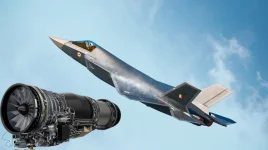
- Twisted Engine Intakes: The aircraft features specially designed Y-shaped or S-duct air intakes. This complex aerodynamic choice is vital for stealth, as it physically blocks enemy radar waves from reaching and bouncing off the highly reflective, spinning compressor blades of the jet's powerful GE F414-INS6 turbofan engine.
- Specialised Radar-Defeating Coatings: The entire airframe is treated with domestically developed Radar Absorbent Material (RAM) paints. Additionally, the cockpit canopy is coated with a microscopic Indium-Tin Oxide layer, which stops hostile radar sweeps from penetrating the glass and reflecting off the pilot's helmet and interior avionics.
Addressing the Challenge of External Weapons
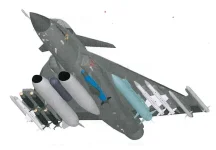
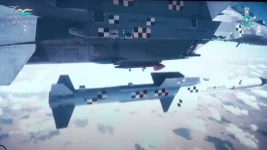
While these built-in structural advantages make the Tejas Mk2 incredibly hard to detect in a "clean" flying configuration, actual combat missions require the aircraft to be fully armed.Because the Tejas Mk2 relies on 11 external mounting points rather than internal stealth weapon bays, equipping the jet with heavy missiles, external fuel tanks, and targeting pods will unavoidably increase its visibility on enemy radar screens.
To counteract this vulnerability, Indian defence engineers are prioritising highly innovative weapons-loading strategies.
Current mitigation efforts include applying advanced RAM coatings directly to external pylons and weapon pods.
Furthermore, the ADA is exploring the use of conformal weapon designs, which hug the aircraft's body tightly, ensuring the radar signature remains as small as possible during heavily armed strike operations.
Strategic Importance for National Defence
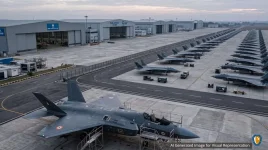
The Indian Air Force is in urgent need of the Tejas Mk2 to successfully phase out its ageing legacy squadrons of SEPECAT Jaguars, Dassault Mirage 2000s, and MiG-29s.The aircraft will serve as a vital technological and operational bridge until the AMCA stealth fighter is ready for active duty.
Targeted for formal induction by the end of this decade, the Tejas Mk2 will be equipped with a cutting-edge Unified Electronic Warfare Suite (UEWS) and the formidable Uttam Active Electronically Scanned Array (AESA) radar.
Open-source reports confirms that the Mk2 will utilise an upgraded Gallium Nitride (GaN)-based Uttam radar featuring over 900 Transmit/Receive (T/R) modules, providing a 25% increase in detection range and superior resistance to complex electronic jamming.
This potent blend of "ghost-like" low observability, world-class domestic sensors, and a massive 6.5-tonne payload capacity marks a major doctrinal evolution.
It ultimately provides India with a highly lethal and survivable 4.5-generation platform purposefully built to dominate heavily contested modern airspaces.