As India advances its domestic aerospace capabilities, a common misunderstanding often arises when comparing the upcoming Tejas Mk2 to the Advanced Medium Combat Aircraft (AMCA).
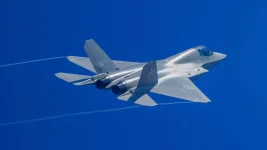
It is essential to recognise that these two aircraft serve completely different purposes. The Tejas Mk2 is designed as a 4.5-generation Medium Weight Fighter (MWF). In contrast, the AMCA will be India’s first true fifth-generation stealth fighter.
Instead of viewing the two projects as competitors, the Tejas Mk2 should be seen as a vital stepping stone. It provides the engineering experience and industrial base required to make India's stealth ambitions a reality.
Developing Industrial Depth and Advanced Capabilities
Creating a world-class combat jet is a complex process. It involves a continuous cycle of designing, testing, certifying, and manufacturing.No country can successfully jump directly from building light combat aircraft to producing advanced stealth fighters without mastering these intermediate steps.
The Aeronautical Development Agency (ADA) and Hindustan Aeronautics Limited (HAL) are utilizing the Tejas Mk2 program to gain this crucial expertise.
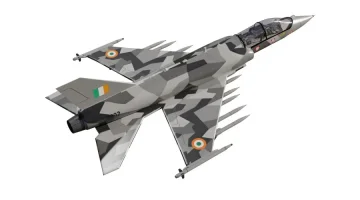
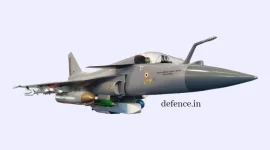
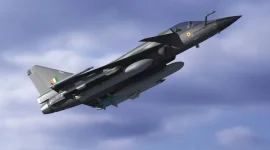
The Tejas Mk2 will be a heavier, more capable aircraft in the 17.5-tonne category. It features a longer body equipped with close-coupled canards, which are small forward wings that improve maneuverability.
The fighter will be powered by the robust GE F414 engine, which will be co-produced in India following a landmark technology transfer agreement between GE Aerospace and HAL.
Designed to carry a payload of around 6.5 tonnes across 11 weapon stations, the aircraft will be equipped with advanced indigenous technologies.
These include the Uttam Active Electronically Scanned Array (AESA) radar, an Infrared Search and Track (IRST) sensor, and a Missile Approach Warning System (MAWS).
Once operational, the Tejas Mk2 is expected to replace the Indian Air Force's aging fleets of Mirage 2000, Jaguar, and MiG-29 fighters.
Strengthening the Defence Ecosystem
Beyond the aircraft itself, the Mk2 project is maturing India's broader defence manufacturing ecosystem.Every new system integrated into the fighter—from electronic warfare components to locally manufactured smart weapons—helps expand a nationwide network of suppliers.
Hundreds of private and public sector companies are contributing to this supply chain, strengthening the national aviation infrastructure and advancing the country's goal of total self-reliance in defence manufacturing.
A Step-by-Step Approach to Stealth
India’s strategy for military aviation follows a careful, phased approach where each new project builds on the successes of previous ones:- Tejas Mk1 and Mk1A: These initial models established the basic foundation for designing and manufacturing supersonic fighter jets within the country. The Indian Air Force is currently heavily investing in the Mk1A variant to build up its squadron numbers.
- Tejas Mk2: Officially approved by the Cabinet Committee on Security in 2022, this platform takes the existing foundation and scales it up. It trains the industry to handle heavier weight classes, integrate better sensors, and refine high-end electronics.
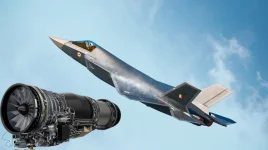
- AMCA: With its development recently cleared by the government in early 2024, the stealth project will utilize the mature manufacturing techniques and engineering knowledge gained directly from the Mk2 program to push India into the fifth-generation era.
Rather, it is the necessary engine driving the creation of a strong, self-sustaining aerospace industry that will successfully deliver India's future stealth capabilities.