The brief but intense conflict between India and Pakistan in May 2025, codenamed Operation Sindoor, continues to generate debate regarding the true extent of military damage.
Sparked by a tragic terror attack in Pahalgam weeks prior, the clash saw heavy aerial combat and cross-border strikes.
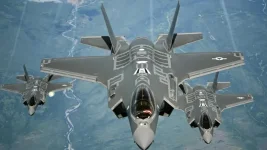
Recent disclosures about strict American surveillance over Pakistan’s F-16 fighter jets have introduced a new angle to the evidence.
Indian military leaders and defence experts argue that advanced monitoring systems—such as round-the-clock CCTV and electronic security installed by the United States inside Pakistani F-16 bases—could hold undeniable proof of the aircraft destroyed during Indian precision airstrikes.
Career profiles of American contractors employed by Booz Allen Hamilton shed light on the rigorous Technical Security Team (TST) operations tied to the F-16 End Use Monitoring (EUM) programme in Pakistan.
These documents detail extensive daily duties at key military sites, notably the Shahbaz airbase in Jacobabad.
Contractors were responsible for running 24-hour security protocols, physically inspecting the fighter jets and their weapons, and ensuring that Pakistan adhered strictly to agreements designed to prevent the unauthorized transfer of sensitive US technology.
This constant oversight required direct coordination between American air force commanders and Pakistani military officials regarding their advanced F-16s.
Launched in early May 2025 as a direct response to terrorism, Operation Sindoor targeted critical infrastructure and military assets.
According to Air Chief Marshal Amar Preet Singh, the Indian Air Force carried out highly successful strikes that crippled enemy air defences and struck vital airbases, including the hangars at Jacobabad's Shahbaz base.
Indian assessments suggest that up to five Pakistani fighter jets, believed to be F-16s, were eliminated on the ground.
Additional open-source military reports highlight that India also successfully utilized advanced S-400 systems to intercept aerial targets at distances of up to 300 kilometres during the fighting.
While commercial satellite photos showed clear destruction to the buildings at these bases, the exact number of destroyed aircraft has remained a subject of intense debate.
Despite India's claims, Pakistan has repeatedly rejected any reports of heavy losses to its F-16 fleet.
Meanwhile, the United States government has chosen to stay silent, refusing to confirm or deny the strike's impact and asking reporters to seek answers from Islamabad.
However, the existence of continuous American surveillance inside these very hangars has led to growing theories that US officials likely have direct video footage and sensor data from the bombings that occurred around May 10.
These security measures, built to ensure that US-supplied weapons are used correctly, mean that Washington could silently hold the most accurate record of the damage.
Defence analysts in India believe that this foreign monitoring infrastructure captured the exact moments of the strikes, offering clear evidence of any destroyed fighters.
Because both the US and Pakistan have kept this data secret, the true outcome of the clashes remains clouded by opposing claims.
This situation highlights a complicated relationship: America's need to protect its exported military hardware, Pakistan's desire to hide its operational vulnerabilities, and India's efforts to verify the success of its military campaigns.
Tensions in the region are still high, especially following warnings from Pakistan’s Defence Minister Khawaja Asif about the possibility of further Indian military operations.
The revelation that the US actively monitors these combat aircraft adds a fascinating new dimension to the demand for truth in South Asian security matters.
Both India and Pakistan are currently navigating a fragile peace, knowing that concrete proof regarding the fate of top-tier weapons like the F-16s could shift the global view of their military strength.
Security experts are urging careful diplomacy to avoid another war, stressing that clear facts about military capabilities and losses are essential to prevent deadly misunderstandings between these two nuclear-armed neighbours.