- Views: 2K
- Replies: 4
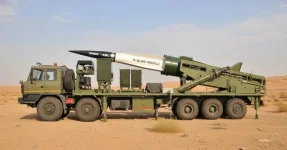
In a recent assessment, Germany-based aviation and defence writer Thomas Newdick has underscored the transformative potential of India’s new Long-Range Anti-Ship Hypersonic Missile (LR-AShM).
According to his analysis, this advanced weapon system is poised to fundamentally reshape naval strike dynamics within the Indo-Pacific region.
Newdick emphasises that the missile’s defining characteristic—its extreme hypersonic velocity—renders it exceptionally lethal.
The destructive power of the LR-AShM is not solely dependent on its explosive warhead; the sheer kinetic energy generated at such high speeds allows it to penetrate a vessel’s hull and structural defences before the payload even detonates.
This fusion of immense speed and kinetic force places the LR-AShM in a league entirely separate from traditional cruise missiles.
Unlike subsonic or supersonic variants, a hypersonic missile drastically reduces the reaction window available to enemy defences.
Ship-borne radar systems, air defence batteries, and close-in weapon systems (CIWS) are left with mere seconds to detect, track, and attempt an interception.
As noted by Newdick, this capability makes the LR-AShM tacticaly superior and significantly more dangerous, particularly when targeting high-value naval assets such as destroyers or aircraft carriers.
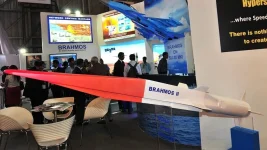
Newdick’s evaluation also draws a sharp contrast between the LR-AShM and the renowned BrahMos cruise missile, which has served as the cornerstone of India’s maritime strike capabilities for over two decades.
While the BrahMos remains one of the world's fastest operational cruise missiles, its performance is constrained by supersonic limits.
Early iterations of the BrahMos were restricted to ranges of approximately 190 miles (300 km) due to international export control regimes.
Although India is actively upgrading the BrahMos to achieve an extended range of roughly 560 miles (900 km), the system remains bound by its supersonic design.
Even with these enhancements to the BrahMos, the LR-AShM offers superior performance. Its hypersonic profile ensures higher survivability and vastly greater destructive potential.
Recently displayed during India's 77th Republic Day parade in January 2026, the LR-AShM is reported to have a strike range of approximately 1,500 km (930 miles).
This extended reach allows Indian platforms—whether land-based mobile launchers or future air and ship-based variants—to engage hostile vessels from deep standoff distances, well outside the engagement zone of most enemy naval air defence systems.
Newdick’s analysis highlights a broader strategic shift in modern naval warfare: a move away from relying on the volume of missiles toward fielding fewer, but far more capable, systems.
The LR-AShM epitomises this trend. It is designed to overwhelm sophisticated defences through a combination of speed, range, and raw impact energy.
Against a modern warship, the damage would be catastrophic; the kinetic force alone could rupture hulls, penetrate armoured decks, and disable critical command systems in a single strike.
For the Indian Navy, this development marks a generational leap in capability. If the BrahMos provided a robust deterrent in the supersonic era, the LR-AShM propels that deterrence into the hypersonic age.
The advantages, as Newdick points out, are transformational rather than merely incremental, offering a combination of unprecedented reach and interception difficulty that few adversaries can currently counter.
In a wider strategic context, the deployment of the LR-AShM reflects India’s determination to maintain supremacy against evolving naval threats and to secure its interests across vast oceanic expanses.
With adversaries investing heavily in layered missile defences at sea, the ability to deliver a weapon that strikes with hypersonic speed and massive kinetic force becomes a decisive advantage.
While BrahMos defined India’s maritime strike posture for the last twenty years, the LR-AShM is set to define it for the next generation.