- Views: 2K
- Replies: 3
The Indian Air Force (IAF) is currently evaluating a strategic decision regarding the replacement of two Tejas Mk1 fighter jets lost in recent accidents.
High-level discussions are underway to determine whether to commission new aircraft of the existing Mk1 standard or to transition the affected squadron directly to the advanced Tejas Mk1A variant.
This deliberation follows the loss of two Final Operational Clearance (FOC) standard aircraft within a two-year period: a crash in Jaisalmer, India, in March 2024, and a subsequent incident in Dubai in late 2025.
Both airframes were relatively new inductees, having served for less than four years.
The aircraft in question belonged to the No. 18 Squadron, known as the "Flying Bullets," which currently operates the remaining 16 Tejas Mk1 FOC fighters.
While these jets are fully capable of air defence and training roles, they rely on older technology compared to the incoming fleet.
Specifically, the current Mk1s are equipped with the mechanically scanned ELM-2032 radar and legacy avionics suites.
They notably lack the comprehensive upgrades defined in the Mk1A configuration, such as a modern Active Electronically Scanned Array (AESA) radar, a sophisticated Electronic Warfare (EW) system with pod-based jamming capabilities, and a re-architected avionics computer.
According to defence sources, the IAF has not yet moved to immediately backfill the two lost positions.
The primary reason for this pause is the pending commencement of deliveries for the Tejas Mk1A.
The Air Force has placed substantial orders with Hindustan Aeronautics Limited (HAL) for this upgraded variant, including an initial contract for 73 single-seat and 10 twin-seat jets signed in 2021, followed by a more recent approval for an additional 97 aircraft.
The production run for these fighters is expected to continue through 2032.
While the existing Mk1 fleet is being progressively upgraded with specific enhancements—such as Software Defined Radio (SDR) and satellite communication (SATCOM) pods—the internal differences between the two variants are significant.
The Mk1A represents a major technological leap, featuring a lighter airframe, vastly improved maintainability, and enhanced Beyond Visual Range (BVR) combat potential.
These improvements are designed to make the Mk1A the cornerstone of the IAF’s light fighter capability for the coming years.
Logistical considerations are also influencing the decision.
With HAL focusing its resources on ramping up the Mk1A production line, reverting to the older Mk1 manufacturing standard could disrupt the supply chain and further delay the new jets.
Consequently, officials indicate that a final decision on replacing the lost aircraft will likely be deferred until the Mk1A production stabilizes.
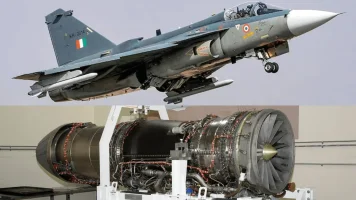
Once a steady stream of the new fighters is established—likely following the resolution of recent supply chain delays involving the GE F404 engines—the IAF will decide whether to induct Mk1A units directly into the No. 18 Squadron to restore its strength.
For the immediate future, the priority remains firmly on accelerating the Mk1A program. The IAF is keen to ensure that delivery timelines are met to support its squadron strength goals.
As the Tejas program enters this critical expansion phase, the successful induction of the Mk1A will be pivotal in defining India's indigenous air power for the next two decades.