IAF Seeks G2G Route for 114 Rafale Fighters to Bypass Further MRFA Trials & Fast-Track Delivery as India-France Deal Nears

IAF Seeks G2G Route for 114 Rafale Fighters to Bypass Further MRFA Trials & Fast-Track Delivery as India-France Deal Nears


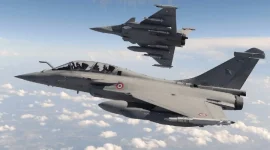
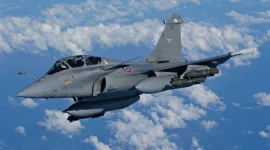
The Indian Air Force (IAF) is accelerating its efforts to secure an additional 114 Rafale fighter jets, with emerging reports suggesting that New Delhi and Paris are on the verge of finalising a historic government-to-government (G2G) agreement.

This potential deal, which aims to bypass the protracted Multi-Role Fighter Aircraft (MRFA) tender process, promises to fundamentally restructure India’s aerospace manufacturing capabilities and address critical combat readiness gaps.

Bypassing the Tender Delays​

According to high-level sources within the IAF, there is building momentum to grant the Acceptance of Necessity (AoN) for a direct acquisition from Dassault Aviation.

Senior officials are reportedly in favour of adopting a G2G framework similar to the 2016 acquisition of 36 Rafales, rather than pursuing the traditional global tender route.

The decision is driven by an urgent need to arrest the decline in the IAF’s combat strength.

With the current squadron count hovering near 30—well below the authorised strength of 42—officials fear that a fresh MRFA tender could involve up to five years of technical evaluations and field trials before a contract is even signed.

A direct G2G deal would circumvent these delays, allowing for faster contract conclusion and delivery.

The upcoming visit of French President Emmanuel Macron to India next month is viewed as a critical catalyst.

It is anticipated that the deal will receive a significant political push from the highest levels of both governments, potentially clearing the path for formal negotiations to commence by the middle of this year.

Dassault to Take Control of Nagpur Facility​

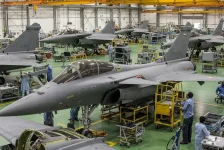
A central pillar of the proposed agreement is the "Make in India" component, which envisages the 114 fighters being manufactured domestically. The production line is likely to be established at the existing Dassault Reliance Aerospace Limited (DRAL) facility in Nagpur.

However, significant structural changes to the joint venture are on the horizon. Sources indicate that Dassault Aviation is keen to acquire full ownership of the manufacturing plant by buying out the stake currently held by Anil Ambani’s Reliance Defence.

This acquisition, subject to approval from the Ministry of Defence, would grant the French aerospace giant complete control over the facility, which would then undergo massive upgrades to support full-scale fighter production.

Under the negotiated terms, the Indian-manufactured Rafales will feature approximately 60 per cent indigenous content. This includes the complex fabrication of complete airframes within India, marking a major leap in the transfer of technology and aligning with the government's Atmanirbhar Bharat vision for defence production.

Technical Edge: F4 and F5 Standards​

The proposed fleet is expected to comprise a mix of the latest Rafale F4 standard and the future-ready F5 variant, ensuring the IAF maintains a qualitative edge in the region.
  • Rafale F4: Currently being inducted by the French Air Force, this standard focuses on network-centric warfare. It features the Thales Scorpion helmet-mounted display, improved radar sensors, and the integration of the 1,000 kg AASM "Hammer" precision-guided munition. It offers enhanced connectivity, allowing the aircraft to act as a data node within a larger combat network.
  • Rafale F5: Expected later in the decade, the F5 standard is designed for the future air combat environment. It will introduce advanced capabilities in manned-unmanned teaming (MUM-T), allowing the Rafale to control "loyal wingman" combat drones such as the nEUROn. The F5 will also feature next-generation data fusion and deep-strike capabilities, specifically tailored for suppression of enemy air defences (SEAD).

Strategic Implications and Timeline​

While the G2G route offers a faster procurement process, officials have cautioned that the industrial setup will still require time.

It is estimated that at least three years will be needed to upgrade the Nagpur infrastructure, certify Indian supply chain partners to Dassault’s global standards, and train a skilled local workforce.

Once operational, however, the facility is expected to serve a dual purpose. Beyond fulfilling the IAF’s requirements, the Indian production line is projected to become a global export hub for Dassault Aviation.

This would integrate India deeply into the global supply chain of one of the world's most advanced multi-role fighters, securing long-term industrial benefits for New Delhi while ensuring the sustainability of the Rafale programme for France.
 
HAL should be broken to multiple companies so that they work effectively on delivery. Presently HAL employees have no accountability, time line to deliver.
 
HAL should be broken to multiple companies so that they work effectively on delivery. Presently HAL employees have no accountability, time line to deliver.
I don't think so. It's not HALs fault that they are leading the charge. The government is demanding it. The babus want control. FK India is their attitude. . Control is money.

We need private enterprise to get technology and experience that will allow them to work with HAL. That's not there yet. It's coming.
 
Last edited:
HAL should be broken to multiple companies so that they work effectively on delivery. Presently HAL employees have no accountability, time line to deliver.
Have been saying this...learn from Indian Navy.
They too have PSUs, but they all are competing with each other. Goa Shipyard, GRSE, Hindustan Shipyard, MDL, Cochin Shipyard..all are working on different parts.

Break HAL as well, one focus on missile integration, other on helicopters, couple of them on fighter jets and one on commercial aircrafts. Production lines should continue to work on multiple fronts in parallel.
 
Hi,

India should just abandon the Tejas MK1 & MK1a & focus on MK2 as a force multiplier.

Even if & when the MK2 come around, it will be way, way outdated but the argument is that India is way to deep in the Tejas programme - with MK2, at least there might be some export opportunities with the very many countries that cannot afford 5th or 6th Gen.

It should then focus on AMCA incorporating as much 6th Gen Tech as possible - with help if need be from outside partners and in addition, to stay in the game in any meaningful way to counter China, it needs to join a proposed 6th Gen platform like FCAS or GCAP.

With India's lack of experience in 5th/6th Gen technologies, poor infrastructure, almost none existent diverse military aviation complex & manufacturing, inexperienced workforce, lack-lustre & backwards attitudes, poor planning, poor leadership & monumentally slow time frames not to mention the greatest of all Indian traits - procrastination & corruption, India is only going to keep falling further & further behind.

India simply has to partner in joint ventures with outside companies as long as it not the Americans.
 
Hi,

India should just abandon the Tejas MK1 & MK1a & focus on MK2 as a force multiplier.

Even if & when the MK2 come around, it will be way, way outdated but the argument is that India is way to deep in the Tejas programme - with MK2, at least there might be some export opportunities with the very many countries that cannot afford 5th or 6th Gen.

It should then focus on AMCA incorporating as much 6th Gen Tech as possible - with help if need be from outside partners and in addition, to stay in the game in any meaningful way to counter China, it needs to join a proposed 6th Gen platform like FCAS or GCAP.

With India's lack of experience in 5th/6th Gen technologies, poor infrastructure, almost none existent diverse military aviation complex & manufacturing, inexperienced workforce, lack-lustre & backwards attitudes, poor planning, poor leadership & monumentally slow time frames not to mention the greatest of all Indian traits - procrastination & corruption, India is only going to keep falling further & further behind.

India simply has to partner in joint ventures with outside companies as long as it not the Americans.

It would be disastrous.
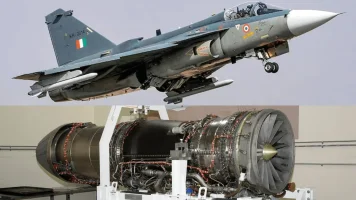
Tejas mk1a, although delayed, but forms the outer layer of Indian Air Force. It can carry the BVR missiles which will be helpful in combat post the SEAD/DEAD. There are 10 squadrons planned for the same.
Tejas mk2, will be a strong upgrade, of the calibre of Rafale. It too will see atleast 10-12 squadrons. So in total we're talking here about 20-22 squadrons or close to 400 fighter jets.

More than that, once the Kaveri program matures to provide the required thrust of F404, IAF can even induct additional Tejas mk1a's to keep the numbers high while using the Rafales, Sukhois and AMCA for the critical missions. Kaveri 2.0 clubbed with the experience of Safran will become the alternative for F414 as well.
 
Hi,

India should just abandon the Tejas MK1 & MK1a & focus on MK2 as a force multiplier.

Even if & when the MK2 come around, it will be way, way outdated but the argument is that India is way to deep in the Tejas programme - with MK2, at least there might be some export opportunities with the very many countries that cannot afford 5th or 6th Gen.

It should then focus on AMCA incorporating as much 6th Gen Tech as possible - with help if need be from outside partners and in addition, to stay in the game in any meaningful way to counter China, it needs to join a proposed 6th Gen platform like FCAS or GCAP.

With India's lack of experience in 5th/6th Gen technologies, poor infrastructure, almost none existent diverse military aviation complex & manufacturing, inexperienced workforce, lack-lustre & backwards attitudes, poor planning, poor leadership & monumentally slow time frames not to mention the greatest of all Indian traits - procrastination & corruption, India is only going to keep falling further & further behind.

India simply has to partner in joint ventures with outside companies as long as it not the Americans.
Mk2 is 10 years away. Jets are a platforms to launch long range weapons. Dog fights are over. You attack from 100km away. Seeing your enemy first firing BVR missiles and guide them before the enemy sees you. Ground attack from huge distances with weapons that India are producing and made to integrate to our own software. Foreign companies charge a fortune because they want to lock you in for 40 years of buying missiles from them 10 times the cost of our own. You need numbers. The MK2 exists because of the 1 and 1A that taught us and built our industrial complex.
 
Mk2 is 10 years away. Jets are a platforms to launch long range weapons. Dog fights are over. You attack from 100km away. Seeing your enemy first firing BVR missiles and guide them before the enemy sees you. Ground attack from huge distances with weapons that India are producing and made to integrate to our own software. Foreign companies charge a fortune because they want to lock you in for 40 years of buying missiles from them 10 times the cost of our own. You need numbers. The MK2 exists because of the 1 and 1A that taught us and built our industrial complex.

Hi,

Say MK2 is 10 years away as you state - if so, the Indian skies are hardly flying currently with any meaningful numbers of Mk1's & ZERO MK1a's - how many more years will it take them to be built, inducted & operated in their proposed numbers - probably 10 or more will be likely anyway
 

Forum statistics

Threads
6,408
Messages
63,033
Members
4,977
Latest member
shamskonda
Back
Top