India and France are reportedly in the final stages of a significant defence contract focused on the procurement of additional SCALP air-launched cruise missiles.
This move follows the weapon's demonstrated effectiveness during the Indian Air Force’s (IAF) precision strikes against hostile infrastructure in Pakistan during Operation Sindoor last year.
Defence sources close to the negotiations indicate that talks are advancing rapidly, with a formal agreement expected soon, highlighting New Delhi’s commitment to bolstering its long-range precision strike capabilities.
The impetus for this fresh acquisition is directly linked to recent combat experiences.
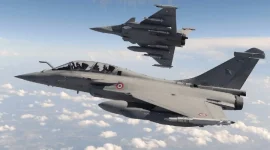
During Operation Sindoor, IAF Rafale fighter jets successfully utilised the SCALP, in conjunction with BrahMos supersonic missiles, to dismantle key terrorist command centres associated with Jaish-e-Mohamed and Lashkar-e-Toiba in the Muridke and Bahawalpur districts of Pakistan.
The operation was characterised by high precision, with reports confirming that hardened targets were neutralised with minimal collateral damage.
This success has cemented the Indian defence establishment's confidence in the missile’s ability to penetrate contested airspace and navigate with high accuracy.
Manufactured by the European defence group MBDA, the SCALP (known as 'Storm Shadow' in the UK) is a low-observable, long-range air-launched cruise missile.
It is specifically engineered to engage high-value stationary assets such as bunkers, command and control hubs, and storage facilities.
Weighing approximately 1,300 kg and measuring over 5 metres in length, the missile is equipped with a specialised two-stage warhead known as BROACH (Bomb Royal Ordnance Augmented Charge).
This system allows it to penetrate reinforced concrete structures before detonating, ensuring maximum damage to the target's interior.
The missile's advanced guidance system combines Inertial Navigation, GPS, and Terrain Reference Navigation, allowing it to fly at low altitudes to avoid radar detection.
Open-source data indicates that while export variants typically have a range of over 250 kilometres, the weapon allows aircraft to strike deep into enemy territory without entering the range of hostile air defence systems.
This "fire and forget" capability aligns perfectly with the IAF's evolving doctrine, which prioritises stand-off engagement to ensure pilot and aircraft safety.
The financial scale of the proposed deal is substantial. With the estimated unit cost of the missile historically hovering around 3 million US dollars, the discussion reportedly covers an inventory of approximately 100 to 120 missiles.
This volume would significantly enhance India's operational stockpiles, ensuring sustained combat readiness across multiple fighter squadrons.
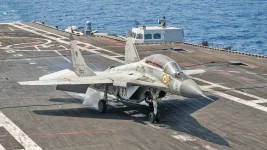
Furthermore, defence planners are exploring the possibility of integrating these systems across different services, with potential applications for naval aviation to boost maritime strike options.
On a strategic level, this acquisition underscores the deepening defence partnership between India and France.
This relationship has evolved into a cornerstone of New Delhi’s security architecture, extending beyond the purchase of fighter jets to include joint development of sensors, advanced weaponry, and industrial collaboration.
Increasing the stockpile of SCALP missiles not only enhances interoperability with the existing Rafale fleet but also ensures that the IAF can maintain a high tempo of operations in conflict scenarios requiring rapid and precise intervention.
The operational insights gained from recent engagements have sharpened India's focus on acquiring stand-off weapons that can neutralise time-critical targets with reduced risk.
The SCALP offers commanders a flexible option that bridges the gap between conventional deterrence and precision warfare. The combat success observed during Operation Sindoor has effectively turned a routine restocking process into a strategic expansion of capability.
As the negotiations near completion, this potential agreement serves as a clear signal of India's intent to make long-range precision strikes a permanent feature of its air power strategy.
If concluded as anticipated, the deal will ensure that Indian Rafale squadrons—and potentially future naval platforms—possess a credible and formidable deep-strike capability for the foreseeable future, reinforcing India's deterrence posture in a volatile region.