- Views: 4K
- Replies: 7
Following recent high-level discussions between New Delhi and Moscow during President Vladimir Putin’s visit to India in early December 2025, it has emerged that the Indian government is maintaining a cautious stance regarding the Su-57E fighter jet.
While Russia strongly advocated for a comprehensive Transfer of Technology (ToT) and local manufacturing of the fifth-generation aircraft, sources indicate that India has politely declined a deep industrial engagement.
Instead, New Delhi is exploring a limited, direct purchase of the aircraft to serve as an interim solution for the Indian Air Force (IAF).
A "Bridge" Solution, Not a Replacement
The IAF’s current deliberations focus on acquiring a modest fleet of approximately 40 to 60 Su-57E fighters directly from Russian production lines.This strategy marks a significant departure from previous procurement models, such as the Su-30MKI programme, which involved extensive licence production at Hindustan Aeronautics Limited (HAL).
Defence planners intend to utilise these Russian jets primarily as long-range, high-speed strike platforms rather than as the mainstay of India’s air superiority fleet.
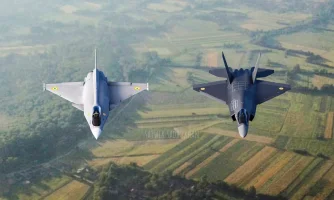
With capabilities such as supercruise and compatibility with the hypersonic Kinzhal missile, the Su-57E is viewed as a "capability bridge."
It is intended to fill the operational gap until the indigenously developed Advanced Medium Combat Aircraft (AMCA)—India’s own fifth-generation stealth fighter—enters service in the mid-2030s.
Learning from the FGFA Experience
This restrained approach is heavily influenced by the lessons learned from the now-defunct Fifth Generation Fighter Aircraft (FGFA) programme.Over a decade ago, India partnered with Russia to co-develop a variant of the Su-57 but eventually withdrew due to disputes over workshare, rising costs, and concerns regarding the aircraft's stealth features and engine performance.
According to defence officials, the IAF is keen to avoid repeating those mistakes by getting entangled in another complex, decades-long co-development project.
By opting for an "off-the-shelf" purchase, India secures immediate advanced capabilities without the industrial risks associated with setting up a new production line.
This decision allows the domestic aerospace sector to remain fully focused on the AMCA project, which is expected to roll out its first prototypes by 2027-28.
Rostec’s Assessment of HAL Nashik
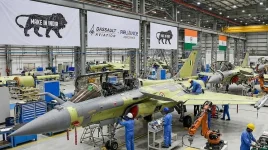
Prior to President Putin’s visit, a delegation from Russia’s state defence conglomerate, Rostec, conducted a detailed assessment of HAL’s Nashik facility. This plant, which has successfully manufactured the Su-30MKI for years, was pitched by Moscow as an ideal hub for assembling the Su-57E.Russian officials claimed the facility was "50% ready" for the new stealth fighter and offered deep localization, including the potential for 40-60% indigenous content.
However, despite these assurances, Indian officials remained skeptical. Transforming the Nashik facility to handle the complex stealth coatings and sub-micron tolerances required for a fifth-generation jet would require massive investment and years of retooling.
The IAF fears that diverting resources to a Russian project of this scale could derail the timeline for the AMCA, which remains the cornerstone of the India's "Atmanirbhar Bharat" initiative.
Strategic Considerations and Engine Technology
Financial prudence also plays a key role.The proposed price for the Su-57E is estimated between $80 million and $100 million per unit, which is notably lower than the American F-35, priced at approximately $110 million.
While the Russian offer is economically attractive, the IAF is wary of managing two massive foreign fighter programmes simultaneously, given the ongoing Multi-Role Fighter Aircraft (MRFA) tender where the French Rafale is a strong contender.
Despite rejecting the proposal for local assembly of the airframe, India has secured a significant strategic victory in propulsion technology. Dscussions have reportedly greenlit the Transfer of Technology for high-performance engines to be manufactured at HAL’s Koraput division in Odisha.
This agreement places India in an elite group of nations capable of manufacturing advanced fighter engines, supporting long-term goals for domestic engine development while keeping the immediate Su-57E purchase simple and manageable.