- Views: 8K
- Replies: 30
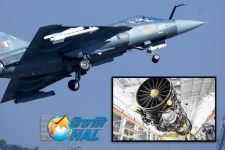
In a landmark event for Indian aerospace capability, Defence Minister Rajnath Singh witnessed a successful full afterburner test of the indigenous Kaveri engine earlier this week.
The test, conducted at the Gas Turbine Research Establishment (GTRE) in Bengaluru on February 16, marks a critical step forward in India’s quest to develop its own high-performance jet engines for combat aircraft.
A New Spark with BrahMos Technology
For decades, the Kaveri programme faced a persistent technical hurdle: generating enough "wet thrust" (the extra power produced when fuel is injected directly into the exhaust stream) to power supersonic fighter jets.While earlier versions of the engine’s afterburner could only reach a combined thrust of roughly 73 kilonewtons (kN), they fell short of the power required for modern agile combat.
The latest test showcased a redesigned afterburner module developed in collaboration with BrahMos Aerospace, the joint venture best known for its supersonic cruise missiles.
This new system is engineered to deliver a significant boost, targeting a peak thrust of 81–83 kN.
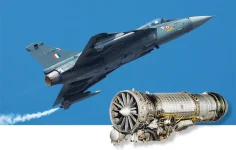
This performance leap—an increase of over 60% compared to the engine's normal operation—places the Kaveri in the same power class as the American GE F404 engine, which currently powers the Tejas Mk1 fighter fleet (rated at approximately 84 kN).
Solid Foundation: The Dry Kaveri
The success of the afterburner builds upon the reliable performance of the core engine, known as the "Dry Kaveri" or Kaveri Derivative Engine (KDE). Recent ground and altitude trials have confirmed that this core engine can consistently deliver nearly 49–51 kN of dry thrust.This stable baseline is already being adapted for strategic unmanned platforms. Specifically, the Dry Kaveri is slated to power the DRDO Ghatak, India’s upcoming stealth Unmanned Combat Aerial Vehicle (UCAV).
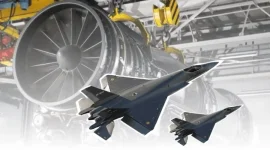
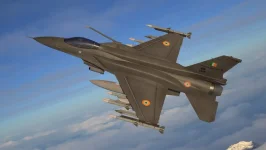
However, the addition of a functional, high-power afterburner reopens the possibility of using the Kaveri for manned fighters in the future, potentially as a powerplant for the Tejas Mk1A or as a technology bridge for the Advanced Medium Combat Aircraft (AMCA) programme.
Strategic Independence
The ability to build jet engines is often considered the "Holy Grail" of defence technology, a capability currently possessed by only a handful of nations (the US, Russia, France, the UK, and China).India’s reliance on foreign engines has historically been a vulnerability, creating dependency on external supply chains.
During his visit, Defence Minister Singh emphasised that mastering this technology is essential for Aatmanirbharta.
He urged scientists to accelerate development timelines, noting that while other nations took decades to mature these technologies, India must leverage Artificial Intelligence (AI) and advanced materials to close the gap rapidly.
He further stressed the need to look beyond current standards, encouraging research into sixth-generation propulsion technologies.
This successful trial signals that the Kaveri, once written off by some critics, has evolved into a potent platform.
By integrating the high-speed expertise of BrahMos with GTRE's engine core, India is edging closer to breaking the monopoly on fighter jet propulsion.