- Views: 7K
- Replies: 13
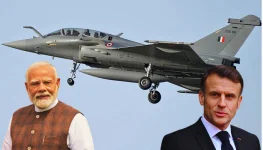
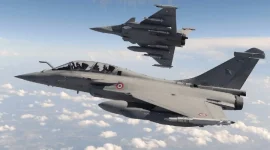
The Indian Air Force (IAF) appears to be moving decisively towards a government-to-government (G2G) procurement of 114 Dassault Rafale fighters, signaling a strategic shift away from prolonged competitive tendering.
As reported by Air Marshal Anil Chopra (Retired) in the EurAsian Times, the French-origin fighter has maintained a formidable lead in the Multi-Role Fighter Aircraft (MRFA) race, largely because it offers the IAF a critical advantage: the avoidance of the logistical nightmare associated with inducting yet another new aircraft type into a diverse fleet.
Continuity Over Complexity
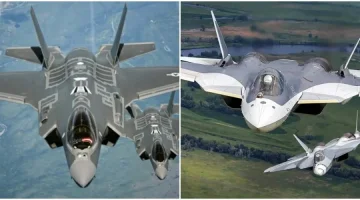
With the IAF currently grappling with a squadron strength of approximately 31—well below the sanctioned 42—the operational readiness of the force is a paramount concern.Introducing a new fighter type from a different manufacturer (such as the American F-21 or Swedish Gripen-E) would necessitate entirely new supply chains, pilot training programmes, and maintenance infrastructure.
In contrast, the Rafale is already in active service with the IAF, operational at the Ambala and Hasimara airbases. Expanding the existing fleet presents a 'low-risk, high-readiness' solution.
A direct G2G deal would bypass the years-long technical trials and commercial negotiations typical of open tenders, allowing for accelerated delivery schedules that align with the IAF's urgent requirements.
The ‘Leak’ and the Numbers: 90 F4s and 24 F5s
The speculation regarding an imminent deal has been intensified by a recent disclosure—suspected to be an accidental leak—from the French Ministry of the Armed Forces.The report indicated that New Delhi is finalising a procurement plan for 90 Rafale F4 variants, with an additional option for 24 Rafale F5 fighters.
While the F4 standard focuses on enhanced connectivity, networked warfare, and improved radar capabilities, the F5 is widely regarded as a "Super Rafale."
This next-generation variant is expected to bridge the gap to sixth-generation technology, featuring the ability to operate alongside 'loyal wingman' drones (derived from the nEUROn programme), advanced data fusion, and potential integration with hypersonic munitions.
Industrial Viability: The ‘Make in India’ Equation
Diplomatic and industrial signals suggest that negotiations are progressing steadily. A key factor driving this deal is the combined volume of the order.When the IAF’s requirement for 114 jets is added to the Indian Navy’s planned acquisition of 26 Rafale-M (Marine) fighters, the total order exceeds 140 aircraft.
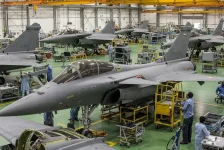
This volume is significant enough to economically justify a full ‘Make in India’ assembly line.
Unlike smaller orders which rely on offsets, this scale supports deep industrial investment and the transfer of critical manufacturing technologies to Indian partners.
Strengthening the Support Ecosystem
Groundwork for this expanded capability is already visible. Safran, the French engine manufacturer, has recently inaugurated a massive Maintenance, Repair, and Overhaul (MRO) facility in Hyderabad.While primarily catering to LEAP civil engines, Safran has also broken ground on a dedicated MRO facility for the M88 engines that power the Rafale.
Scheduled to be operational in the near future, this facility will ensure that the engines for India’s Rafale fleet are serviced domestically, drastically reducing turnaround times and dependency on foreign depots.
This move positions India not just as a consumer, but as a regional hub for Rafale sustainment.
A Decisive Shift
The IAF reportedly moved an internal case to fast-track the purchase of these 114 jets to bypass the historical delays that have plagued Indian defence procurement.With the Rafale having already proven its mettle in Indian conditions—and reportedly performing exceptionally well during the recent 'Operation Sindoor' exercises—the preference for assured delivery and logistical commonality seems to have outweighed the theoretical benefits of a fresh, multi-vendor competition.