- Views: 2K
- Replies: 5
In a significant statement regarding India’s future air combat capabilities, Air Chief Marshal A P Singh has suggested that the country should collaborate with friendly nations to fast-track the development of sixth-generation fighter jets.
Speaking at a seminar on Wednesday, January 21, the Air Force Chief emphasised that while self-reliance remains a core priority, the sheer complexity and speed of modern aerospace advancements necessitate strategic international partnerships.
A Call for Strategic Collaboration
The Air Chief’s remarks are being viewed as a decisive shift in strategy.He noted that although India has successfully established a robust ecosystem for defence research and manufacturing over the last decade, the pace at which aerospace warfare is evolving is unprecedented.
Attempting to develop these next-generation technologies entirely in isolation could lead to significant delays in induction, potentially leaving India behind its adversaries.
"We need to join hands with other countries," Air Chief Marshal Singh stated, highlighting that such alliances are critical for securing access to cutting-edge weapons, platforms, and systems in the near future.
The objective is to balance the long-term goal of indigenous development with the immediate need to stay technologically relevant on the global stage.
The Engine Deal Precedent
This proposed model mirrors the approach India has already adopted for advanced jet engines.Defence analysts interpret the Chief’s comments as a direct reference to the landmark agreement formalised with France’s Safran in late 2025.
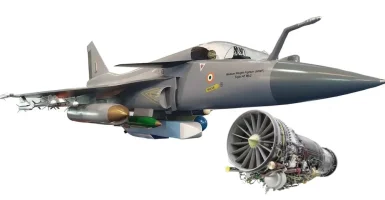
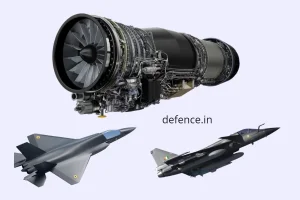
That deal involves the co-development of a new 110-120 kN engine for the future AMCA (Advanced Medium Combat Aircraft) Mark 2, featuring a 100 per cent transfer of technology, including the critical "hot section" components.
The Air Chief hinted that a similar "joint venture" model could be applied to a sixth-generation fighter programme.
By entering as a co-developer rather than a mere buyer, India would ensure it retains design sovereignty and manufacturing rights while sharing the financial and technological burden of such an ambitious project.
The Complexity of Sixth-Generation Tech
While asserting that India possesses the technical capability to build these platforms eventually, Air Chief Marshal Singh cautioned that the "go-it-alone" route might be too slow. Sixth-generation combat aircraft are defined by technologies that are exponentially more complex than their predecessors.These include:
- Artificial Intelligence (AI): Combat systems capable of making split-second tactical decisions.
- Manned-Unmanned Teaming (MUM-T): The ability of a piloted jet to control a swarm of "loyal wingman" drones.
- Directed Energy Weapons: Lasers and high-power microwaves for missile defence.
- Adaptive Cycle Engines: Powerplants that switch between fuel efficiency and high thrust mid-flight.
The Global Race Heats Up
The urgency in the IAF Chief’s tone reflects the aggressive timelines of rival global programmes.The United States is currently advancing its Next Generation Air Dominance (NGAD) programme, aiming for operational capability in the 2030s.
Meanwhile, the Global Combat Air Programme (GCAP)—a trilateral coalition of the UK, Japan, and Italy—and Europe’s Future Combat Air System (FCAS) are already deep into the development phase.
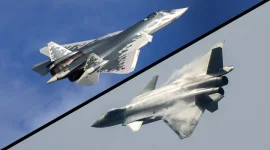
Furthermore, reports indicate that China is aggressively pursuing its own sixth-generation platform, potentially designated the J-50 or similar, increasing the pressure on New Delhi to act swiftly.
Balancing the Present and Future
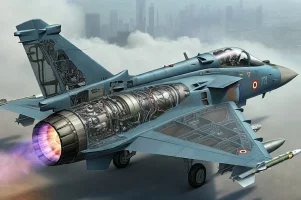
Currently, India’s primary focus remains the Advanced Medium Combat Aircraft (AMCA), a fifth-generation stealth fighter expected to enter service by the mid-2030s.However, the Air Chief’s address signals that planning for the post-AMCA era has already begun. The logic is clear: if India waits until the AMCA is fully inducted to start thinking about the next generation, it may find itself technologically outpaced.
If this vision translates into official policy, India could soon initiate high-level talks with select partners—likely France, the UK, or Japan—to join a sixth-generation consortium.
This would position India not just as a consumer of military hardware, but as a founding partner in one of the world’s most advanced aerospace endeavours.