- Views: 2K
- Replies: 2
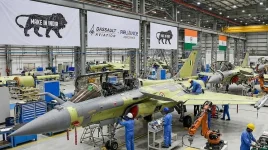
As India advances its negotiations for the procurement of 114 Multi-Role Fighter Aircraft (MRFA), clarity is emerging regarding the "Make in India" component of the deal.
While recent reports have highlighted an initial indigenous content figure of approximately 30 per cent for the first India-made Rafale jets, defence officials and industry insiders clarify that this is merely a starting point.
The ultimate objective is to scale localisation to over 60 per cent by the conclusion of the contract, ensuring a deep industrial foundation rather than a superficial assembly line.
Phased Indigenisation Strategy
Sources within the government and the defence industry suggest that the initial 30 per cent figure is being misinterpreted as the final benchmark. Instead, it reflects the reality of the early production phase.Establishing a new aerospace manufacturing line requires time to set up robust local supply chains, certify tooling, and ensure quality control frameworks meet international standards.
Therefore, the first tranche of jets will naturally rely more heavily on imported sub-systems while Indian partners build their capabilities.
As the programme matures, the level of Indian-made components is projected to increase significantly.
The production roadmap envisions a trajectory where the final airframe rolling off the Indian assembly line will comfortably surpass the 60 per cent localisation mark.
This progression is considered critical to the deal's commercial and strategic viability, ensuring that Indian industry gains genuine technological expertise.
From Assembly to Full Manufacture
Officials familiar with the programme note that this "graduated" approach is standard for complex fighter jet manufacturing.The initial batches are expected to be assembled from imported kits and pre-fabricated structures.
During this period, Indian vendors will undergo rigorous qualification processes, flight safety certifications, and process audits.
Once cleared, these domestic manufacturers will progressively take over the production of complex parts, including fuselage sections, wiring looms, hydraulic systems, and avionics sub-assemblies.
This method allows the production line to stabilise and ensures the workforce is adequately trained without compromising the quality of the initial aircraft.
By the later stages of the contract, the reliance on imported kits will diminish as the Indian ecosystem takes over the manufacturing of critical airframe and mission system components.
Strategic Viability and the "Screwdriver" Trap
A senior official close to the negotiations emphasised that a low level of localisation would defeat the purpose of the deal.If the indigenous content remains below 60 per cent, the facility would essentially function as a "screwdriver" assembly plant—putting together foreign parts with little value addition.
Such a setup would neither justify the massive capital investment required nor meet India's long-term goal of strategic self-reliance (Atmanirbhar Bharat).
A viable fighter manufacturing ecosystem requires deep technology transfer and the ability to produce core systems domestically.
Engine and Weapons Integration
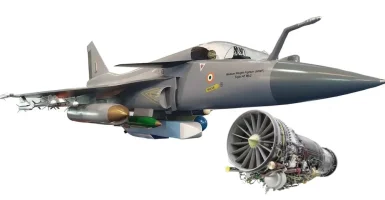
A key driver of this rising indigenous content will be the localisation of the fighter's propulsion and weapon systems.Negotiations are reportedly underway regarding the local production of the Safran M88 engine and its future variants.
This is supported by recent developments, such as Safran's initiative to establish a Maintenance, Repair, and Overhaul (MRO) facility for M88 engines in Hyderabad.
The successful localisation of engine components and the integration of Indian-made avionics and weapons would add a substantial percentage to the overall indigenous value of each aircraft.
A Long-Term National Asset
Defence planners view the Rafale manufacturing line not as a one-off project, but as a multi-decade national asset.A fully mature production line would support the Indian Air Force for decades, facilitate future upgrades, and potentially serve export markets.
Consequently, the success of the programme is being measured by its final localisation trajectory rather than the percentage of the first few aircraft.
The consensus within the defence-industrial establishment is clear: falling short of the 60 per cent target would undermine the strategic logic of building a fourth-generation fighter base in India.