Last week turned out to be a watershed moment for the Indo-American ties as India and the United States announced a historic and interim agreement framework on trade, marking a significant de-escalation of trade tensions, overcoming a major impasse and a strategic reset in bilateral relations with a final legally binding document expected to be signed by mid-March 2026.
The deal is significant as the United States is India's largest trading partner, with bilateral trade in goods and services valued at an estimated $212.3 billion in 2024 and approximately $132.2 billion in goods alone for FY2025.
Besides the bilateral trade deal, the U.S. has also offered India to be a part of the Pax Silica which is a U.S.-led strategic initiative focused on building secure and resilient supply chains for critical minerals, semiconductors, and AI technologies. It is a high-trust coalition aimed at advancing a new economic security consensus among trusted global partners.
The interim trade deal, first & foremost, provides India with a much-needed respite & a huge sigh of relief as well as stability from mercurial Trump’s policy uncertainties, coercion and geopolitical vagaries besides assured access to the U.S. market at tariff rates which are more competitive than key competitors which coupled with recent devaluation of Indian Rupee against the U.S. Dollar collectively are likely to come as a huge & much required boost to Indian exports in a highly dynamic, challenging and uncertain global macroeconomic environment.
Trump, thus, after having used stick against India over its oil imports from Russia with imposition of tariffs while using trade effectively as the weapon of his choice; has just offered the carrot in form of tariff cuts and trade deal, in order, to incentivize India while also maneuvering and wean it away from its traditional energy & security partner, Russia, while trying to woo India towards America with multi-billion dollar defence deals in his crosshairs, especially the additional P-8I Poseidon naval surveillance planes which have been put on hold by India and the IAF’s Medium Transport Aircraft program worth $8-$10 billion for 70 tactical transport aircraft, in which, the U.S. defence behemoth Lockheed Martin is a key contender with its C-130J Super Hercules program besides IAF’s impending & urgent need for aerial tanker aircraft for air-to-air refuelling of its fighter jet fleet.
Therefore, cautiously calibrating the prevailing euphoria over the trade deal with the U.S. without getting swayed & carried away by it and carefully balancing it with India’s existing strategic relationships with traditional, longstanding partners will be the imperative and need of the hour for India going forward. This is especially important given Trump’s mercurial, mercantilist and unpredictable nature.
India, therefore, will have to very carefully manage its tricky relationship with the U.S. while carefully balancing its existing strategic relationship with Putin & Russia as the moment India gets into a strategic dependency on the oil or any other front with the U.S., Trump will try and leverage it via arm twisting to extract a payoff and to corner & maneuver India coercively to his advantage, which could, thereby, impact India’s strategic autonomy in an increasingly multipolar world.
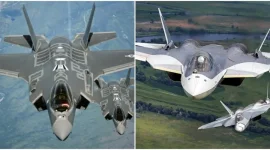
This is, especially important, as India is already evaluating Russia’s Su-57 & the American F-35 for its urgent requirement for an interim 5th generation fighter to deter & counter the China-Pakistan axis militarily and also exploring the procurement of S-500 system. If India ultimately goes ahead with the Su-57 & the S-500, Trump might get rattled and may not hesitate from throwing in below-the-waist punches, in order, to force India to buckle down and backtrack from Russia and rather buy American while using trade as his preferred battlefront and weapon of choice.
India, therefore, needs to be prepared to tackle Trump tactically and diplomatically really effectively going forward through the rest of his tenure in the White House, especially post the latest trade deal, as India is effectively getting into the American orbit on Trump’s coercion in a major departure from its traditional stance of non-alignment maintained throughout the Cold War and strategic autonomy since then which has been the linchpin of India’s foreign policy.
Lastly, India has to be fully aware that energy security piece could potentially be the biggest wrench thrown into India’s economic growth engine and story going forward...while always remembering the following popular quote from America’s former Secretary of State, Henry Kissinger, “America has no permanent friends or enemies, only interests...”