- Views: 2K
- Replies: 11
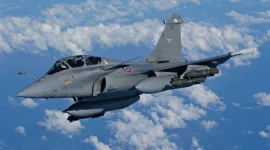
The Indian Air Force (IAF) is pursuing a monumental modernization of its combat fleet through the Multi-Role Fighter Aircraft (MRFA) programme.
Centered around the proposed purchase of 114 Dassault Rafale jets—a deal estimated at ₹3.25 lakh crore—this initiative is widely considered one of the most critical airpower upgrades in Asia.
A major focus of this acquisition is to secure dominance in beyond-visual-range (BVR) engagements, which have become the defining feature of modern aerial warfare.
A core component of the Rafale's lethal payload is the MBDA Meteor, globally recognized as a premier BVR air-to-air missile.
Unlike traditional rocket-powered weapons, the Meteor relies on an advanced solid-fueled, throttleable ramjet engine.
This unique propulsion allows the missile to exceed speeds of Mach 4 and sustain its high energy all the way to the target.
Consequently, it creates an unprecedented "no-escape zone" against enemy aircraft attempting to evade the strike, capable of covering 100 kilometres in just about 90 seconds.
However, ongoing negotiations for the MRFA deal suggest that India is looking beyond the standard Meteor.
Reports indicate that the IAF aims to incorporate the latest technological leaps emerging from the Meteor programme’s Mid-Life Activities (MLA).
Securing these future upgrades would provide the next generation of Indian Rafales with a decisive technological advantage over current regional capabilities.
A central piece of this modernization is a completely revamped datalink system.
Spanish defence contractor Indra, which has been involved in the weapon's evolution for 25 years and manufactures 20 percent of its electronics, is heavily involved in this redesign.
Indra recently passed the Preliminary Design Review (PDR) phase with missile manufacturer MBDA, greenlighting the full-scale development and integration of this advanced communication architecture.
During the mid-course phase of a missile's flight, the datalink acts as a vital digital tether between the fighter jet and the weapon.
It continuously feeds the missile with real-time target coordinates, flight path adjustments, and direct engagement commands long after it has left the aircraft.
According to defence experts, integrating this next-generation datalink will yield three critical battlefield advantages.
Primarily, it will dramatically expand the Meteor's already formidable no-escape zone.
By leveraging a high-volume data stream from the Rafale’s powerful RBE2 Active Electronically Scanned Array (AESA) radar, the missile can constantly adjust its trajectory against fast-moving targets.
This constant stream of precision data is vital when engaging enemies at extreme distances exceeding 100 kilometres, where slight changes in an adversary's position can easily ruin an intercept.
Furthermore, the new datalink will offer superior protection against electronic warfare.
As modern combat zones become increasingly saturated with powerful jammers and anti-access/area denial (A2/AD) systems, maintaining communication with a fired weapon is challenging.
The upgraded architecture features robust Electronic Counter-Countermeasures (ECCM), ensuring the missile remains immune to intense enemy interference and accurately tracks its target.
Lastly, the upgrade introduces unprecedented tactical flexibility for the pilot.
The enhanced two-way communication allows pilots to reassess the battlefield after launching the weapon and, if necessary, redirect the missile to an entirely different threat mid-flight. In today’s network-centric combat environments, where radar pictures and target priorities shift in seconds, this adaptability is crucial.
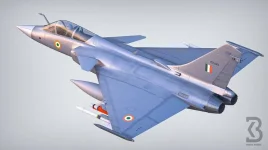
In addition to the state-of-the-art Meteor missiles, the 114 future MRFA fighters will build upon the foundation of the 13 India-Specific Enhancements (ISEs) already present in the IAF's active fleet of 36 Rafales.
Prominent among these customizations are Israeli-designed Helmet Mounted Displays (HMDs).
This technology projects vital flight and targeting data directly onto the pilot's visor, allowing them to lock onto an enemy simply by turning their head.
Paired with agile missiles like the Meteor and MICA, this drastically cuts down reaction times during high-stakes dogfights.
Another essential modification is a specialized engine cold-start system tailored for India’s unique geography.
This allows the Rafale to rapidly power up and launch from high-altitude airbases like Leh, overcoming the severe operational hurdles posed by freezing Himalayan temperatures.
Finally, electronic warfare capabilities remain a top priority.
The IAF’s Rafales are equipped with custom modifications to the SPECTRA electronic warfare suite, featuring specialized radar warning receivers and jamming modules.
These are specifically calibrated to detect, jam, and outsmart the radar systems currently utilized by the Chinese People’s Liberation Army Air Force (PLAAF) and the Pakistan Air Force, ensuring survivability in heavily defended airspace.