- Views: 2K
- Replies: 2
As President Donald Trump settles into his second term at the White House, a significant friction point is emerging in Indo-US relations.
India’s determined shift towards European defence platforms—specifically French fighter jets and jet engine technology—threatens to provoke a diplomatic backlash from a US administration that views military sales as a barometer of political loyalty.
Despite the risk of angering Washington, New Delhi has doubled down on its partnership with Paris.
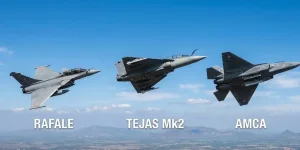
By selecting the Dassault Rafale for its air and naval needs and finalising a high-stakes partnership with Safran for indigenous engine development, India has signalled that long-term strategic autonomy outweighs the diplomatic comfort of buying American.
The "America First" Friction
US President Trump has long maintained a transactional view of foreign policy, frequently arguing that allies and partners must purchase American weaponry to offset trade deficits. During his previous term, he often characterised defence deals as personal "wins."Consequently, India’s pivot away from US aerospace giants is likely to be viewed not as a strategic necessity, but as a slight against his "America First" agenda.
The warning signs were evident during the procurement process. American heavyweights Boeing and Lockheed Martin campaigned aggressively for India’s massive fighter contracts, offering the F-15EX and the F-21 (a customised F-16).
Similarly, General Electric (GE) was the primary competitor to power India’s fifth-generation Advanced Medium Combat Aircraft (AMCA) with its F414 engine.
However, India has chosen a different path. In addition to the Indian Air Force’s existing Rafale fleet, the Indian Navy has opted for the Rafale Marine (Rafale M) over Boeing’s F/A-18 Super Hornet, solidifying France’s position as India’s preferred combat aviation partner.
The Safran Engine Deal: A Crown Jewel of Autonomy
The most significant leap in this partnership is the collaboration on jet engine technology. New Delhi has moved forward with French aerospace major Safran to co-develop the engine for the AMCA, India’s future stealth fighter.Unlike standard import contracts, this deal represents a shift towards genuine sovereignty.
Open-source defence analysis indicates that the Safran proposal includes 100% Transfer of Technology (ToT) and, crucially, joint ownership of the Intellectual Property (IP) rights.
This stands in sharp contrast to the offer from General Electric, which, while valuable, would have largely been a manufacturing licence for the F414 engine without transferring the critical "hot engine" technology or IP ownership.
By choosing Safran, India ensures it can upgrade, modify, and export its future fighters without seeking permission from a foreign capital.
Sovereignty Over "Strings Attached"
From New Delhi’s perspective, the decision is driven by a cold calculation regarding reliability. Indian defence planners have learned that American military technology often comes with significant strings attached.US defence exports are governed by strict regulatory frameworks, including End-Use Monitoring (EUM). These agreements grant American inspectors the right to physically verify equipment and inventory, a clause that many in the Indian defence establishment view as intrusive.
Furthermore, the US retains the ability to restrict software upgrades or withhold spare parts based on shifting geopolitical goals.
In contrast, France offers a partnership model based on "strategic autonomy."
Paris has historically refrained from imposing political vetoes on how India uses its military assets and does not weaponise supply chains during times of crisis.
For an Indian administration facing rising regional threats and a squadron shortage, this operational freedom is non-negotiable.
The Calculated Risk
Critics have argued that swapping American dependence for French dependence is hardly self-reliance. They point out that importing billions of dollars worth of foreign hardware contradicts the "Make in India" ethos.However, defenders of the deal argue that the Indian Air Force cannot afford to wait. With China deploying fifth-generation J-20 fighters, India needs immediate combat power (Rafale) and a rapid route to indigenous stealth capabilities (the Safran-AMCA project).
India appears to have concluded that the risk of a diplomatic tantrum from President Trump is a price worth paying. While the White House may view the rejection of Boeing and GE as "ingratitude"—especially after Washington championed initiatives like the Initiative on Critical and Emerging Technology (iCET)—India is prioritising the security of its supply chains.
In an era where defence technology can be politicised, India has decided that its air power cannot be subject to the moods of Washington. By betting on France, New Delhi is securing not just a fighter jet, but the freedom to fly it on its own terms.