- Views: 2K
- Replies: 4
In a significant development for the Indian Air Force’s (IAF) upcoming Medium Transport Aircraft (MTA) procurement, US aerospace giant Lockheed Martin has announced major upgrades to its bid.
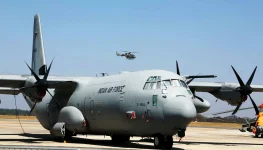
The company has confirmed that the C-130J Super Hercules aircraft offered to India will feature a newly developed range-extension capability and an open architecture design, aimed at meeting New Delhi's requirements for long-range logistics and domestic defence production.
Extended Reach for Strategic Missions
Rob Toth, Vice President for Strategy Development, Air Mobility and Maritime Missions at Lockheed Martin Aeronautics, confirmed to CNBC-TV18 that the company has developed a dedicated range-extension kit for the C-130J. This system is currently undergoing certification.The enhanced range is expected to be a critical factor for the IAF, which requires an aircraft capable of spanning the vast Indian Ocean Region (IOR) and reaching high-altitude forward bases without frequent refuelling stops.
This capability would significantly bolster India's ability to conduct long-distance logistics, disaster relief, and special operations from short, semi-prepared airstrips in remote border areas.
Open Architecture to Boost 'Make in India'
Beyond physical performance, Lockheed Martin is actively tailoring the aircraft’s digital backbone to suit Indian industrial priorities. Toth highlighted that the proposed C-130J will feature an open architecture design.This technical flexibility is intended to allow the Indian Air Force and local defence firms to integrate indigenous subsystems—such as avionics, communication suites, and sensors—without facing restrictive proprietary software barriers.
This approach aligns directly with the Indian government's "Atmanirbhar Bharat" initiative.
By enabling the integration of locally developed technology, the proposal offers Indian companies substantial opportunities to participate in lifecycle support, future upgrades, and high-value subsystem integration, rather than serving merely as assembly partners.
The MTA Tender Landscape
These announcements come as the Ministry of Defence prepares to release the Request for Proposal (RFP) for the MTA programme.The tender, estimated to be worth between $6 billion and $8 billion, envisages the procurement of 40 to 80 aircraft to replace the IAF's ageing fleet of Soviet-era Antonov An-32s.
The competition is expected to be fierce. Lockheed Martin’s C-130J faces a strong challenge from Brazil’s Embraer, which has pitched its C-390 Millennium in partnership with the Mahindra Group, and Europe’s Airbus, offering the A400M Atlas.
While the competitors offer different payload capacities, Lockheed Martin is banking on the C-130J’s proven track record; the IAF already operates a fleet of 12 Super Hercules, which have successfully executed demanding missions, including landings at the world’s highest airstrip at Daulat Beg Oldie in Ladakh.
Deepening Industrial Ties
Lockheed Martin already possesses a significant manufacturing footprint in India through its joint venture, Tata Lockheed Martin Aerostructures Limited (TLMAL). Based in Hyderabad, this facility serves as the sole global producer of the C-130J empennage (tail assembly).The company has indicated that winning the MTA contract could lead to the establishment of a final assembly line in India, further cementing the aerospace partnership between Washington and New Delhi.
With the RFP expected shortly, Lockheed Martin’s strategy focuses on leveraging the IAF’s existing familiarity with the "Super Herc" while addressing the new demand for greater range and deeper indigenisation.