- Views: 2K
- Replies: 7
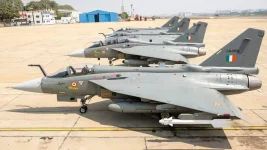
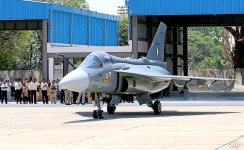
The Ministry of Defence (MoD) projects that Hindustan Aeronautics Limited (HAL) will have between 18 and 24 Light Combat Aircraft (LCA) Tejas Mk1A fighters prepared for the Indian Air Force (IAF) by the close of the year.
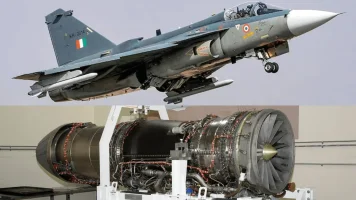
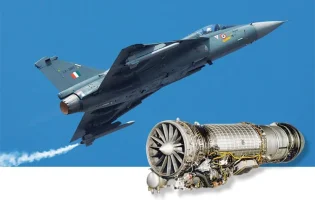
This push comes as the programme attempts to recover from significant schedule disruptions caused by delayed F404 engine deliveries from American manufacturer GE Aerospace.
Following a comprehensive progress review led by Defence Minister Rajnath Singh, officials noted that six Mk1A airframes are currently complete and fitted with their powerplants.
If HAL successfully addresses the remaining technical parameters—known as Air Staff Qualitative Requirements (ASQRs)—to meet the IAF's operational standards, the targeted two dozen aircraft could be combat-ready by December.
While the indigenous fighter programme has crossed several important development milestones, the MoD has made it clear that patience regarding production delays is wearing thin.
Sources indicate that HAL has been firmly instructed to meet its production commitments, with warnings that failing to adhere to the revised timelines could trigger financial penalties.
Bolstering Depleting Squadrons
The IAF is heavily relying on the Tejas platform to arrest the decline in its combat squadron strength, which currently hovers well below the sanctioned 42 squadrons due to the phased retirement of legacy MiG-21 interceptors.To date, the government has placed two massive orders totalling 180 Tejas Mk1A jets. The initial contract for 83 aircraft (comprising 73 fighters and 10 trainers) was signed in February 2021. This was followed by a massive secondary procurement of 97 additional jets in September 2025, valued at over Rs 62,370 crore.
Currently, HAL has augmented its infrastructure across its Bengaluru and Nashik facilities to achieve a peak production capacity of 24 jets annually. Even at this maximum rate, fulfilling the IAF's total order will take more than seven years, pushing the final deliveries of the fleet into 2033.
Technological Leaps and Combat Prowess
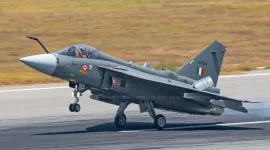
As a 4.5-generation, single-engine fighter, the Mk1A is heavily upgraded compared to the 40 baseline Tejas Mk1 jets currently operated by the IAF in their Initial and Final Operational Clearance configurations.The upgraded fighter pushes its indigenous content past the 64 percent mark by integrating 67 new domestically manufactured components.
The most critical tactical improvements include a modern Active Electronically Scanned Array (AESA) radar that allows pilots to simultaneously track and engage multiple aerial and ground targets.
Survivability in highly contested airspace is further boosted by a new, locally developed Electronic Warfare (EW) suite designed to detect and jam hostile radar threats.
Additionally, the Mk1A features mid-air refuelling probes for extended range and incorporates Line Replaceable Units (LRUs) alongside advanced diagnostic systems. These maintenance upgrades are specifically engineered to reduce turnaround times between combat sorties.
Armed with a 23mm internal cannon, the platform features multiple hardpoints capable of carrying beyond-visual-range (BVR) air-to-air missiles, anti-ship missiles, and precision-guided laser munitions.
As India waits for future platforms like the heavier Tejas Mk2 and the fifth-generation Advanced Medium Combat Aircraft (AMCA) to enter mass production, these 180 LCA Mk1A fighters will serve as the crucial backbone of India's aerial defence grid.