- Views: 2K
- Replies: 10
The Indian government has established rigorous guidelines for the special purpose company tasked with building the Advanced Medium Combat Aircraft (AMCA).
The newly issued Request for Proposal (RFP) ensures that the enterprise developing and manufacturing India’s highly anticipated fifth-generation stealth fighter will remain entirely under Indian ownership and management.
This mandate highlights New Delhi’s drive toward absolute self-reliance and strategic independence in the domestic defence sector, shutting the door on any potential foreign interference in crucial national security projects.
According to the specific terms laid out in Clauses 47 and 48 of the RFP, the consortium chosen for this monumental project cannot involve direct foreign corporate ownership.
International financial participation is strictly limited to passive capital. This means funds can only come through Foreign Institutional Investors (FIIs), Foreign Portfolio Investors (FPIs), or mutual funds, all of which must operate within the strict boundaries set by the Reserve Bank of India (RBI) and the Securities and Exchange Board of India (SEBI).
Furthermore, operational control is non-negotiable. The legal framework requires that the Chief Executive Officer, Chief Financial Officer, Chief Operating Officer, and the entire Board of Directors must be resident Indian citizens.
This approach guarantees that external entities cannot hold majority stakes or sway vital boardroom decisions, while still permitting regulated international capital to support the venture.
Beyond the initial prototype phase, the newly formed company will bear massive long-term responsibilities.
Clause 50 of the document outlines that once the development phase is successfully finished, this same entity will be entrusted with mass series production as well as comprehensive Repair and Overhaul (RoH) services.
This transition will be facilitated through a Transfer of Technology (ToT) from the Aeronautical Development Agency (ADA), the premier DRDO lab spearheading the aircraft's design.
To execute this, major domestic industrial groups—reportedly including the shortlisted consortia of Tata, L&T-BEL, and Bharat Forge—are competing to become the primary private sector partner.
The winning group will spearhead the manufacturing of prototypes and oversee flight trials before eventually anchoring the mass production lines.
The AMCA project, which received a ₹15,000-crore clearance from the Cabinet Committee on Security (CCS) in early 2024, is expected to yield its first prototype flight by 2028-2029.
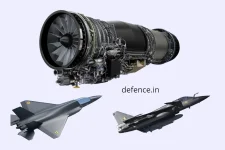
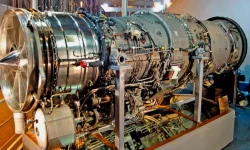
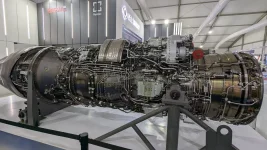
Open-source reports indicate the aircraft will be rolled out in two phases: the Mark-1 jets will be powered by American GE-F414 engines, while the Mark-2 variants are slated to feature a more powerful, jointly-developed indigenous engine.
Ultimately, these strategic stipulations are crafted to nurture a robust, self-sustaining aerospace supply chain within the country.
By ensuring that sensitive stealth technologies and overarching leadership stay strictly with resident Indians, the Ministry of Defence is setting a new benchmark for indigenous military manufacturing and safeguarding India's airspace for the future.