New AMCA RFP Mandates Strict Indian Control and Ownership, Restricts Foreign Investment to Passive Capital

New AMCA RFP Mandates Strict Indian Control and Ownership, Restricts Foreign Investment to Passive Capital


The Indian government has established rigorous guidelines for the special purpose company tasked with building the Advanced Medium Combat Aircraft (AMCA).

The newly issued Request for Proposal (RFP) ensures that the enterprise developing and manufacturing India’s highly anticipated fifth-generation stealth fighter will remain entirely under Indian ownership and management.

This mandate highlights New Delhi’s drive toward absolute self-reliance and strategic independence in the domestic defence sector, shutting the door on any potential foreign interference in crucial national security projects.

According to the specific terms laid out in Clauses 47 and 48 of the RFP, the consortium chosen for this monumental project cannot involve direct foreign corporate ownership.

International financial participation is strictly limited to passive capital. This means funds can only come through Foreign Institutional Investors (FIIs), Foreign Portfolio Investors (FPIs), or mutual funds, all of which must operate within the strict boundaries set by the Reserve Bank of India (RBI) and the Securities and Exchange Board of India (SEBI).

Furthermore, operational control is non-negotiable. The legal framework requires that the Chief Executive Officer, Chief Financial Officer, Chief Operating Officer, and the entire Board of Directors must be resident Indian citizens.

This approach guarantees that external entities cannot hold majority stakes or sway vital boardroom decisions, while still permitting regulated international capital to support the venture.

Beyond the initial prototype phase, the newly formed company will bear massive long-term responsibilities.

Clause 50 of the document outlines that once the development phase is successfully finished, this same entity will be entrusted with mass series production as well as comprehensive Repair and Overhaul (RoH) services.

This transition will be facilitated through a Transfer of Technology (ToT) from the Aeronautical Development Agency (ADA), the premier DRDO lab spearheading the aircraft's design.

To execute this, major domestic industrial groups—reportedly including the shortlisted consortia of Tata, L&T-BEL, and Bharat Forge—are competing to become the primary private sector partner.

The winning group will spearhead the manufacturing of prototypes and oversee flight trials before eventually anchoring the mass production lines.

The AMCA project, which received a ₹15,000-crore clearance from the Cabinet Committee on Security (CCS) in early 2024, is expected to yield its first prototype flight by 2028-2029.

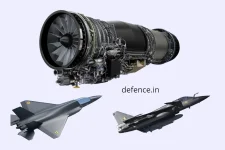
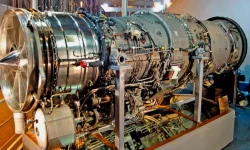
Open-source reports indicate the aircraft will be rolled out in two phases: the Mark-1 jets will be powered by American GE-F414 engines, while the Mark-2 variants are slated to feature a more powerful, jointly-developed indigenous engine.

Ultimately, these strategic stipulations are crafted to nurture a robust, self-sustaining aerospace supply chain within the country.

By ensuring that sensitive stealth technologies and overarching leadership stay strictly with resident Indians, the Ministry of Defence is setting a new benchmark for indigenous military manufacturing and safeguarding India's airspace for the future.
 
What is the most important thing here? Having a world class 5th generation fighter or to protect the oligarc companies of India(BJP) friends.

If my priority was to protect India. I would not set guidelines that limit technology and competive bids.

Go to the F35 website and look at all the vendors. There are vendors from douzens of countries that have built this jet.

Go ahead, like you have since 2014 and promote the Adani, Tatas and Abanis. Limit competition and overpay for everything and still no guarantee of success.

Success, is probably down the list of priorities.
 
What is the most important thing here? Having a world class 5th generation fighter or to protect the oligarc companies of India(BJP) friends.

If my priority was to protect India. I would not set guidelines that limit technology and competive bids.

Go to the F35 website and look at all the vendors. There are vendors from douzens of countries that have built this jet.

Go ahead, like you have since 2014 and promote the Adani, Tatas and Abanis. Limit competition and overpay for everything and still no guarantee of success.

Success, is probably down the list of priorities.
That's because they were involved in it's developed from the beginning and paid for it to get a share of the manufacturing.


What is the point of development if we don't get to own it?

Might as well purchase flyaway aircrafts if we don't care about that. Why even bother developing?
 
What is the point of development if we don't get to own it?

Might as well purchase flyaway aircrafts if we don't care about that. Why even bother developing?
In retrospect, India should perhaps have gone for an expensive approach to defending Indian skies. Something along these lines:

order some Gripen
develop Tejas

order some Rafale
develop Tejas Mk2

order some PAK-FA
develop AMCA

If an Indian programme was not holding to schedule, more imports could be ordered to avoid a troublesome fall in IAF squadron numbers.
 
In retrospect, India should perhaps have gone for an expensive approach to defending Indian skies. Something along these lines:

order some Gripen
develop Tejas

order some Rafale
develop Tejas Mk2

order some PAK-FA
develop AMCA

If an Indian programme was not holding to schedule, more imports could be ordered to avoid a troublesome fall in IAF squadron numbers.

Your suggestions are wise, but the BOLD part is where problem lies in.

In 2016 when only 2 squadrons of Rafale were ordered, the expectation was that Tejas mk1a will hit the floor from 2024 onwards (that's where we retired Mig 21) and Tejas mk2 will hit prototype as well. There is a slip of more than 2 years and Tejas mk1a still hasnt arrived.

Similarly from 2028-29 the expectation was Tejas mk2 will start to come in squadrons and parallely the Jags will start retirement. Now that won't happen before 2031 is what is believed...that means there will be a period of 2-3 years where the Indian Airforce might be down to 27 odd squadrons as they'll see loss of Jaguars but very limited increment.

That's where push of 114 Rafales gained pace.
 
In retrospect, India should perhaps have gone for an expensive approach to defending Indian skies. Something along these lines:

order some Gripen
develop Tejas

order some Rafale
develop Tejas Mk2

order some PAK-FA
develop AMCA

If an Indian programme was not holding to schedule, more imports could be ordered to avoid a troublesome fall in IAF squadron numbers.
But these programs themselves need sufficient number of orders to be viable. Not to mention the problem of inter comunication between these systems.

If you go this way you are planning for it to fail to begin with.

Better would be to actually fix the issues that cause development problems and delays. Including management inefficiencies. Lack of funds, delays of funds, change of requirements etc.

If we actually want to become a real player we need to have indigenous fighter and defence industry. We can't have our supply chain dependent on another country in a time of war.
 
But these programs themselves need sufficient number of orders to be viable. Not to mention the problem of inter comunication between these systems.

If you go this way you are planning for it to fail to begin with.

Better would be to actually fix the issues that cause development problems and delays. Including management inefficiencies. Lack of funds, delays of funds, change of requirements etc.

If we actually want to become a real player we need to have indigenous fighter and defence industry. We can't have our supply chain dependent on another country in a time of war.
My original post suggested a 'belt and braces' approach to providing the kit needed to defend Indian skies

- import some fighters
- develop similar performance fighters in India
- if locally developed fighters are going to be late, import more fighters

The purpose of IAF coming up with fighter requirements and industry developing and building fighters that meet those requirements is to enable IAF to defend the skies of India.

Based on performance up to now (40 years since LCA started), India is IMO incapable of successfully developing and building fighter aircraft.

India cannot become a real player in the fighter business until the failed development and production structure devised by GOI and continued by GOI's for decades is thrown out and replaced by something that could work.
 
My original post suggested a 'belt and braces' approach to providing the kit needed to defend Indian skies

- import some fighters
- develop similar performance fighters in India
- if locally developed fighters are going to be late, import more fighters

The purpose of IAF coming up with fighter requirements and industry developing and building fighters that meet those requirements is to enable IAF to defend the skies of India.

Based on performance up to now (40 years since LCA started), India is IMO incapable of successfully developing and building fighter aircraft.

India cannot become a real player in the fighter business until the failed development and production structure devised by GOI and continued by GOI's for decades is thrown out and replaced by something that could work.
If these are your believes might as well stop wasting money and buy Entire jets requirement from foreign developers.


Also hard disagree with your statment. India has developed quite a lot of tech that it couldn't or never achive till the last decade or two. And fighter engines are one of the most complicated techs to master in the world.

India can just need to go about it in a different way. (Which it is) Current development program is to decrease the control and contribution of the government PSU utilising them as more of a drawing board and managing directors of the project while the manufacturing and development will be done by private players. L&T TATA godrej etc.

Honestly it is already working out far better then before. Have seen more progress and regular updates for the Kaveri engine in the last 3-4 years then the previous decade. There is alot more transparency and accountability.

With the tech tranfer from France and USA in the future and the creation of the test beds(finally) the problem of the engine shortage like with tejas shouldn't occur.

Also about Tejas. There was never a serious political will behind it. It faced multitude of funding and development delays because the bureaucrats never backed it like it should have been.

They simontanusly want the cheapest option while having it developed as per requirement on time. Simply not possible.

Despite all that and the failure to develop Kaveri and having to redesign the jet for the 414. It's come out as a competent enough jet. If not for the delays there wouldn't have been a need for the rafale contract.


Sure you could still qualify the program as a failure (which it should) but still having a program and not are two very different things.
Making a jet and making the second jet better are two very different tasks and one of them is far more monumental then the other.
And india has accomplished the first one.
 
My original post suggested a 'belt and braces' approach to providing the kit needed to defend Indian skies

- import some fighters
- develop similar performance fighters in India
- if locally developed fighters are going to be late, import more fighters

The purpose of IAF coming up with fighter requirements and industry developing and building fighters that meet those requirements is to enable IAF to defend the skies of India.

Based on performance up to now (40 years since LCA started), India is IMO incapable of successfully developing and building fighter aircraft.

India cannot become a real player in the fighter business until the failed development and production structure devised by GOI and continued by GOI's for decades is thrown out and replaced by something that could work.

Problem is the "will", not the "skill".

We were able to build SSBN on our own (with some support by USSR/ Russia), because it was under strategic command and hence was under PMO right from the start.

Kaveri Engine and LCA program was under MoD and hence it was in limbo...and then the separation of Kaveri project with LCA in 2005 landed a killer blow.

On top of it, HAL is involved into multiple things. Be it LUH, ALH, Dorniers, Trainer jets Su30MKI, Tejas mk1, mk1a, mk2...everywhere....you can have only a limited number of personnel's to work on. So whatever program was deemed as urgent, HAL used the workforce there.

Unlike Navy which maintained multiple shipyards and divided the work, IAF didnt look elsewhere.
Now when we have TASL, L&T, Mahindra, Kalyani as competitors...IAF has the option to look for alternatives.
 

Forum statistics

Threads
7,348
Messages
66,265
Members
5,435
Latest member
Sagnik Agasti
Back
Top