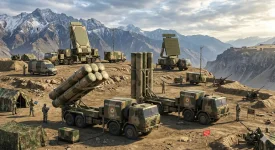
A dedicated hypersonic missile defence layer will form a critical pillar of ‘Operation Sudarshan Chakra’, India’s ambitious multi-layered air and missile defence initiative.
Sources familiar with the development have confirmed that this advanced capability is being designed to counter next-generation aerial threats and is targeted for completion under the programme's second phase by 2035.
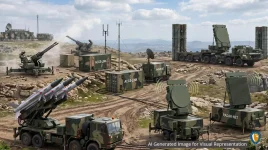
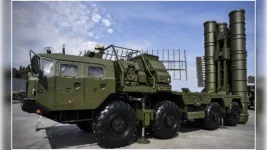
Operation Sudarshan Chakra was first announced by Prime Minister Narendra Modi in August 2025. The initiative envisions a nationwide, AI-enabled shield that integrates existing air defence systems—such as the S-400 Triumf and Akash—with emerging indigenous platforms.
While the initial phases will focus on establishing a robust shield against conventional threats, long-term planning is now aggressively pivoting towards countering hypersonic weapons.
Addressing the 'True' Hypersonic Threat
Defence sources indicate that the Phase-II architecture of Operation Sudarshan Chakra will focus specifically on neutralizing “true” hypersonic weapon systems.Unlike traditional ballistic missiles, which may briefly achieve hypersonic speeds (exceeding Mach 5) during their re-entry phase, true hypersonic weapons—such as Hypersonic Cruise Missiles (HCMs) and Hypersonic Glide Vehicles (HGVs)—sustain these speeds while operating within the atmosphere.
These modern weapons pose a significant challenge to conventional radar and interceptor systems. They combine extreme speed with lower-altitude flight profiles and the ability to manoeuvre unpredictably, drastically reducing the reaction time available to defenders.
The Role of Project Kusha
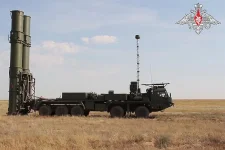
The first layer of this evolving shield will be bolstered by Project Kusha, the DRDO’s indigenous long-range surface-to-air missile system currently under development.Project Kusha is designed to deploy the M2 interceptor, which possesses hypersonic interception capabilities. However, experts note that the M2 is primarily optimised for tactical ballistic missiles and aircraft, rather than manoeuvrable hypersonic glide vehicles.
Project Kusha, often compared to the S-400 system, will reportedly feature interceptors with ranges of 150 km, 250 km, and 350 km. While these assets will provide formidable area defence against stealth fighters, drones, and cruise missiles, the unique trajectory of HGVs requires a more specialised approach.
Integration with Ballistic Missile Defence (BMD)
It remains unclear whether the Defence Research and Development Organisation (DRDO) will develop an entirely new class of interceptors for atmospheric hypersonic threats or adapt capabilities from India’s existing Ballistic Missile Defence (BMD) programme.The BMD Phase-III architecture is already in development to address longer-range intercontinental ballistic missiles.
Defence analysts suggest that the hypersonic defence layer for Operation Sudarshan Chakra could logically evolve as an extension of this programme, leveraging the high-altitude interception technologies already being matured by Indian scientists.
A Future-Ready Defence Posture
While specific system configurations and timelines remain fluid, the inclusion of a dedicated hypersonic layer reflects India’s acute recognition of the rapidly changing threat environment in the Indo-Pacific region.With neighbouring nations actively deploying hypersonic technologies, the DRDO’s roadmap aims to ensure that India’s defensive posture remains credible against weapons that blur the traditional lines between ballistic and cruise missiles.
By 2035, Operation Sudarshan Chakra is expected to provide comprehensive protection against a full spectrum of aerial threats, ranging from low-cost drone swarms to high-end stealth aircraft and hypersonic missiles.