- Views: 916
- Replies: 2
The Future Combat Air System (FCAS), a collaborative European venture aimed at developing a sixth-generation fighter ecosystem, is currently facing significant internal friction.
As of early 2026, the ambitious project—designed to integrate advanced drones and AI-driven networks for France, Germany, and Spain—is being hampered by intense industrial disagreements.
Industrial Deadlock in Europe
At the heart of the dispute is Dassault Aviation, the French lead behind the Rafale, which is reportedly insisting on maintaining control over approximately 80% of the high-end development for the core fighter jet.This stance has drawn sharp criticism from Airbus, representing German and Spanish interests. Airbus officials have accused the French manufacturer of withholding critical intellectual property (IP) related to stealth technology, advanced sensors, and primary design authority.
The impasse has led to missed milestones and growing political skepticism. In Berlin, the German administration has suggested the program may no longer align with national requirements, particularly as France prioritizes a carrier-capable and nuclear-compatible platform.
India’s Strategic Interest
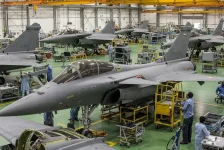
Against this backdrop of European instability, India has emerged as a potential heavyweight partner.Building on the established success of the Rafale procurement and local manufacturing initiatives with Tata Advanced Systems, New Delhi has signaled a strong interest in joining the FCAS framework.
India’s motivations are driven by a dual necessity:
- Addressing Capability Gaps: The Indian Air Force (IAF) is managing declining squadron strengths as older airframes retire.
- Technological Leapfrogging: While India is developing its own Advanced Medium Combat Aircraft (AMCA), a 5.5-generation project, joining a sixth-generation program could provide immediate access to manned-unmanned teaming (MUM-T) and next-generation propulsion.
The Challenge of High-End Workshare
Despite India’s growing economic and defence influence, experts warn that securing "crown jewel" technology remains a formidable challenge.Dassault Aviation has historically guarded its most sensitive innovations—such as sensor fusion and stealth shaping—even against its current European partners.
| Potential Workshare Category | Likely Outcome for India |
|---|---|
| Airframe Manufacturing | High probability of local assembly and component production. |
| Avionics Integration | Possible through licensed technology transfers. |
| Core Stealth & AI IP | Likely to remain restricted under French control. |
| Maintenance & Support | Full domestic autonomy for regional hubs. |
Open-source intelligence suggests that while India would demand a significant "Make in India" component, France likely views New Delhi as a strategic financier and a massive export market rather than a co-equal in core design.
A Pragmatic Alliance
If the European partnership fractures further, an Indo-French axis could serve as a "lifeline" for the FCAS. For France, India offers the scale and capital necessary to sustain such a costly project. For India, the collaboration provides a hedge against domestic R&D delays.However, the central question remains whether India can negotiate a seat at the high table of aerospace design or if it will primarily serve as a sophisticated production hub for French-designed technology.