- Views: 1K
- Replies: 1
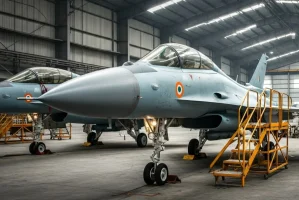
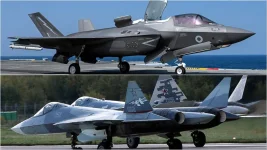
Recent discussions among Pakistani military observers have sparked fresh dialogue regarding the potential sale of Russia’s fifth-generation Su-57E stealth fighter to the Indian Armed Forces.
In a recent podcast, commentators Bilal Khan and Arslan Khan from the Quwa Group proposed that Islamabad should actively campaign against this prospective acquisition.
Furthermore, they suggested that Pakistan should lobby China to use its economic weight to block the transfer of these advanced jets to New Delhi.
The crux of the Pakistani analysts' argument rests on the global supply chain.
They theorized that because China dominates the international market for rare earth minerals—components vital to modern aerospace manufacturing—Beijing could threaten to withhold these materials to stop Moscow from arming India.
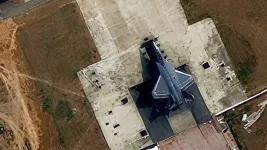
The commentators voiced concerns that the deployment of the Su-57, known by its NATO reporting name 'Felon', would pose a severe challenge to both Pakistani and Chinese strategic interests in the region.
However, defence experts and geopolitical analysts have largely dismissed these claims, pointing out a lack of concrete evidence to suggest Beijing holds any real authority over Russia's flagship aviation programmes.
The Su-57 is a highly guarded, domestically produced asset developed by the Sukhoi Design Bureau.
Like all major global military powers, Russia relies on secure, nationalized supply chains for its critical defence infrastructure.
While China is the world's leading processor of rare earth elements, this commercial dominance does not grant it veto power over foreign, state-run military projects.
In fact, Russia itself boasts massive rare earth reserves, such as the Tomtor deposit in the Arctic, and has historically prioritized self-reliance for its strategic weapons platforms to avoid exactly this kind of external vulnerability.
Industry insiders note that there is absolutely no public data indicating that Chinese materials are critically tied to the Su-57's production line in a way that would allow Beijing to dictate its export.
Furthermore, the idea that China could or would halt the export of a Russian fighter jet remains an unsubstantiated theory.
From a diplomatic standpoint, while Moscow and Beijing share a robust strategic alliance, they maintain a strict policy of non-interference regarding each other's arms sales.
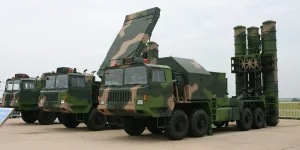
Russia has consistently supplied New Delhi with high-end military technology, including the S-400 air defence system and collaborative projects like the BrahMos cruise missile, despite India's border tensions with China.
Conversely, China acts as the primary arms supplier for Pakistan, providing platforms like the J-10CE and JF-17 fighter jets, without facing any diplomatic pushback from Moscow.
Ultimately, global defence trade is driven by sovereign interests and bilateral relationships.
Although India walked away from the joint Fifth Generation Fighter Aircraft (FGFA) programme with Russia in 2018 to focus on indigenous development, Moscow has continuously offered the fully developed Su-57E to New Delhi.
As India remains one of Russia's most lucrative and enduring defence partners, experts conclude that Moscow's export decisions will continue to be guided by its own economic and strategic goals, completely independent of third-party pressures.