- Views: 2K
- Replies: 3
India’s decades-long effort to modernise its fighter fleet appears to be reaching a critical turning point, according to a new assessment by the International Institute for Strategic Studies (IISS).
The UK-based think tank indicates that New Delhi is close to awarding a major contract that would finally fulfil the Indian Air Force’s (IAF) long-standing requirement for Medium Multi-Role Combat Aircraft (MRFA).
Recent reports suggest the government is poised to approve a deal with French aerospace major Dassault Aviation for 114 Rafale fighters. This potential agreement, estimated to be worth approximately ₹3.25 lakh crore, marks a significant reset in the IAF’s strategy to rebuild its combat strength.
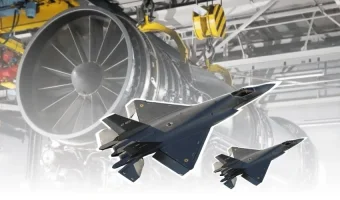
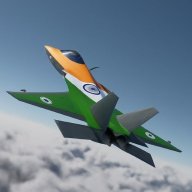
Simultaneously, India is accelerating its indigenous Advanced Medium Combat Aircraft (AMCA) programme, a next-generation stealth fighter designed to secure the nation's long-term air power capabilities.
Addressing the Squadron Shortfall
The driving force behind these parallel initiatives is the urgent need to restore the IAF’s force structure.For years, defence planners have set a target of 42 fighter squadrons to ensure credible deterrence against collusive threats on both northern and western fronts.
However, the retirement of ageing Soviet-era platforms, such as the MiG-21, combined with delays in new inductions, has severely compressed operational capacity.
According to the IISS analysis, the IAF currently fields approximately 29 fighter squadrons—well below the authorised strength. This critical gap has brought procurement back to the centre of defence planning.
The situation was further highlighted by the operational demands of 'Operation Sindoor' in May 2025, which underscored the necessity of a robust and technologically superior fighter fleet.
The Rafale Continuity
The potential acquisition of 114 additional Rafales reflects a pragmatic approach to India’s complex procurement ecosystem.Dassault originally won a competition for 126 jets in 2012, but that deal collapsed due to contractual disputes. A smaller, government-to-government agreement for 36 jets was signed in 2016, with induction commencing in 2020.
These 36 aircraft have since become one of the IAF’s most potent assets, praised for their multirole flexibility and advanced avionics.
If the new deal for 114 jets is finalised, it will likely include a significant "Make in India" component, with reports indicating that 96 of the aircraft would be manufactured domestically.
This move would not only expand the fleet but also ensure logistical continuity, as the IAF has already integrated the Rafale into its operational doctrine.
The Indigenous Pillar: AMCA
While the Rafale addresses immediate needs, the IISS report highlights the AMCA as the cornerstone of India’s future air power.This ambitious programme aims to develop a fifth-generation stealth fighter to match global advancements. The project received a major boost in March 2024 when the Cabinet Committee on Security (CCS) approved its design and development phase.
The think tank notes that India is keen to avoid the extended timelines that plagued previous indigenous projects.
The HAL Tejas Light Combat Aircraft, for instance, was conceived in the 1980s but only reached full production in the mid-2010s. Such delays previously forced the IAF to rely on interim imports.
With the AMCA, the goal is to achieve technological autonomy and ensure that future capability gaps are met with home-grown solutions.
A Two-Pronged Strategy
Strategically, these developments are a response to rapid advancements in the region. China’s accelerated induction of J-20 and J-35 stealth fighters has placed pressure on New Delhi to hasten both its indigenous development and selective imports.The IISS assessment concludes that the Rafale and AMCA programmes are not competing interests but complementary pillars of a unified strategy.
The large-scale induction of Rafales is intended to stabilise squadron numbers and provide immediate high-end capability.
In contrast, the AMCA represents a generational investment, ensuring that in the coming decades, India’s air superiority will be defined by its own industrial prowess.