Rolls-Royce Leverages Historical F-35 Engine Development Experience to Challenge Safran for India’s AMCA Engine Contract

Rolls-Royce Leverages Historical F-35 Engine Development Experience to Challenge Safran for India’s AMCA Engine Contract


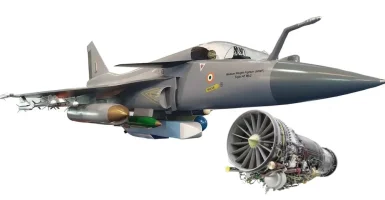
As India approaches a critical decision on selecting an international partner to co-develop a high-powered engine for its Advanced Medium Combat Aircraft (AMCA), British aerospace major Rolls-Royce has intensified its campaign.

The company is now explicitly highlighting its direct involvement in fifth-generation fighter propulsion to counter the strong position held by French competitor Safran.

While reports suggest that the Indian Ministry of Defence may be leaning towards Safran for the prestigious programme, Rolls-Royce is arguing that its unique historical experience makes it the superior candidate.

Sashi Mukundan, Executive Vice President of Rolls-Royce India, recently emphasised the company’s proven track record in designing engines for stealth platforms, positioning this expertise as a perfect match for India's requirements.

The F-35 Connection: A Key Differentiator​

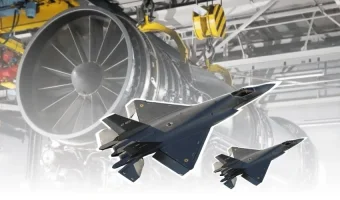
In a bid to showcase its technical credentials, Rolls-Royce has drawn attention to its significant role in the F-35 Lightning II programme, one of the most sophisticated fighter projects in history.

Mr Mukundan noted that Rolls-Royce was a core partner in a joint venture with US-based GE Aviation to develop a specialised powerplant for this fifth-generation fighter.

“We were also part of a joint programme where GE and Rolls-Royce together developed an engine specifically for the fifth-generation F-35,” Mr Mukundan stated.

He argued that this experience is directly relevant to India’s needs, adding, “This is another example of recent engine development, particularly in the thrust range or even above the thrust range that India is looking to build.”

By referencing this past work, Rolls-Royce aims to demonstrate that it is not merely offering to upgrade an older design, but rather has the "clean-sheet" design capability required for a true fifth-generation platform.

Understanding the F136 Engine Legacy​

The engine at the centre of Rolls-Royce’s pitch is the F136. Originally conceived as a competitive alternative to the Pratt & Whitney F135 engine that currently powers the F-35 fleet, the F136 was a purpose-built design for stealth operations.

Although the F136 programme was ultimately cancelled due to US budgetary constraints and policy decisions, the engine reached an advanced stage of development.

It successfully completed critical design reviews and ground testing, demonstrating advanced capabilities in thermal management, materials science, and high-thrust performance.

Rolls-Royce’s involvement in this project provided it with deep insights into the rigorous demands of fifth-generation propulsion—knowledge it is now offering to share with India’s Defence Research and Development Organisation (DRDO).

Strategic Autonomy and Naval Synergies​

Beyond technical specifications, Rolls-Royce is also appealing to India’s desire for strategic independence.

The company has proposed a model where India would hold the Intellectual Property (IP) rights for the new AMCA engine. This would allow India to upgrade, modify, and export the engine without requiring foreign permission in the future.

Furthermore, Mr Mukundan has highlighted a unique advantage of the Rolls-Royce proposal: cross-sector synergy. He suggested that the core technology developed for the AMCA jet engine could be adapted for marine use, potentially powering future warships for the Indian Navy.

This "marinisation" of aero-engines is a niche capability that Rolls-Royce has successfully demonstrated with its MT30 marine gas turbines, derived from the Trent 800 aero-engine.

The Challenge from Safran​

Despite this robust pitch, industry observers note that Rolls-Royce faces a steep uphill battle. Safran, the French aerospace giant, is widely considered the frontrunner for the deal.

The French firm has reportedly offered a comprehensive technology transfer package, including the highly sensitive "hot section" technology—the heart of a jet engine where temperatures exceed the melting point of metal.

Safran’s proposal is bolstered by the existing diplomatic warmth between New Delhi and Paris, as well as the operational success of the Rafale fighter in the Indian Air Force.

The company has committed to a long-term industrial partnership that promises to help India bridge the technological gap that has historically hampered indigenous engine programmes like the Kaveri.

Conclusion​

The competition for the AMCA engine contract represents more than just a commercial deal; it is a pivotal moment for India’s defence manufacturing ambitions.

The selected partner will not only power India’s future stealth fleet but also help determine the nation’s level of self-reliance in aerospace technology for decades to come.

While Safran currently holds the advantage, Rolls-Royce’s invocation of its F-35 heritage serves as a powerful reminder that the race is not yet run.
 
Rolls Royce should be given a chance in developing 6th

gen engine in 150-170 kN class with VCE and DEW integration in 2030 when our tejas mk2 is in production stages, AMCA in pre production and IOC tests (up from designing phase), so that we can focus on 6th gen engine and aircraft otherwise it will be too late given the European GCAP, and western NGAD if not then we will as usual remain a decade or two behind, the 6th gen engine could be developed on the footprints of the AMCA mk2 engine (most probably with safran bcz it's expected timeline is lesser and probably gov is trying to impress the French with it so that they can give some more ToT (which is also not expected) in rafale contract if it happens) so that it can be later plugged in seamlessly to upgrade it.
 
Rolls Royce should be given a chance in developing 6th

gen engine in 150-170 kN class with VCE and DEW integration in 2030 when our tejas mk2 is in production stages, AMCA in pre production and IOC tests (up from designing phase), so that we can focus on 6th gen engine and aircraft otherwise it will be too late given the European GCAP, and western NGAD if not then we will as usual remain a decade or two behind, the 6th gen engine could be developed on the footprints of the AMCA mk2 engine (most probably with safran bcz it's expected timeline is lesser and probably gov is trying to impress the French with it so that they can give some more ToT (which is also not expected) in rafale contract if it happens) so that it can be later plugged in seamlessly to upgrade it.
Unfortunately, the UK is a US puppet. "Go fetch the ball doggy, good dog." Just listen to Starmer, sounds like a CIA asset.
 
Unfortunately, the UK is a US puppet. "Go fetch the ball doggy, good dog." Just listen to Starmer, sounds like a CIA asset.
Yes and I think that's why the MoD and IAF is ignoring a company like RR (also it's relation with Turkey plays a role)
 
Rolls Royce are better suited to making the advanced engine for the gcap 6th gen fighter plane and new top of the line ultra fans engines for commercial aircraft.

This is just a pass time for Rolls Royce and better suited to a smaller engine maker using old tech created for the f35b 15 years ago.

Btw if you dont want a American puppet then it's best to get russian engine as France is more up Americas backside then the uk
 
Rolls Royce are better suited to making the advanced engine for the gcap 6th gen fighter plane and new top of the line ultra fans engines for commercial aircraft.

This is just a pass time for Rolls Royce and better suited to a smaller engine maker using old tech created for the f35b 15 years ago.

Btw if you dont want a American puppet then it's best to get russian engine as France is more up Americas backside then the uk
Look up history.

Why did the US go off the gold standard. Its because France demanded their Gold.

France has their own jets, engines and weapons. Simply because they don't want to be under the yoke of the Anglo American (Israeli) empire.
 
Look up history.

Why did the US go off the gold standard. Its because France demanded their Gold.

France has their own jets, engines and weapons. Simply because they don't want to be under the yoke of the Anglo American (Israeli) empire.
What gold standard does France have. Their jets are second rated when compared to the Russians, their engines are 50/50 with GE and based in America so basically American and their weapons are majority designed and developed in Europe with french in name only.

Simple fact is when the china (Pakistan) have the second best fighter plane in the J35, India need to have the best fighter jet to retaliate otherwise U might as well fly the white flag.

The rafiale is like bringing a sword to a gun fight
 
Why are Indian defence ministry officials not too keen on the Mitsubishi offer for its engines which are also proven ?
Because the Indian ministry like taking crisp euros in the back pocket then wonder why their engine are no good when the Chinese jets come calling
 
What gold standard does France have. Their jets are second rated when compared to the Russians, their engines are 50/50 with GE and based in America so basically American and their weapons are majority designed and developed in Europe with french in name only.

Simple fact is when the china (Pakistan) have the second best fighter plane in the J35, India need to have the best fighter jet to retaliate otherwise U might as well fly the white flag.

The rafiale is like bringing a sword to a gun fight
That's why the Rafale has a 200 jet backlog.

Russia can't even deliver the S400 fully, who are you kidding? Russia charges India fully, extortion prices for replacement parts when we can get them.
 

Forum statistics

Threads
6,004
Messages
61,571
Members
4,755
Latest member
OutForVendetta
Back
Top