- Views: 4K
- Replies: 12
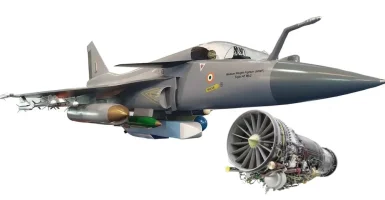
As India approaches a critical decision on selecting an international partner to co-develop a high-powered engine for its Advanced Medium Combat Aircraft (AMCA), British aerospace major Rolls-Royce has intensified its campaign.
The company is now explicitly highlighting its direct involvement in fifth-generation fighter propulsion to counter the strong position held by French competitor Safran.
While reports suggest that the Indian Ministry of Defence may be leaning towards Safran for the prestigious programme, Rolls-Royce is arguing that its unique historical experience makes it the superior candidate.
Sashi Mukundan, Executive Vice President of Rolls-Royce India, recently emphasised the company’s proven track record in designing engines for stealth platforms, positioning this expertise as a perfect match for India's requirements.
The F-35 Connection: A Key Differentiator
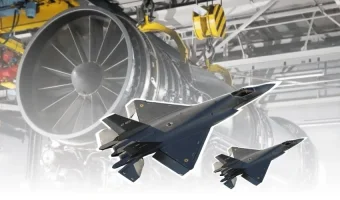
In a bid to showcase its technical credentials, Rolls-Royce has drawn attention to its significant role in the F-35 Lightning II programme, one of the most sophisticated fighter projects in history.Mr Mukundan noted that Rolls-Royce was a core partner in a joint venture with US-based GE Aviation to develop a specialised powerplant for this fifth-generation fighter.
“We were also part of a joint programme where GE and Rolls-Royce together developed an engine specifically for the fifth-generation F-35,” Mr Mukundan stated.
He argued that this experience is directly relevant to India’s needs, adding, “This is another example of recent engine development, particularly in the thrust range or even above the thrust range that India is looking to build.”
By referencing this past work, Rolls-Royce aims to demonstrate that it is not merely offering to upgrade an older design, but rather has the "clean-sheet" design capability required for a true fifth-generation platform.
Understanding the F136 Engine Legacy
The engine at the centre of Rolls-Royce’s pitch is the F136. Originally conceived as a competitive alternative to the Pratt & Whitney F135 engine that currently powers the F-35 fleet, the F136 was a purpose-built design for stealth operations.Although the F136 programme was ultimately cancelled due to US budgetary constraints and policy decisions, the engine reached an advanced stage of development.
It successfully completed critical design reviews and ground testing, demonstrating advanced capabilities in thermal management, materials science, and high-thrust performance.
Rolls-Royce’s involvement in this project provided it with deep insights into the rigorous demands of fifth-generation propulsion—knowledge it is now offering to share with India’s Defence Research and Development Organisation (DRDO).
Strategic Autonomy and Naval Synergies
Beyond technical specifications, Rolls-Royce is also appealing to India’s desire for strategic independence.The company has proposed a model where India would hold the Intellectual Property (IP) rights for the new AMCA engine. This would allow India to upgrade, modify, and export the engine without requiring foreign permission in the future.
Furthermore, Mr Mukundan has highlighted a unique advantage of the Rolls-Royce proposal: cross-sector synergy. He suggested that the core technology developed for the AMCA jet engine could be adapted for marine use, potentially powering future warships for the Indian Navy.
This "marinisation" of aero-engines is a niche capability that Rolls-Royce has successfully demonstrated with its MT30 marine gas turbines, derived from the Trent 800 aero-engine.
The Challenge from Safran
Despite this robust pitch, industry observers note that Rolls-Royce faces a steep uphill battle. Safran, the French aerospace giant, is widely considered the frontrunner for the deal.The French firm has reportedly offered a comprehensive technology transfer package, including the highly sensitive "hot section" technology—the heart of a jet engine where temperatures exceed the melting point of metal.
Safran’s proposal is bolstered by the existing diplomatic warmth between New Delhi and Paris, as well as the operational success of the Rafale fighter in the Indian Air Force.
The company has committed to a long-term industrial partnership that promises to help India bridge the technological gap that has historically hampered indigenous engine programmes like the Kaveri.
Conclusion
The competition for the AMCA engine contract represents more than just a commercial deal; it is a pivotal moment for India’s defence manufacturing ambitions.The selected partner will not only power India’s future stealth fleet but also help determine the nation’s level of self-reliance in aerospace technology for decades to come.
While Safran currently holds the advantage, Rolls-Royce’s invocation of its F-35 heritage serves as a powerful reminder that the race is not yet run.