- Views: 2K
- Replies: 11
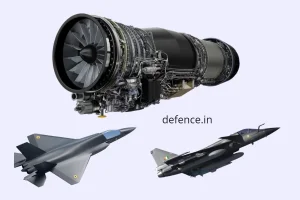
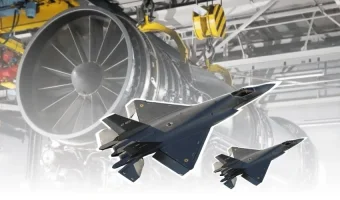
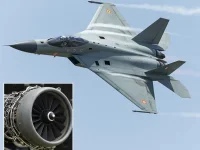
As India edges closer to selecting a foreign partner to co-develop a 120-kilonewton (kN) engine for the Advanced Medium Combat Aircraft (AMCA) Mk2, the contest between Britain's Rolls-Royce and France's Safran has grown into a major strategic crossroads.
The final choice is no longer just about engine thrust; it is a critical debate between diversifying military suppliers and sticking with proven partnerships, a decision that will dictate India’s aerospace independence for decades.
Because the Indian government is heavily funding this indigenous engine programme, New Delhi expects to retain the primary intellectual property (IP) rights rather than handing them over to the foreign manufacturer.
This financial backing has transformed the negotiation landscape.
Both European aerospace giants are now forced to compete fiercely, offering unprecedented levels of technology transfer and local industrial participation to win the contract.
Recently, Rolls-Royce escalated the competition by offering full IP rights to co-develop a new engine from scratch, while Safran has countered with promises of 100% technology transfer and no export restrictions based on its M88 engine family.
A primary argument for selecting Rolls-Royce revolves around the need for strategic diversification. India already enjoys a robust defence partnership with France, prominently featuring the Rafale fighter jet programme.
However, military planners warn against the vulnerability of relying too heavily on a single nation for vital aerospace technology.
Should shifting geopolitics or domestic policy changes in a partner country disrupt defence exports, India could face severe challenges in maintaining and upgrading its fleets.
Integrating the United Kingdom into the next-generation fighter programme would spread this risk and prevent over-reliance on a single supplier.
Furthermore, the intense rivalry between these two global engine manufacturers plays directly into India's hands.
By pitting Safran and Rolls-Royce against each other, New Delhi has successfully encouraged a bidding war over who can offer the best IP rights and technological access.
This competitive environment greatly strengthens India’s bargaining power, making it much easier to acquire the kind of top-tier propulsion technology that foreign nations usually keep strictly guarded.
The potential boost to local industry is another massive factor. Rolls-Royce has reportedly proposed the creation of a specialised aero gas-turbine ecosystem within India, which would likely involve major domestic players such as Tata, Larsen & Toubro, and Bharat Forge.
This initiative would expose Indian engineers to brand-new design philosophies and significantly expand the country's domestic manufacturing capabilities.
Conversely, Safran presents a strong case built on stability and proven experience. The French company is already deeply embedded in India’s aerospace framework through various ongoing defence projects.
Because Safran is already highly familiar with the operational demands of the Indian Armed Forces and the capacity of local industries, partnering with them could greatly reduce the technical risks involved in executing such a complex project.
Ultimately, building a fifth-generation fighter jet requires more than just bolting a powerful engine into an airframe.
The propulsion system must be flawlessly integrated with the aircraft's stealth profile, flight control software, and thermal management systems.
Achieving this seamless integration demands decades of close collaboration and rigorous testing, meaning India must choose a partner it can trust for the long term.
Fortunately, India’s phased rollout for the AMCA provides a crucial buffer.
The initial AMCA Mk1 prototypes—expected to roll out around 2027—will be powered by the reliable American General Electric F414 engine.
This ensures that essential flight testing and development can proceed without delay. Because the advanced Mk2 engine is not required until the 2030s (with Rolls-Royce projecting initial ground tests by 2032), India has the luxury of time.
The government can afford to negotiate aggressively for the ultimate IP and technology transfer deal, ensuring true strategic autonomy without stalling the overall AMCA timeline.