- Views: 3K
- Replies: 4
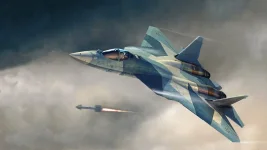
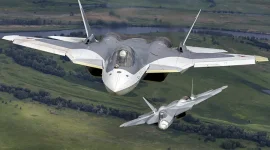
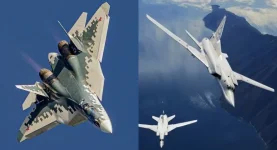
In a development that could fundamentally alter the trajectory of Indo–Russian defence cooperation, Moscow has presented a comprehensive proposal to New Delhi that positions the Su-57E fighter jet not merely as a purchase, but as a bridge to future high-tech warfare.
Senior Russian officials have conveyed that reviving the Fifth Generation Fighter Aircraft (FGFA) programme could unlock deep collaboration on next-generation platforms, including sixth-generation fighter jets and strategic bombers.
A Two-Track Proposal for Air Dominance
According to sources familiar with the discussions, Russia has structured an expansive offer designed to meet India's immediate and long-term security needs.The proposal involves the direct supply of two to three squadrons of the Su-57E stealth fighter to the Indian Air Force (IAF) for immediate operational readiness.
Simultaneously, Moscow has offered to establish local production lines in India, ensuring valid technology transfer and indigenous manufacturing capabilities.
This dual approach aims to address the IAF’s urgent requirement for stealth capabilities while honoring the government’s "Make in India" initiative.
Russian officials have stressed that this partnership would seamlessly integrate India into their future aviation roadmap.
"We would like partners like India to be part of any future program," an official stated, highlighting that work on sixth-generation prototypes is already underway globally, with initial flights expected by 2035.
Reviving the FGFA: A Gateway to Future Tech
India suspended its participation in the original FGFA project in 2018, citing disagreements over development costs, stealth specifications, and the extent of technology sharing.However, the geopolitical environment has since evolved, prompting a re-evaluation of the partnership. The renewed negotiations promise significantly greater access to critical technologies, including mission software architecture and design participation—elements India views as non-negotiable for maintaining sovereign defence capabilities.
If New Delhi approves this revived collaboration, it could serve as a foundational platform for jointly developing advanced systems, such as:
- Sixth-generation air dominance fighters: Future aircraft capable of operating in highly contested environments.
- Stealth strike platforms: Dedicated aircraft for deep-penetration missions.
- Manned-Unmanned Teaming (MUM-T): Systems where piloted jets control swarms of autonomous drones.
- Strategic bomber technologies: Potential cooperation on long-range bomber programs, similar to Russia's PAK DA project.
The Su-75 "Checkmate": Affordable Stealth
Parallel to the Su-57E discussions, Russian officials have provided updates on the Su-75 "Checkmate," a light tactical stealth fighter.Sources confirmed that the 26-ton, single-engine aircraft is scheduled for its maiden flight in 2026. Moscow is actively marketing the jet to nations looking for cost-effective alternatives to Western platforms.
The Su-75 is being pitched as a direct competitor to the American F-35 Lightning II, offering comparable stealth and avionics capabilities at approximately half the cost.
Key features expected to appeal to export markets include its modular open-architecture design, reduced maintenance requirements, and the ability to operate in unmanned configurations.
A Critical Decision for New Delhi
This explicit offer to include India in top-tier aviation programs comes at a pivotal moment. While India has been diversifying its defence portfolio with acquisitions from France and the United States, it retains a deep appreciation for Russian engineering resilience.The decision now rests with the Indian government. New Delhi must carefully balance the allure of early access to sixth-generation technology against fiscal constraints, delivery timelines, and the progress of its indigenous Advanced Medium Combat Aircraft (AMCA) programme.
What remains certain is that Moscow has put forward its most significant and strategic defence pitch to India in recent history.