- Views: 2K
- Replies: 3
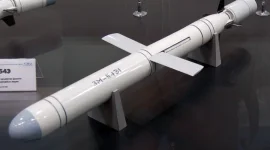
In a renewed effort to strengthen bilateral naval cooperation, Russia has formally presented a proposal to equip the Indian Navy’s submarine fleet with the 3M-14E Kalibr-PL (export designation Club-S) land-attack cruise missile system.
This latest offer is pitched as the most rapid and flexible solution to provide Indian submarines with a formidable 1,500 km deep-strike capability, utilising the existing 533 mm torpedo tubes without the need for extensive refits.
A Modular "Bridge" Solution
Earlier this year, representatives from Rosoboronexport and the Rubin Design Bureau briefed Indian Navy delegations in Moscow. Their presentation highlighted that the Kalibr family is designed as a comprehensive modular system rather than a standalone weapon.They asserted that this system could transform conventional submarines into multi-role strategic platforms without requiring major structural modifications.
According to a senior naval analyst familiar with the ongoing discussions, the Kalibr-PL is being positioned as an ideal interim measure. "For the Indian Navy right now, Kalibr-PL is a perfect bridge solution," the analyst noted.
While the indigenous Submarine-Launched Cruise Missile (SLCM)—currently under development by the DRDO for Project 75-Alpha and the future SSN programme—is making progress, it remains approximately 4–6 years away from full operational maturity.
In the intervening period, the Russian proposal suggests that the Kalibr system could instantly provide every Kilo (Sindhughosh-class) and Scorpene (Kalvari-class) submarine with a strategic land-attack reach comparable to surface warships armed with BrahMos missiles.
Enhancing the Kilo-Class Fleet
This proposal arrives at a critical juncture for the Indian Navy, which is actively exploring options to maximise the combat effectiveness of its ageing yet potent Kilo-class fleet. With these vessels slated for phased decommissioning beginning in 2030, extending their lethality is a priority.Integrating the Kalibr system onto even six of the nine operational Kilo-class submarines would provide a significant second-strike deterrent.
Such a capability would allow Indian submarines to hold vital military and economic targets at risk across a vast operational arc—stretching from the Persian Gulf to the Malacca Strait—while remaining undetected underwater.
Complementing Indigenous Programmes
While the long-term strategic objective remains the deployment of the indigenous SLCM, which is being co-developed by DRDO and Russia’s NPO Mashinostroyeniya, naval planners view the Kalibr offer as a low-risk, high-impact interim capability.A Navy source emphasised that this acquisition would not derail local development. "Kalibr is not replacing our indigenous programme – it is protecting national security while that programme matures," the source explained.
"One Kalibr-armed Kilo patrolling silently in the northern Arabian Sea can influence events 1,500 km inland. That kind of layered deterrence is priceless today."
A Narrowing Decision Window
The timing of this decision is becoming increasingly critical. The Project 75I tender is already evaluating torpedo-tube launched missile capabilities as a primary requirement.Furthermore, with the first three Scorpene submarines scheduled to enter their mid-life refit cycle starting in 2027, the opportunity to integrate such a capability is closing.
Additional Context
- MTCR Implications: Typically, export variants of Russian missiles (designated with an "E") are capped at a range of 300 km to comply with the Missile Technology Control Regime (MTCR). However, India's membership in the MTCR (since 2016) allows for the acquisition of systems with ranges exceeding this limit, lending credibility to the offer of a 1,500 km variant.
- Current Arsenal: The Indian Navy already operates the shorter-range 3M-54E Club-S anti-ship and land-attack variants on its Kilo-class submarines and Talwar-class frigates. The proposed upgrade would significantly extend this engagement envelope.
- Strategic Need: The capability to launch deep land strikes from diesel-electric submarines is a specific niche that enhances India's deterrence against adversaries who may have robust anti-access/area-denial (A2/AD) systems protecting their coastlines.